In a nutshell
- 🧪 Acetic acid shifts pH to disrupt mineral and alkaline bonds, lifting tannin stains and neutralising sticky detergent residues.
- ⚙️ Mix safely: typical dilution ratios 1:1–1:3 with cool water; perform a colorfastness test; use distilled water; never mix with bleach.
- 🧻 Method for speed: blot, don’t rub; light application, short dwell, gentle agitation; rinse and dry thoroughly to prevent wicking.
- 🚫 Know limits: vinegar excels on tannin/alkaline/mineral soils, but not on oil, grease, tar or set proteins; treat pet urine with vinegar then an enzyme cleaner.
- 🌬️ Aftercare: ventilate to dissipate odour, avoid overwetting carpet/backing, groom pile, and maintain with regular vacuuming to cut resoiling.
There’s a reason every cleaner’s cupboard hides a bottle of vinegar. The humble liquid’s active ingredient, acetic acid, is a quiet overachiever, loosening stubborn carpet stains and dissolving dulling residues without harsh fumes or heavy scrubbing. Used correctly, a simple water-and-vinegar mix can tackle coffee rings, pet accidents, and muddy footprints in minutes. It’s fast. It’s cheap. It’s surprisingly technical. Understanding how acetic acid works gives you the edge: you’ll know when to reach for vinegar, when to wait, and when to choose something else entirely. Here’s the chemistry, the method, and the safety checklist—distilled for busy homes and brisk results.
The Science: How Acetic Acid Breaks Bonds
Vinegar’s bite comes from acetic acid, a weak acid that shifts the pH of a stain. Many carpet blemishes—tannin-based drinks, mineral-laden tap water marks, soap residues—are either slightly alkaline or bound to fibres by mineral ions. By nudging the environment acidic, acetic acid disrupts those bonds, loosening the stain so it can be blotted away. The trick isn’t brute force; it’s chemistry-driven detachment. Acetic acid also helps neutralise leftover alkaline detergents that can leave a sticky film, which otherwise attracts fresh soil and creates that mysterious “reappearing stain.”
Not all soils are equal. Tannin stains (tea, coffee, red wine) respond well to a mild acid. So do hard-water rings and dulling soap scum tracked in from bathroom mats. Protein-based stains—blood, milk, egg—can coagulate under heat or acid, so handle them with cool water first. Oil and tar? Vinegar won’t dissolve them; you need a solvent-based spotter. Match the chemistry to the culprit to avoid setting stains and to protect fibres. For most synthetic carpets, a gentle vinegar solution is safe; for wool, use a lighter touch and shorter contact time.
Mixing the Right Vinegar Solution
Household white vinegar sits around 5% acetic acid. For general carpet spots, a 1:1 or 1:2 dilution with cool water delivers effective acidity without overwhelming fibres or backing. Start mild, escalate only if the stain resists. Always perform a colorfastness test: dab solution on an inconspicuous area, blot for 30 seconds, then check the cloth for dye transfer. If colour lifts, stop and switch to a neutral method. Distilled water helps too, preventing minerals from dulling the finish. Avoid fragranced vinegars that may add residues.
| Stain Type | Dilution (Vinegar:Water) | Dwell Time | Notes |
|---|---|---|---|
| Tannin (tea, coffee, wine) | 1:1 | 3–5 minutes | Blot, don’t rub; repeat if needed |
| Pet urine (fresh) | 1:2 | 5–10 minutes | Pre-blot thoroughly; finish with rinse |
| Hard-water/soap residue | 1:1 | 2–3 minutes | Agitate lightly with soft brush |
| General dinginess | 1:3 | 1–2 minutes | Light mist, then blot and rinse |
Never mix vinegar with bleach; it can release chlorine gas. Keep solutions small and fresh; acetic acid can slowly evaporate, weakening your mix. Store your bottle clearly labelled to avoid confusion with drinking water.
Step-by-Step Method for Fast Stain Removal
Speed matters. First, blot up as much liquid as possible with white, lint-free cloths. Press hard. Replace cloths often. Rubbing spreads colour and damages pile. For dried spills, gently scrape crusted material with a dull knife, then vacuum to lift loose particles. Pre-wet the stain lightly with cool water if it’s protein-rich, then proceed with vinegar only after the area is cooled and flushed.
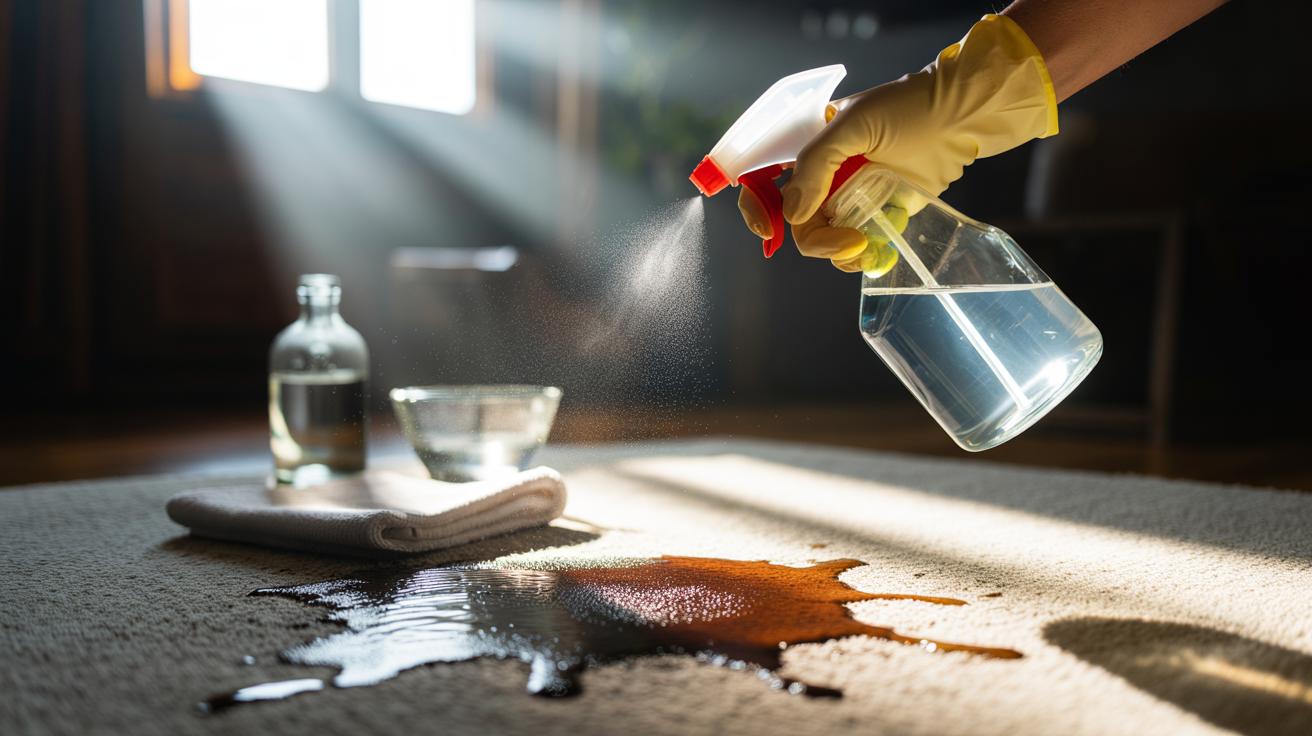
Apply your vinegar solution via spray or a damp cloth—never soak the carpet. Light, even coverage prevents backing from getting wet. Allow the solution to dwell as per the table. Agitate gently with a soft brush, working from the outside in to corral the stain. Blot again, rotating to clean sections of cloth until transfer fades. Rinse by misting with clean water and blotting repeatedly to remove residual acidity and loosened soil. Finish by stacking paper towels on the spot and weighting them with a book for 30 minutes to draw out moisture. Good drying stops wicking, the chief cause of phantom stains.
When Vinegar Shines—and When It Doesn’t
Use vinegar when stains are tannin-based, alkaline, or mineral-linked. It excels at coffee halos, wine blushes, cola, rust-tinged water marks, and the crunchy film left by overused shampoo. It is also handy after a DIY detergent job to neutralise residues, leaving fibres squeaky-clean rather than tacky. Think of acetic acid as a reset button for pH and mineral bonds. For odour from fresh pet accidents, vinegar helps counter ammonia but should be followed by a proper enzymatic cleaner to digest uric crystals.
Skip vinegar on oil, grease, tar (use solvent spotters first), on delicate wool with unstable dyes (test thoroughly), and on alkali-sensitive backings that might swell if overwet. Avoid marble or limestone thresholds near the carpet; acidic drips can etch stone. If a bright, synthetic dye has bled, acid won’t reverse it—call a pro. Likewise, deeply set protein stains respond better to enzyme treatments before any acid step. Right tool, right order, right result.
Fabric Safety, Odor, and Aftercare
Vinegar’s scent is temporary. As it dries, the volatile acetic acid dissipates, taking much of the odour with it. Speed this up by ventilating the room and running a fan across the treated area. If any tang lingers, a final rinse and blot session typically clears it. Residual smell usually signals residual solution—keep blotting. Protect underlay by controlling moisture; mist, don’t pour. For plush piles, groom fibres with a spoon in the original nap direction after drying to prevent a flattened look.
To prevent resoiling, finish with a light rinse and a thorough dry. If the stain hints at returning, apply a slightly stronger dilution (for instance, from 1:2 to 1:1), repeating the short dwell and blotting cycle. Regular maintenance matters too: frequent vacuuming removes gritty soil that can lock spills into fibres. For recurring pet spots, pair vinegar with an enzyme cleaner to tackle odour at the source. Store a premixed bottle for quick response, and keep white cloths handy. Fast action turns a crisis into a non-event.
Vinegar isn’t magic, but it’s close: a science-backed, budget-friendly way to release stains, rebalance carpets, and cut through the residues that make floors look tired. With the right dilution, deft blotting, and proper drying, acetic acid can lift dirt and discolouration in minutes while preserving fibres. You now know when to deploy it, when to hold back, and how to avoid the classic pitfalls. Ready to put the method to work on your next spot—or is there a stubborn stain you’d like decoded step by step?
Did you like it?4.6/5 (27)