In a nutshell
- ✅ 10-minute tea bag foot soak hydrates the stratum corneum and uses tannins to tighten skin, visibly smoothing dry, cracked heels fast.
- 🧪 The mechanism: plant polyphenol tannins provide mild astringent and antimicrobial effects; warm water loosens dead cells; finish with urea or lactic acid cream to seal moisture.
- 🦶 Method: brew 3–4 black tea bags in ~2L hot water, cool to warm, soak for 10 minutes, pat dry, moisturise, and wear cotton socks; repeat 2–3 times weekly.
- 🍵 Choices & tweaks: black tea = strongest astringency, green tea = gentler, herbal = minimal smoothing; optional add-ins include sea salt or a splash of apple cider vinegar.
- ⚠️ Safety first: avoid if cracks bleed or with diabetes/neuropathy without GP advice; watch for allergies; pair with emollients and gentle filing for realistic results over time.
It sounds like a hack your gran might swear by, but a warm tea bag foot soak has serious chemistry behind it. In ten minutes, it can make cracked heels look and feel smoother. The secret is in tannins, the naturally astringent compounds in black and green tea that tighten skin, tame odour, and curb bacteria. Done right, it’s fast, cheap, and surprisingly pampering. Think spa results from a kettle and a mug. For dry, scuffed heels after a long day, this simple soak can deliver visible softness before you’ve finished your cuppa. Here’s how it works—and how to do it safely and effectively at home.
Why Tea Works: The Science of Tannins
The hero here is tannins, a class of plant polyphenols that bind to proteins in the skin. That binding action creates a mild tightening effect. In practice, this gentle astringent squeeze smooths ragged edges, reduces superficial swelling, and makes rough heels feel less snaggy to the touch. The warm water helps hydrate the thick outer layer of the heel—the stratum corneum—while the tea’s slightly acidic pH can nudge loose dead cells to lift away more easily. Not magic, just clever chemistry and careful timing.
There’s more. Tannins also show modest antimicrobial activity, useful for feet that have lived in trainers all day. They can help with odour control and keep minor skin irritation calmer. In many cases, a 10-minute soak is enough to soften the surface and reduce the appearance of shallow cracks the same evening. Deeper fissures won’t vanish instantly, but the edges will feel smoother, reducing snagging on socks and tights. Follow with a nourishing moisturiser to lock in that hydration and create a protective film as the skin rebounds.
How to Do the 10-Minute Tea Bag Soak
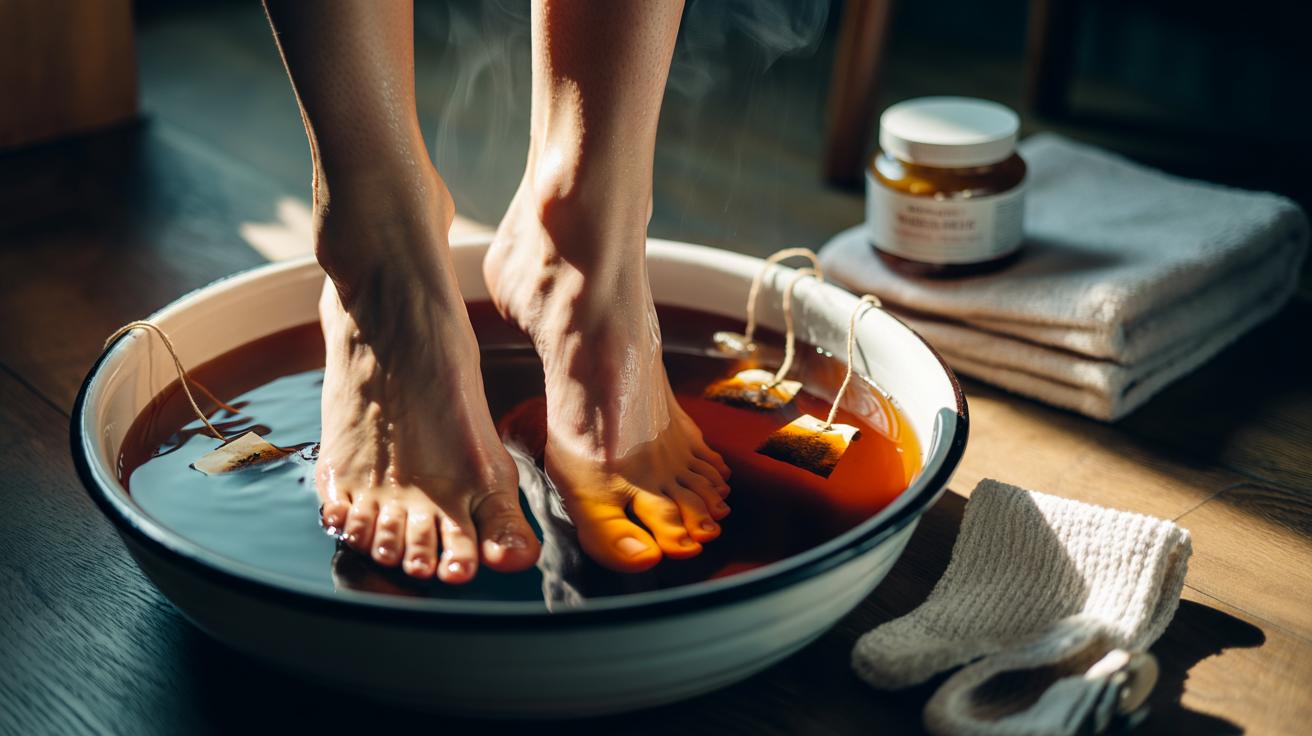
Boil a kettle. Add 3–4 ordinary black tea bags to a large bowl, then pour in about two litres of freshly boiled water. Steep for 5–7 minutes for a strong brew. Remove the bags and let it cool until comfortably warm. Never soak in water hot enough to redden or sting the skin. Place clean feet in the tea for ten minutes, keeping heels fully submerged. Gently rub heels together in the last minute to lift softened flakes without scraping.
Pat feet dry—don’t rub aggressively, which can create micro-tears. Now seal the softness: apply a dollop of urea or lactic acid foot cream to the heels. If you’re heading to bed, cotton socks help the cream absorb. Ten minutes is usually enough; longer soaks can over-swell skin and increase sensitivity. Repeat two to three evenings a week for maintenance, or daily for three to four days if heels are especially rough. If cracked areas are tender, keep the soak brief and moisturise generously afterwards.
Choosing the Right Tea and Simple Add-Ins
Most kitchens already have what you need. Standard black tea offers robust tannin levels and delivers the most pronounced astringency. Green tea is gentler but still effective, with added antioxidant bragging rights. Herbal infusions vary widely; many are fragrant but light on tannins. If you have sensitive skin, start with green tea for a milder introduction.
| Tea Type | Approx. Tannin Level | Best For | Notes |
|---|---|---|---|
| Black tea | High | Rapid smoothing | Strongest astringency; may lightly stain nails |
| Green tea | Moderate | Sensitive skin | Milder feel; pleasant scent |
| Herbal (e.g., chamomile) | Low | Relaxation | Soothing, but limited smoothing effect |
A pinch of sea salt can boost exfoliation without harsh scrubbing. A teaspoon of apple cider vinegar adds acidity for stubborn roughness—use sparingly to avoid irritation. If you’re prone to eczema or have broken skin, skip acids and fragrance. Always rinse bowls and tiles promptly; strong tea can mark grout. For a fragrance lift without fuss, drop in a spent lemon slice as the water cools. It’s indulgence, not expense.
Safety, Evidence, and Realistic Results
Let’s keep it honest. The tea bag soak is a practical, low-cost way to make heels look and feel better quickly, but it’s not a cure for deep fissures. If cracks bleed, if you have diabetes or neuropathy, or if you’re immunocompromised, seek advice from a GP or podiatrist before any home treatment. The science rests on well-documented astringent and antimicrobial properties of tannins, plus the hydrating effects of warm water. Clinical trials on tea for cracked heels are limited, yet the mechanism and real-world reports align.
Watch for allergies to plant extracts. If skin tingles sharply, goes red, or feels itchy, stop and rinse with cool water. Avoid essential oils if you’re sensitive; they add risk without improving the core effect. For ongoing care, pair the soak with nightly emollients containing urea (10–25%) or lactic acid, and tackle callus build-up weekly with a gentle file—never razor scraping. Consistency, not force, is what genuinely transforms heel skin over weeks. That said, as an emergency tidy-up before sandals, the tea trick earns its place.
Quick, frugal, and oddly luxurious: a teapot, a bowl, and ten minutes can reset tired heels before your next dash out the door. The tannin-powered squeeze smooths the surface, the warmth hydrates, and a smart moisturiser seals the deal for longer-lasting softness. Used thoughtfully, it’s an easy ritual to slot into an evening routine without fuss or faff. Will you brew a stronger black tea for a fast fix, or try a gentler green infusion to test the waters first? What tweaks—salt, vinegar, or just the basics—will you experiment with to find your perfect foot soak?
Did you like it?4.5/5 (22)