In a nutshell
- ✨ An overnight salt bath brightens cutlery; add aluminium foil for silver to trigger a gentle galvanic reaction that lifts tarnish while you sleep.
- 🔬 Salt boosts conductivity and bicarbonate of soda buffers the solution, helping reverse silver sulphide into metal without abrasion.
- 🛠️ Method: for silver/silver‑plated, warm water (60–70°C) + 2 tbsp salt + 2 tbsp bicarbonate per litre in a foil‑lined bowl, 6–8 hours; for stainless steel, no foil, weaker solution, 10–20 minutes only.
- ⚠️ Avoid soaking carbon steel, chef’s knives, hollow‑handled or delicate finishes (aluminium, pewter, PVD, wood/bone). Match the method to the metal to prevent pitting or dulling.
- 💡 Finish with a hot rinse, immediate microfibre dry, and quick buff to lock in brightness for weeks—aim for shine without compromise.
The trick sounds almost too easy: soak your tired spoons and forks in a warm salt bath, head to bed, and wake to a brighter drawer. Yet there’s real science behind the shine. Salt doesn’t simply scrub; it enables reactions that lift stains and tame tarnish. With the right set-up, a bowl, some aluminium foil, and common pantry staples, your cutlery can clean itself while you sleep. The key is knowing which metals respond beautifully and which demand caution. Done right, it’s low-cost, low-effort, and surprisingly effective. Done wrong, it can mark blades or dull finishes. Here’s how to get it right first time.
Why Salt Works on Overnight Tarnish
Salt—ordinary sodium chloride—boosts the conductivity of warm water, creating a friendly environment for tiny electrical exchanges. Pair that with aluminium foil and you’ve built a gentle galvanic reaction that helps reverse silver’s dark layer of silver sulphide. In plain English: the tarnish is chemically nudged back into gleaming metal, lifting without harsh abrasion. Add a spoon of bicarbonate of soda and you buffer the solution, softening water and loosening greasy films that fog the sheen. For silver or silver-plated cutlery, this is a quiet overnight marvel, trading elbow grease for chemistry while you sleep.
Reserve the aluminium-foil method for silver and silver‑plated pieces only. Stainless steel doesn’t tarnish in the same way, so the foil-assisted reaction brings little benefit and, in certain pairings, can encourage unwanted corrosion. For stainless, a very mild, short salt bath can help lift mineral haze, but time matters. Heat matters too. Opt for warm, not boiling, water to protect adhesives in hollow handles and to avoid warping. The headline principle is simple yet vital: match the method to the metal, and you get the shine without the risk.
Step-by-Step: The Safe Salt Bath Method
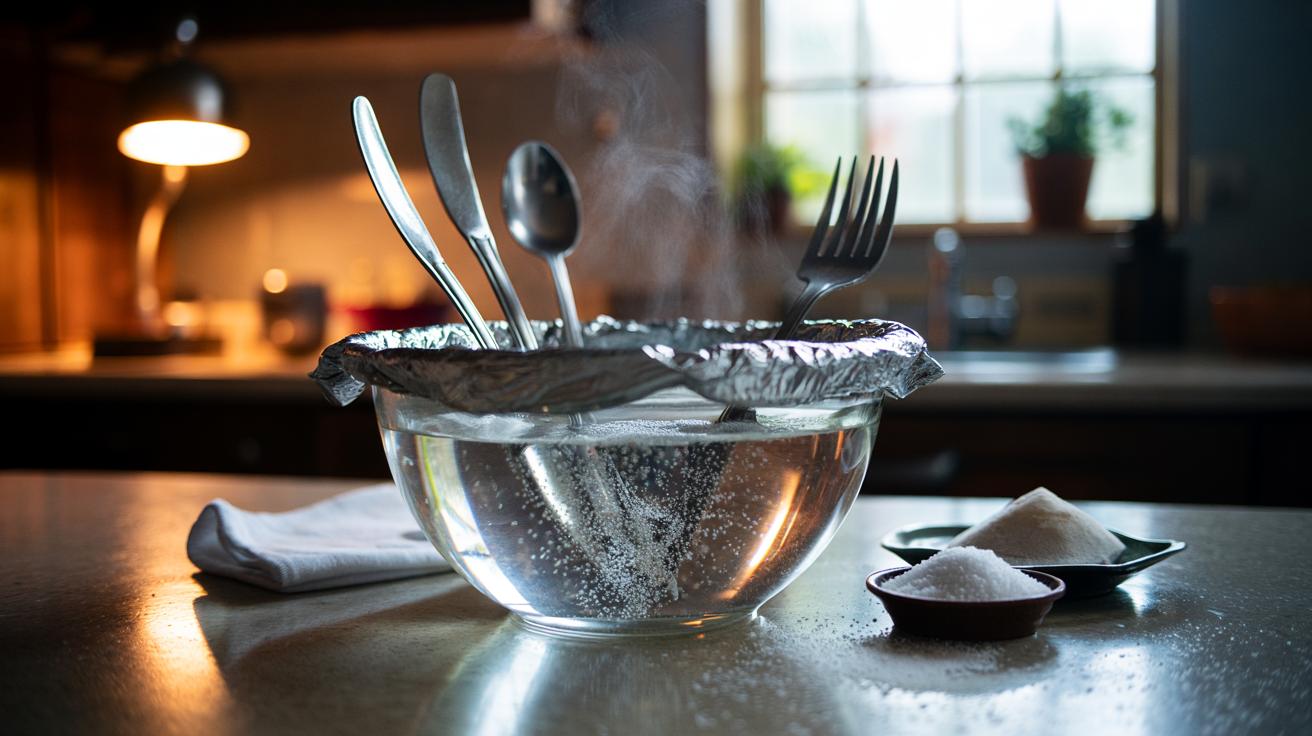
For silver and silver-plated pieces, line a ceramic or glass bowl with aluminium foil, shiny side up. Add 500 ml very warm water (about 60–70°C), 1 tablespoon table salt, and 1 tablespoon bicarbonate of soda. Stir to dissolve. Lay pieces so they touch the foil, fully submerged. Leave 6–8 hours or overnight. Rinse hot, dry immediately with a soft microfibre cloth, and buff. You’ll see the grey sulphide vanish with no scratching. Do not use this foil-assisted set-up for stainless steel. For stainless, use a gentle approach: 1 litre warm water with ½ teaspoon salt and 1 teaspoon bicarbonate, no foil, 10–20 minutes only, then rinse and dry thoroughly.
The measurements below keep things simple at the sink:
| Item/Metal | Bowl Liner | Salt per Litre | Bicarbonate per Litre | Soak Time | Notes |
|---|---|---|---|---|---|
| Silver / Silver‑Plated | Aluminium foil | 2 tbsp | 2 tbsp | 6–8 hours | Touching foil enables electrochemical action. |
| Stainless Steel | None | ½ tsp | 1 tsp | 10–20 minutes | Rinse and dry immediately to prevent marks. |
| Carbon Steel | None | — | — | Do not soak | Wipe only; prone to rust. |
Never leave knives or carbon‑steel items in a salt solution overnight. The edge can pit, and handles may loosen. If in doubt, keep the soak short, rinse thoroughly, and dry until squeaky—no beads, no damp seams.
What Metals Benefit—and Which to Avoid
Sterling silver and silver‑plated cutlery are prime candidates. The salt‑foil set-up specifically targets sulphide tarnish, sparing delicate patina while reigniting sparkle. It is particularly useful for intricately patterned forks where residue lurks in recesses, and for serving pieces too large for regular polish. Stainless steel, by contrast, gains little from chemistry and more from technique: a brief, very mild salt bath can free limescale haze, but the real finish comes from a fast, thorough dry and a light buff with a microfibre cloth.
Certain pieces are off the guest list. Avoid soaking carbon steel, high‑end chef’s knives, or hollow‑handled items where adhesives may soften. Skip anything with wooden, bone, or mother‑of‑pearl handles, and avoid black or coloured PVD finishes that can dull. Aluminium utensils can discolour in salty water, while pewter and nickel silver (a copper‑nickel‑zinc alloy) won’t benefit from the foil trick and may spot. Gold‑plated flatware prefers gentle handwashing with mild soap only. When in doubt, test a single spoon for 10 minutes and check the result before committing the full canteen. Your goal is simple: shine without compromise.
Clean cutlery changes how a table feels. That understated glint, the feel of a smooth tine or blade, says care without shouting. An overnight salt bath lets chemistry and time do the heavy lifting, saving polish and patience for when they’re truly needed. Keep the method metal‑smart—foil for silver, brief and foil‑free for stainless, no soak for carbon steel—and drying becomes your secret weapon. If you finish with a quick buff, you’ll lock in brightness for weeks. Ready to reclaim the sparkle in your drawer—one quiet bowl of warm water at a time—what piece will you try first tonight?
Did you like it?4.7/5 (29)