In a nutshell
- 🔥 Uses aluminium foil to boost heat conduction and trap steam, softening baked-on grease so residue wipes away easily in about ten minutes.
- 🧪 Simple 10-minute method: cover a water-filled tray with foil, heat at 200–220°C, then wipe warm surfaces; scrub racks with a foil ball dipped in soapy water.
- ⚠️ Key safety: do not line the oven floor with foil, avoid blocking vents, use minimal acid, respect catalytic/pyrolytic guidelines, and handle hot trays with gloves.
- ✨ Results and tweaks: expect 70–90% grime removal; follow with a bicarbonate of soda paste or a second steam cycle; gentle wiping protects enamel and glass.
- 🌱 Eco-smart habits: reuse the foil ball, swap vinegar for lemon, and run short maintenance steams after roasts to prevent build-up and reduce harsh-chemical use.
It sounds almost too simple: a roll of aluminium foil, a bit of heat, and ten minutes on the clock. Yet this quick, controlled burst of heat conduction can soften baked-on grease and carbon so effectively that wiping away residue becomes almost effortless. The trick is not to line the oven—never do that—but to use foil as a conductor and lid that traps steam in a safe container. In other words, you create a heat-and-moisture microclimate that targets grime. Short time, big impact. Done correctly, it’s gentle on enamel, fast for busy kitchens, and frugal enough to make harsh chemicals feel outdated.
Why Foil Accelerates Oven Cleaning
Aluminium foil is a superb thermal conductor. It spreads heat across its surface rapidly, creating a more uniform temperature where it contacts a pan or wraps a warm, damp pack. When you cover a shallow oven-safe tray of water with foil, you trap steam while reflecting radiant heat back down. That combination raises the humidity and the local temperature at the film of grime. Fats begin to loosen; sugars and proteins that have polymerised start to soften. The result is not magic but physics: heat and moisture reduce adhesion, so your sponge or cloth meets less resistance.
There’s also a practical upside: the foil lid localises the action. You don’t need to run a full self-clean cycle. You don’t blast the whole cavity with aggressive temperatures. Instead, you give stuck-on splatters a short, concentrated sauna. The foil’s stiffness helps, too. It seals better than a loose cover, so vapour doesn’t escape prematurely. And because foil is non-absorbent and inert at normal cooking temperatures, it doesn’t introduce scents or residues. Used judiciously, it’s a low-risk amplifier of heat and humidity—precisely what stubborn oven grime hates.
Crucially, foil’s strength is directional: it is most effective when it’s part of a closed system (a covered tray), or when formed into a soft ball for post-heat mechanical lift-off on racks taken out of the oven. It should not sit on the oven floor or mask vents. Keep that distinction in mind and you’ll harness foil’s physics without courting damage.
Ten-Minute Method: Step-by-Step
Here’s the streamlined routine that uses foil to melt away grime fast. You’ll need an oven-safe tray, 250–400 ml of water, a splash of white vinegar or lemon juice, a roll of aluminium foil, heatproof gloves, a microfibre cloth, and washing-up liquid. Do not line your oven floor with foil. You’ll cover the tray only.
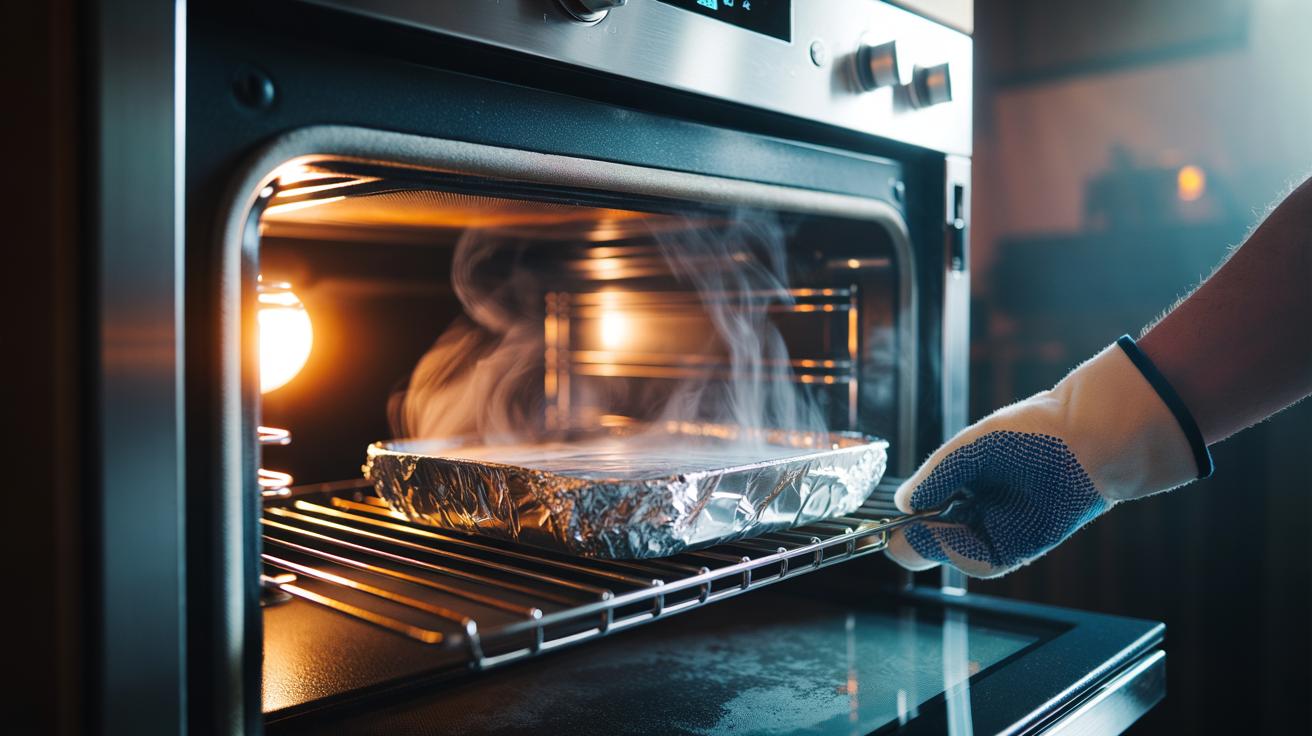
Pour the water into the tray and add 1–2 tablespoons of vinegar or lemon. Cover tightly with foil, crimping the edges to make a snug lid. Place the tray on the middle shelf. Preheat the oven to 200–220°C (fan 180–200°C). As the water steams beneath the foil, heat radiates back, building a warm, humid envelope that targets baked-on spills. After roughly ten minutes, switch off the oven. Open the door carefully, let the initial wave of steam roll away, then remove the tray with gloves.
While the cavity is still warm—never hot—wipe down the sides, base, and back panel with a cloth and a few drops of washing-up liquid. For racks, pull them out and scrub with a loosely crumpled foil ball dipped in soapy water. The softened residue detaches quickly. Dry everything with a clean cloth. If needed, repeat the ten-minute steam one more time for corners or glass. You’re using physics, not force, so resist heavy scraping that could score the enamel or glass.
| Step | Setting/Time | Tool |
|---|---|---|
| Steam-build cycle | 200–220°C, 10 min | Tray + foil lid |
| Wipe-down | 5–8 min | Cloth + mild detergent |
| Racks scrub | 5–10 min | Foil ball + soapy water |
What to Avoid and Safety Checks
Never line the base of your oven with foil. It can block airflow, concentrate heat, and mark or fuse to enamel. Keep foil away from heating elements and vents. Only the tray should be covered with foil, forming a lid; the oven interior remains unobstructed. If your appliance is gas, ensure the flame is not impeded. For fan ovens, maintain clearance so circulation isn’t compromised. Small step, big safety win.
Use minimal acid. A teaspoon or two of vinegar or lemon aids degreasing, but heavy acids can dull surfaces over time. If your oven has catalytic liners, avoid abrasive scrubbing; warm steam plus a soft cloth is sufficient. For pyrolytic models, stick to the manufacturer’s guidance and don’t combine this foil method with a high-temperature self-clean cycle. Switch off the oven before you reach in. Always handle the tray with heatproof gloves.
Spot-test the glass door before vigorous rubbing and avoid razor blades unless the brand explicitly allows them. If you’ve spilled sugar syrups or cheese that carbonised into a lacquer, consider two rounds of the ten-minute cycle. It’s safer than over-scrubbing. And if you smell anything odd—plastic, electrical—abort, cool down, and investigate. The goal is targeted, temporary heat and steam, not a marathon bake.
Results, Variations, and Eco-Friendly Tips
Expect a visible shift after the first pass: dull, brown films turn tacky; thick rings around splatters soften at the edges; glass de-fogs. In many cases, the post-heat wipe will remove 70–90% of everyday grime. For the rest, apply a thin bicarbonate of soda paste (bicarb + water), leave five minutes, and wipe. A second ten-minute steam seals the deal. Racks respond brilliantly to a foil-ball scrub because the rounded edges slide around bars without gouging chrome.
Try variations. Swap vinegar for a slice of lemon in the water if you prefer a fresher scent. Deglaze stubborn corners by laying a hot, damp microfibre cloth wrapped loosely in foil onto the spot for two minutes after the steam cycle; the foil traps heat against the stain. If you’re avoiding disposable materials, use the foil ball for multiple sessions—just rinse and dry it afterwards. Less waste, more value.
When should you escalate? If fat has polymerised into thick, shiny varnish, two foil-steam rounds plus a patient bicarb dwell are kinder to enamel than scouring pads. For glass, slow circles with a cloth and warm detergent outpace harsh blades. As maintenance, run a five-minute mini cycle after a roast—before residue hardens—so your big cleans stay quick. The philosophy here is simple: short, strategic heat beats long, punishing scrubs.
Used wisely, aluminium foil becomes a smart assistant rather than a hazard: it concentrates heat where you need it, fast, and partners with steam to loosen the worst of the mess in minutes. You save time, avoid harsh chemicals, and protect your oven’s finish with a process rooted in simple physics and careful handling. Next time a roast splatters or a pie bubbles over, will you reach for a foil-covered tray and run the ten-minute cycle—or adapt the method with bicarb and lemons to suit your kitchen’s rhythm?
Did you like it?4.6/5 (27)