In a nutshell
- 🔬 Salt as electrolyte: Sodium chloride boosts weak acids (vinegar/lemon) to dissolve iron oxides, making rust removal faster overnight.
- 🧪 How-to in brief: Mix 1 L white vinegar + 1–2 tbsp salt, submerge metal 6–12 hours; scrub, neutralise with bicarbonate, rinse, dry, and oil immediately.
- 🛠️ Alternatives: Use lemon + salt for gentle spot treatment, or opt for electrolysis for intricate shapes; choose based on rust severity and parts.
- ⚠️ Safety and pitfalls: Do not mix vinegar and bleach; avoid prolonged soaks and chloride on stainless/aluminium; residual brine will restart corrosion.
- 🛡️ Aftercare: Protect cleaned steel with light machine oil/beeswax, condition wood with linseed oil, and adopt prevention habits (dry storage, silica gel, quick post-use clean).
Salt is a paradox in the shed. It’s the corrosion culprit that stains spades orange — yet, wielded smartly, it can restore metal with quiet efficiency while you sleep. The trick is not salt alone, but sodium chloride as an electrolyte that turbocharges gentle acids and loosens iron oxides. You set the soak, switch off the light, and wake to tools that scrub clean with a fraction of the effort. Gardeners love simple fixes. This one costs pennies, fits into a late-evening routine, and turns a rusty eyesore back into a sharp, useful edge by morning. Here’s how the chemistry works, and how to do it safely.
How Sodium Chloride Actually Fights Rust
On its own, NaCl invites corrosion. In the right company, it accelerates removal. The magic is conductivity. Dissolved salt creates an electrolyte that lets weak acids, such as acetic acid (vinegar) or citric acid (lemon juice), reach and dissolve iron oxides more efficiently. Rust — primarily Fe₂O₃ and hydrated variants — breaks down into soluble iron salts that can be rinsed away. Chloride ions also help disrupt the tightly bound oxide layer, so your brush or scouring pad finishes the job faster. Salt does not “reverse” rust, but it helps the chemistry that removes it work quickly and evenly.
Texture matters, too. Fine salt crystals act as a mild abrasive, improving mechanical lift-off without gouging steel. Pair that with the chelating action of citrus or the dissolving power of vinegar and you get overnight performance with minimal metal loss. Some tinkerers add a piece of sacrificial steel to the bath to bias reactions toward the scrap rather than the tool. That’s optional. The non-negotiables are control and timing: limit immersion, rinse thoroughly, and protect the fresh metal immediately.
Step-by-Step Overnight Method for Garden Tools
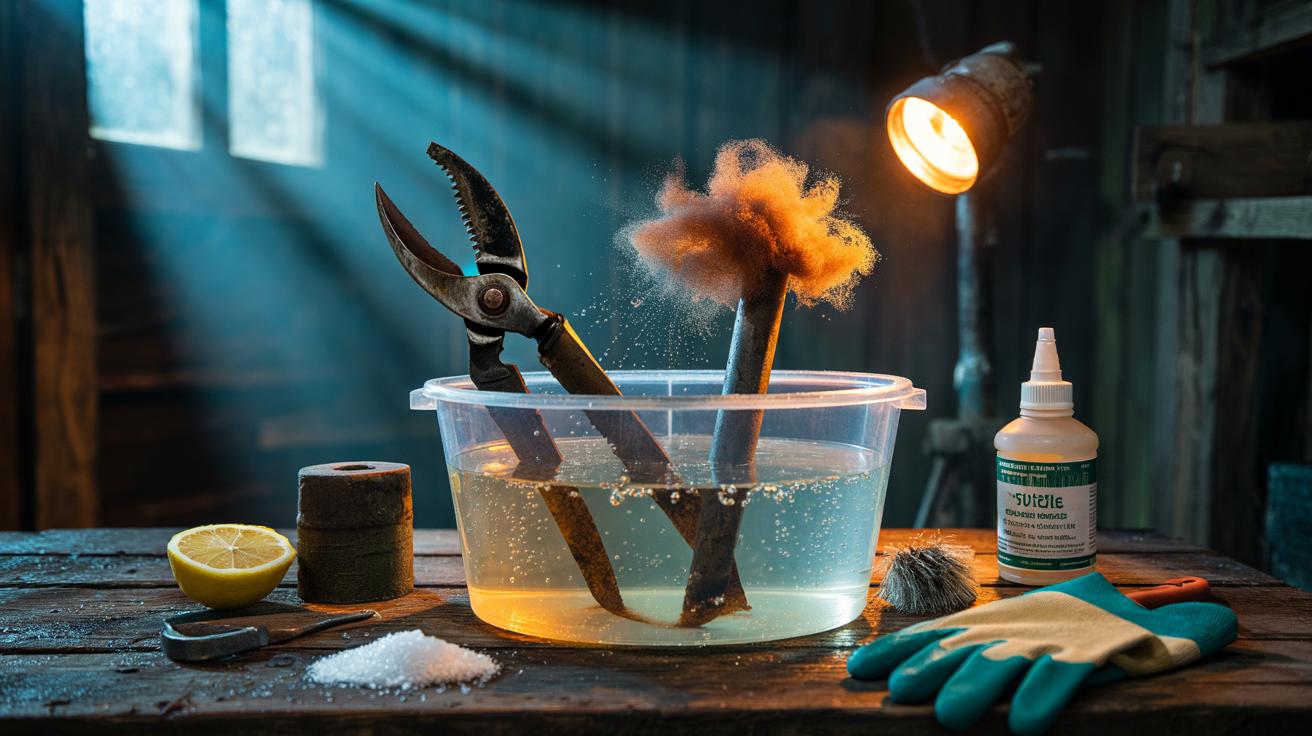
First, prepare the tool. Knock off soil with a stiff brush. Tape over wooden handles if needed to keep them dry. Degrease the metal lightly so the solution can touch the rust. Then mix your bath: 1 litre of white vinegar with 1–2 tablespoons of table salt in a plastic tub deep enough to submerge only the metal. For a gentler paste approach, sprinkle salt over the rust and squeeze in fresh lemon juice until it’s wet but not runny.
Submerge for 6–12 hours (blades and ferrules only), or press the lemon–salt paste onto spots and leave overnight. Check once at the halfway mark; if bubbling is brisk, you’re on track. In the morning, scrub with a wire brush or scouring pad to lift the now-fragile oxide. Neutralise the acid with a bicarbonate-of-soda rinse, then rinse with clean water, dry thoroughly, and oil at once. A hairdryer or a few minutes in a barely warm oven helps chase hidden moisture from joints.
Finish with protection. Wipe on light machine oil or camellia oil. For pruners, reassemble, sharpen, and add a drop to pivots. Do not leave any salt solution on the tool after treatment — residual brine will restart corrosion.
When the Salt Trick Backfires—and How to Stay Safe
Salt without acid is simply brine, and brine accelerates corrosion. Leave a salty tool wet and you invite pitting, especially on stainless steel, which is vulnerable to chloride-induced attack where its chromium oxide film is compromised. Avoid salt-based treatments on aluminium or zinc-plated parts; both dislike chlorides. Keep plastic, paint, and wood out of the bath to prevent swelling or staining. If a tool has a delicate coating, use the lemon–salt paste on the rust only, not the whole surface.
Work in a ventilated space, wear nitrile gloves, and eye protection. Never mix vinegar with bleach — it releases chlorine gas. Keep your soak container labelled and away from children or pets. Don’t exceed overnight; extended immersion can undercut sound metal. After use, dilute the spent solution and dispose down the drain with plenty of water unless local rules say otherwise. Dry the tub and store it clean. The safety headline is simple: control contact time, neutralise, rinse, dry, protect.
Lemon vs Vinegar vs Electrolysis: Choosing the Right Aid
Different tools, different tolerances. Lemon and salt give a slower, more controllable action with a pleasant smell — great for spot rust and plated steel. Vinegar and salt work faster, ideal for heavily oxidised spades or hoes. Electrolysis (using washing soda and DC current) is brilliant for intricate shapes and preserving detail, though it needs supervision and kit. Use the table below to match the method to the job at hand.
| Method | Recipe | Best For | Notes |
|---|---|---|---|
| Lemon + Salt | Salted surface, citric juice paste | Light rust, plated parts | Gentle, good control; slower action |
| Vinegar + Salt | 1 L vinegar + 1–2 tbsp salt | Moderate–heavy rust on carbon steel | Fast; must neutralise and oil immediately |
| Electrolysis | Water + washing soda, DC power | Complex shapes, preserving patina | Not overnight; requires safe setup |
Post-Treatment Protection That Lasts
Freshly cleaned steel is hungry for oxygen. Feed it oil, not air. Wipe a thin coat of light machine oil, camellia oil, or beeswax-based paste across the metal. For wooden handles, sand smooth and seal with boiled linseed oil. Hang tools so edges stay dry, add silica gel packs to drawers, and keep the shed ventilated. Always store tools dry — even spotless steel will flash-rust in damp corners.
Build a habit loop: a quick brush after use, a spritz of oil, and a monthly check for orange blooms. Consider VCI paper for drawers and a bucket of dry sand mixed with a splash of oil for spades — stab, wipe, done. Sharpen edges to close micro-pits where moisture lingers. A minute now prevents an hour later. The overnight salt trick is brilliant, but prevention is quieter, cleaner, and cheaper in the long run.
The overnight salt method turns chemistry into convenience, transforming neglected blades while you sleep and costing less than a cup of coffee. Used with care — controlled times, thorough neutralising, proper drying, immediate oiling — it’s a reliable rescue for most garden tools. Keep it targeted, keep it safe, and keep it occasional. Then let preventative habits carry the load week by week. Ready to set up a simple rust-rescue station in your shed, or will you try a lemon–salt paste first and compare the results?
Did you like it?4.5/5 (24)