In a nutshell
- 🍚 A simple pre-soak hydrates grains and reduces surface starch, delivering fluffy, separate rice every time.
- 🧪 The texture win is chemical: balanced moisture curbs starch slurry; long-grain basmati’s higher amylose separates easily, while jasmine’s amylopectin still benefits from a short soak.
- ⏱️ Method that works: thorough rinse, soak (15–30 min white; 45–60 min brown), drain, cook with a reduced 1:1ish water ratio, low heat, no stirring, 10‑minute rest.
- 📊 Key times and ratios: basmati 20–30 min, 1:1–1.1:1; jasmine 10–20 min, 1:1; short‑grain 20–30 min, 1.05–1.1:1; brown 45–60 min, 1.4–1.5:1; manage steam with a tea towel under the lid if needed.
- 🔧 Troubleshooting: avoid over‑soaking, excess water, lid‑lifting, and high heat; rescue wet rice by oven‑drying at 120°C, or use a tea‑towel rest; for no‑soak days, parboil then steam.
Britain loves rice, but too many home cooks still serve bowls that clump like wet cement. The fix is neither fancy nor costly. It’s time. A simple pre-soak turns erratic grains into fluffy, fragrant mouthfuls that separate elegantly on the fork. Soaking sounds timid, almost old-fashioned, yet it addresses the root causes of stickiness—surface starch, uneven hydration, and heat shock. Treat this as a small act of kitchen patience with big dividends. Soaked rice cooks evenly, steams gently, and releases cleanly. Whether you favour basmati for biryani or jasmine for weeknight stir-fries, the secret is the same: give the grains a bath before the boil.
Why Soaking Prevents Clumping
Rice isn’t sticky by fate; it’s sticky because of surface starch and mismatched moisture inside each grain. Dry rice placed straight in hot water sheds a cloudy starch slurry that glues grains together as it gelatinises. A preliminary soak hydrates the outer layer, easing microscopic fissures closed and letting water penetrate the core. When heat arrives, the internal moisture is balanced, so gelatinisation happens evenly rather than erupting on the surface. This balance is what keeps grains distinct. It’s quiet chemistry: reduce free starch, lower friction, and align the cooking energy where it belongs—inside, not smeared between grains.
Different varieties respond in their own way. Long-grain rice such as basmati contains more amylose, which separates beautifully once surface starch is tamed; jasmine has higher amylopectin, so even a short soak cuts gumminess without dulling its aroma. With brown rice, soaking softens bran and trims cook time. Technically, you’re managing water migration and the gelatinisation window. Practically, you’re preventing clag. Soak first, then cook with slightly less water. That small shift transforms texture from heavy and damp to light, feathery, and reliably fluffy.
How to Soak and Cook for Fluffy Grains
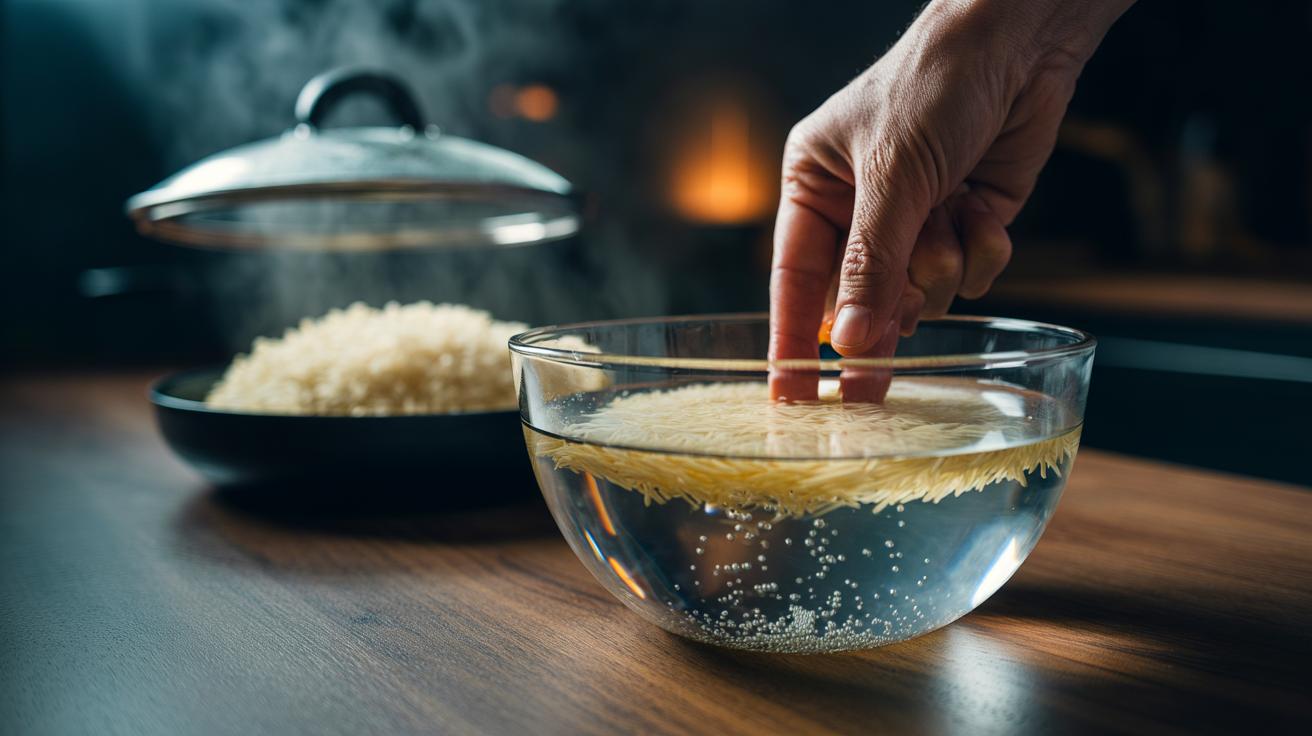
Start with a vigorous rinse. Swirl the rice under cold water until it runs mostly clear—this removes loose powdery starch. Now soak in fresh, cool water. Long-grain white rice enjoys 15–30 minutes; brown rice benefits from 45–60. Drain thoroughly. The soak primes hydration, so compensate by reducing cooking water. For basmati or jasmine, aim roughly for a 1:1 ratio by volume after soaking (adjust to 1.1:1 if your pans vent steam). Too much water is the fastest route to clumping.
On the hob, choose a snug pot with a tight lid. Add a pinch of salt, bring to a gentle simmer, then drop to the lowest heat. Don’t stir. Let the heat creep through the grains rather than churn them. When the water is absorbed—typically 10–12 minutes for soaked long-grain—turn off the flame. Keep the lid on and rest for 10 minutes. This rest is non-negotiable: steam redistributes, firming the structure for clean separation.
Finish with a delicate fluff using a fork or paddle. Lift and turn; don’t mash. If using a rice cooker, the same principles apply—rinse, soak, drain, then use slightly less water than the machine’s unsoaked marks suggest. Restraint with water and heat delivers airy grains every time.
Soak Times and Water Ratios by Rice Type
Timing and ratios vary with the grain. Treat the numbers below as a confident starting point, then tweak for your pan, heat, and preference. The goal is consistent hydration before cooking, followed by controlled steam. Measure carefully, then keep notes for your kitchen conditions. Precision turns this from a trick into a habit.
| Rice Type | Rinse? | Soak Time | Water Ratio (after soak) | Notes |
|---|---|---|---|---|
| Basmati (white) | Yes | 20–30 mins | 1:1 to 1.1:1 | Enhances length and separation |
| Jasmine | Yes, gently | 10–20 mins | 1:1 | Short soak preserves fragrance |
| Japanese short-grain | Yes, until clear | 20–30 mins | 1.05:1 to 1.1:1 | For stickier style, use 1.15:1 |
| Brown long-grain | Yes | 45–60 mins | 1.4:1 to 1.5:1 | Soak softens bran, speeds cooking |
| Wild or blends | Rinse | 60 mins | 2:1 | Requires longer, steady steam |
For a practical benchmark: 200g soaked basmati typically needs about 250ml water on a low flame in a tight pot. If your lid leaks steam, lay a clean tea towel under it, folding the corners up to avoid the flame. This captures vapour and evens out the cook. Steam management is as vital as soaking, ensuring distinct, buoyant grains without wet patches or chalky cores.
Common Pitfalls and Science-Backed Fixes
Over-soaking turns grains flabby and lowers the cooking threshold, leading to mush. Respect the clock. Using too much water? You’ll dissolve starch into a sticky broth that sets into clumps. Stirring during simmering scuffs grains and releases more starch—resist the urge. Lifting the lid vents essential steam, so leave it alone until resting time. Minimal interference equals maximum fluff. High heat also sabotages structure by boiling the outside to glue before the centre catches up.
Need rescue plans? If rice finishes wet, spread it on a tray and oven-dry at 120°C for 5–10 minutes, then gently fluff. If it’s damp only at the base, turn off the heat, place a tea towel under the lid, and rest 10 more minutes. For those who forgot to soak, add a two-stage approach: rinse thoroughly, then parboil for 3 minutes, drain, and finish by steaming with a tighter ratio. Absorption methods love control; small corrections go a long way. Remove free starch and manage steam, and clumps simply don’t form.
Soaking rice is the quiet ritual that pays you back in texture, aroma, and timing. A rinse clears loose starch; a measured soak hydrates the grain; careful heat and a lid-led rest do the rest. The method is repeatable, weeknight-friendly, and surprisingly forgiving once you learn your pot and flame. Think of it as a short investment for guaranteed fluff. Ready to trade sticky spoons for airy, distinct grains—what variety will you test first, and how will you tune the soak to suit your kitchen?
Did you like it?4.4/5 (27)