In a nutshell
- 🍵 Use tea bags to conceal light scratches on wood in minutes; tannins tint exposed fibres and subtly swell them for a cleaner blend.
- ✨ Follow the two-minute method: warm, damp black tea bag; dab along the grain; blot, assess, repeat once; then buff and optionally seal.
- 🧪 Success depends on finish and depth: it works best where scratches breach the coating; if colour beads, the finish is intact and tea won’t take.
- 🛠️ Match brew to wood: weaker tea for pale woods, stronger black for dark; always patch-test and avoid flavoured blends that leave residue.
- 🌱 For long-term care, use light wax or oil after tinting; this eco-friendly fix avoids solvents and costs pennies, but won’t fill deep gouges.
There’s a quietly brilliant home fix hiding in your kitchen drawer. Tea bags, rich in natural tannins, can disguise light scratches on wooden furniture in minutes, restoring warmth and depth without harsh chemicals or expensive kits. The process is clean, quick, and oddly satisfying. A warmed, damp tea bag delivers colour and a touch of fibre swell, softening the edge of a scuff so it blends into the grain. It’s a two-minute rescue for tired tabletops, chair legs, and skirting boards. Not a miracle cure for gouges, but a savvy refresh that buys time, preserves character, and lets you keep your favourite pieces on show.
Why Tea Works on Wood
Wood already contains tannins, the same naturally occurring polyphenols that give black tea its bite and red wine its grip. When a surface scratch exposes paler fibres beneath an aged finish, the contrast screams. Tea’s tannins deliver gentle, controllable colour that pulls that fresh line back into the surrounding patina. It’s camouflage, not carpentry. The moisture does a second job: it subtly swells the broken fibres, helping the scratch edge sit flatter. Heat accelerates this micro-swelling, so a warm bag works better than a cold soak. You’re not painting; you’re encouraging the wood to meet the eye halfway.
Think of it as a targeted stain wash, on cue. Black tea gives the boldest tint; oolong, green, or even rooibos offer softer tones for honeyed woods. Crucially, the method excels where the scratch has breached the finish. If the coating is intact, colour has nowhere to grip. A quick patch test tells the story. When it grabs, it blends; when it beads, it won’t. Either way, you’ve learned something about your finish without risking a patchy mess.
Step-by-Step: The Two-Minute Tea Bag Fix
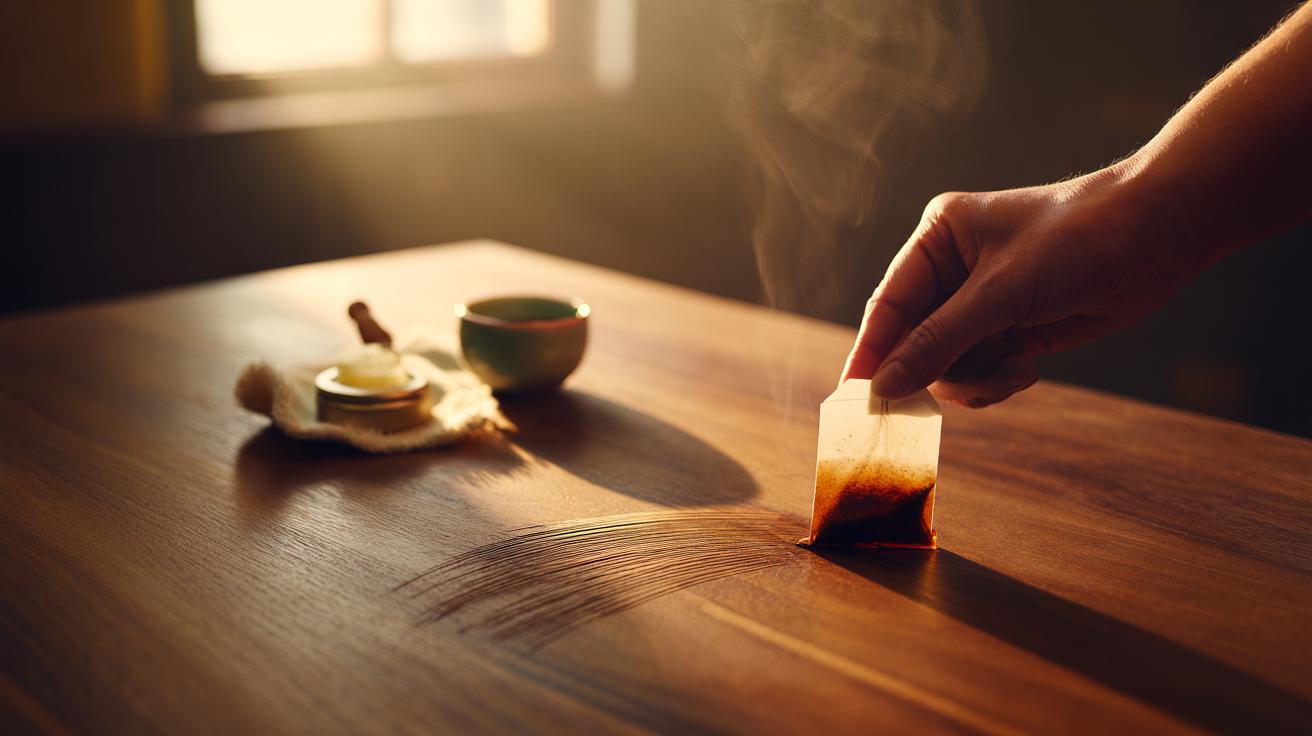
Clock starts now. Flick on the kettle. While it heats, dust the scratched area and wipe with a slightly damp, lint-free cloth to lift grime that would block colour. Pour a splash of hot water into a cup and dunk a plain black tea bag for 60–90 seconds to prime the tannins. Squeeze gently. You want warmth and depth, not drips. Use minimal moisture, maximum control. Press the bag lightly along the scratch, moving with the grain, never across. Count to twenty. Blot with a dry cloth. Assess. Darker? Stop. Still pale? Repeat once.
The visual magic arrives fast because you’re tinting raw fibres, not trying to stain a sealed varnish. On oil or wax finishes, the tea often sits just long enough to bite, then buffs in beautifully. On polyurethane or lacquer, success depends on whether the scratch pierced the coating. Keep your passes brief to avoid tide marks. When you’re happy, burnish with a soft cloth. For durability, add a fingertip of clear paste wax or a dab of matching furniture oil once dry. That seals the colour and restores low sheen. Two minutes, tidy result, no drama.
Choosing the Right Brew for Your Wood
Match the brew to the timber and the tone you’re chasing. Pale ash needs a lighter hand than smoked oak. As a rule, darker woods welcome stronger tea; lighter woods prefer nuance. Always test in an inconspicuous corner before touching the main surface. You’re aiming for harmony, not an obvious brown patch. The warmth of the water matters, too: warm, not boiling, keeps control. If a second pass feels risky, dilute—dip the bag again in fresh water for a gentler wash. And never use flavoured or sweetened tea; sugars can leave tack and attract dirt.
| Wood Tone | Suggested Tea | Brew Strength (mins) | Application Time (secs) | Notes |
|---|---|---|---|---|
| Light (pine, ash) | Green or weak black | 0.5–1 | 10–20 | Build slowly; avoid overshoot |
| Mid (oak, beech) | Standard black | 1–3 | 20–30 | Two light passes often best |
| Dark (walnut, mahogany) | Strong black | 3–5 | 30–45 | Buff well; seal with wax |
| Red-toned (cherry) | Rooibos/oolong blend | 1–2 | 15–25 | Warmer hue, softer contrast |
A final word on chemistry: tea’s mild acidity helps the stain take, but it’s gentle on finishes when used sparingly. If you spot any haloing, immediately feather the edges with a damp cloth, then dry. Control beats enthusiasm. And if your piece has been recently polished with silicone sprays, clean first with a drop of mild soap in water; silicones repel colour like rain on waxed jackets.
Long-Term Care, Limits, and Eco Credentials
This trick shines as part of regular care, not a once-a-decade rescue. Dust weekly with a soft cloth, then every few months feed the surface with a whisper of microcrystalline wax or a matching oil. That protective layer softens future scuffs and keeps tannin touch-ups fast and predictable. Deep gouges, missing fibres, or dents need filler, steaming, or professional refinishing. Tea won’t rebuild wood; it will, however, make honest wear look intentional. Heat rings and water marks? Different problem—use a gentle heat-and-cloth method, then consider a tea tint only if the ring reveals pale wood.
Compatibility matters. Varnished tables respond only where the scratch breaks the film. Oiled and waxed furniture is more forgiving, since the colour can mingle with the finish. Avoid soaking end grain; it drinks fast and can darken too far. And yes, this is a green fix: no solvents, no new plastic, and the bag goes straight on the compost. Keep flavoured blends for the mug, not the mahogany. The cost is pennies, the kit fits in a pocket, and the result—when done with restraint—looks like you never lifted a finger.
Old furniture tells stories; your job is to let the wood speak without shouting about every scrape. With tannin-rich tea, a warm bag, and a steady hand, you can soften scratches in under two minutes and keep beloved pieces in circulation, not in storage. It’s quick. It’s reversible. It respects the original finish while taming the harshness of fresh damage. Small fixes, big difference. Ready to put the kettle on and try a discreet patch test on that nagging scratch, or will you reach for a wax stick first—what’s your plan for bringing your wood back to life?
Did you like it?4.4/5 (29)