In a nutshell
- 🕒 Use lemon zest to purge microwave odours in 5 minutes as aromatic oils ride steam, coat surfaces, and neutralise smells rather than mask them.
- 🔬 Chemistry: d-limonene and citral dissolve hydrophobic odour molecules; steam softens greasy films, and a warm wipe removes the odour-holding matrix.
- ⚙️ Method: zest + 250–300 ml water, heat 3–5 minutes, 2-minute stand, then wipe; use a wide microwave-safe bowl and avoid sealed vessels for safety.
- 🍊 Alternatives: orange peel for fatty, curry smells; lime zest for fishy notes; add bicarbonate for burnt popcorn; go lighter if fragrance-sensitive.
- 🧽 Outcome: a clean, neutral cavity without harsh chemicals; for stubborn residues, repeat the 5-minute method or finish with a brief vinegar-steam rinse.
Open the microwave after reheating last night’s curry and you’re often greeted by a stale fog of spices. There’s a faster fix than scrubbing: lemon zest. In five minutes, the peel’s aromatic oils flood the cavity, riding steam, clinging to surfaces, and dislodging stubborn residues. It’s simple, cheap, and quietly scientific. In a short cycle, citrus volatiles neutralise odours rather than just masking them. They break down smelly molecules, loosen grease films that hold odours, and leave a clean, bright note behind. Here’s how the trick works, why it’s surprisingly effective, and when to tweak the method for tough smells like fish, garlic, or burnt popcorn.
Why Lemon Zest Works in the Microwave
The power isn’t in the juice alone; it’s in the peel. Lemon zest is loaded with limonene, citral, and other terpenes—volatile compounds that readily vaporise under heat. In a microwave, water heats rapidly and creates steam that lifts microscopic droplets of these oils, dispersing them throughout the cavity. This mist coats walls, the turntable, and the door mesh, where odours typically linger. Odour molecules prefer to sit in thin layers of grease, so the warm steam softens those films while citrus oils penetrate, displacing and solubilising the smells.
Another advantage is speed. Unlike slow-diffusing air fresheners, the microwave is a confined box. Volatiles accumulate quickly, hit every corner, and get to work. The result is a double action: physical removal when you wipe the softened residue and chemical interaction between terpenes and odour compounds. The leftover lemon note is light, clean, and short-lived, so your oven smells neutral—ready for porridge, not perfumery.
Five-Minute Method: A Quick, Safe Routine
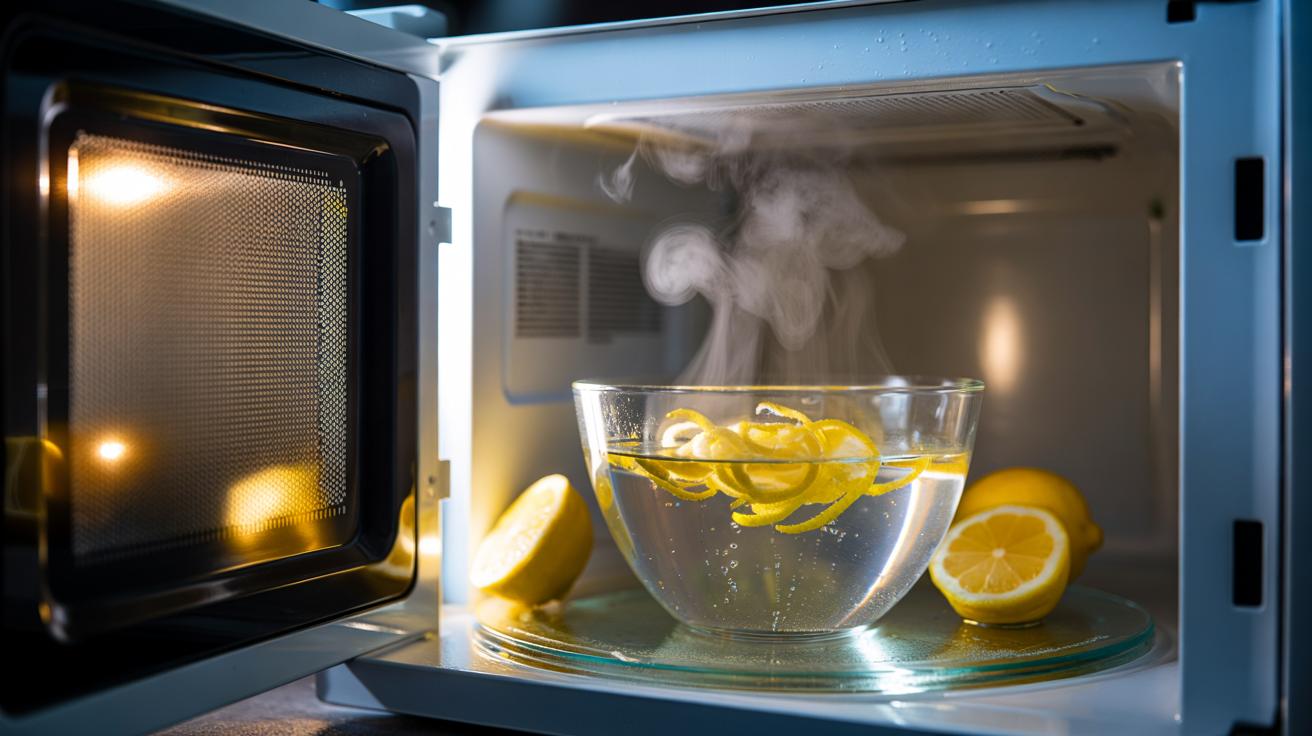
Grate the zest of half a lemon into a microwave-safe bowl and add 250–300 ml of water. Drop in the squeezed lemon shell if you like more fragrance. Place the bowl in the centre. Heat on high for 3–5 minutes, depending on wattage, until you see vigorous steaming. Let it stand with the door closed for two additional minutes. That pause matters: it saturates the cavity with aromatic oils and keeps the steam working on residue.
Open carefully to avoid hot vapour. Wipe all interior surfaces with a soft cloth while they’re still warm; the loosened film comes away easily. A second quick pass with a dry towel prevents streaks. If the smell was intense—fish, bacon, or burnt sugar—repeat with fresh zest and water. Safety notes: always use a wide, microwave-safe container to minimise superheating; avoid sealed vessels; don’t run the oven dry. Five minutes is enough for most cases, and the process leaves no harsh chemical trace, just a clean cabinet.
The Chemistry of Citrus Oils and Odour Neutralisation
What’s actually happening on a molecular level? Lemon oil’s dominant component, d-limonene, is nonpolar and hydrophobic. Many pungent kitchen smells—sulfur notes from cabbage or fish, nitrogen-bearing compounds from burnt foods, and oxidised fats—are also hydrophobic. Like dissolves like: limonene and companions (citral, linalool) interact with these odour molecules, helping lift them from surfaces into the wipeable film. Some terpenes also participate in light oxidative reactions that blunt sharp, sulfurous edges.
Steam is the unsung hero. It softens congealed grease that traps smells, distributes microscopic oil droplets, and raises temperature enough to accelerate diffusion. The confined microwave environment means rapid saturation, so contact time is short yet effective. Compared with vinegar or bicarbonate, citrus oils add a genuine neutralising mechanism alongside a pleasant top note. That’s why the space smells clean rather than “vinegary.” When you wipe after the cycle, you’re not just spreading perfume—you’re removing the smell-bearing matrix itself, leaving fewer places for odours to re-emerge.
Alternatives and When to Use Them
Lemon isn’t the only hero. Orange peel offers more limonene for heavy, fatty odours, while lime’s sharper citral profile tackles fishy notes. For scorched popcorn, pair citrus with a spoon of bicarbonate in the bowl to mop up acidic byproducts. Choose the aromatic profile to match the problem. If residue is visible or sticky, add a drop of neutral washing-up liquid to the bowl; the surfactant helps emulsify loosened grease when you wipe, yet the citrus scent keeps things pleasant. Sensitive to fragrance? Use zest sparingly and ventilate after the cycle; the oils work even at low levels because contact, not intensity, does the heavy lifting.
| Peel/Oil | Main Compounds | Best For | Notes |
|---|---|---|---|
| Lemon zest | Limonene, citral | General stale odours, garlic | Balanced, clean finish |
| Orange peel | High limonene | Bacon, curry, oily films | Richer aroma, strong degreasing |
| Lime zest | Citral, limonene | Fish, cabbage, egg | Sharper top note |
If a burnt smell persists, do one citrus cycle, then a short vinegar-steam rinse to strip any remaining film, and finish with a dry wipe. Two passes beat one long blast.
In practice, the “lemon-in-five” routine slots neatly into daily life: quick, safe, low-cost, and effective. It neutralises odours, loosens grime, and leaves the cavity ready for the next meal without a chemical haze. Steam delivers the oils, the oils disarm the smells, and your wipe removes the lot. Keep a jar of dried zest as backup and you’ll never be stuck. Curious to test the science in your own kitchen—will lemon, orange, or lime win your microwave odour showdown, and which pairing conquers your toughest smells fastest?
Did you like it?4.6/5 (26)