In a nutshell
- ✨ A quick lemon scrub revives dull stainless steel instantly, lifting tarnish, limescale, greasy film, and rainbow detergent residues for a streak-free shine with minimal effort.
- 🧪 The science: citric acid chelates iron ions, dissolves calcium carbonate scale, and helps rebuild the chromium oxide passive layer, while lemon oils (limonene) cut grease and pulp adds gentle micro-abrasion.
- 🧼 Method that works: rinse, halve a lemon, add a pinch of salt, scrub along the grain for 30–90 seconds, brief dwell, then warm rinse and immediate microfibre dry; for batches, use 1 tsp citric acid in 250 ml warm water.
- ⚠️ Smart care: avoid mixing acids with bleach, don’t use on silver-plated items, limit soaks for knives, and rinse and dry fully; in hard-water areas, finish with a distilled-water rinse to prevent spotting.
- ✅ Results and value: fast, non-toxic, low-waste, and budget-friendly; typical timings—limescale 30–60s, tea-stain 1–2 min, rainbow film 1–3 min—restore a bright, durable finish.
There’s a simple kitchen trick that makes tired cutlery gleam again, and it doesn’t involve harsh polishes or long soaks. A quick lemon scrub leverages the natural cleaning power of citric acid to cut through tarnish, limescale, and greasy film, restoring that mirror-like sparkle you remember from day one. In most cases, the turnaround is so fast you’ll see results before the kettle boils. It’s frugal, aromatic, and refreshingly low-tech. Better still, the method is gentle on steel and kinder to the environment than ammonia-laced alternatives. Here’s how the chemistry works—and the practical steps that make a dull knife or spoon shine like new.
Why Stainless Steel Looks Tired
Despite the name, stainless steel isn’t invincible. It stays bright thanks to an ultra-thin, self-healing chromium oxide film that forms on the surface. Over time, that passive layer can be masked by dishwasher detergent residues, dishwasher heat tint, hard-water limescale, and microscopic grease that clings after heavy use. Add to that the scuffs from cutlery baskets and the micro-scratches that scatter light, and even high-grade steel begins to look flat and lifeless. What you’re seeing is usually buildup, not deep damage.
The villains vary. Hard water leaves chalky specks and a cloudy veil. Dishwashers can deposit a rainbow-like film or tea-stain hues where free iron momentarily dominates the surface. Acidic foods and salt can create spots if items are left wet. None of this is permanent on quality stainless steel, but it does require the right approach. Enter citric acid, which strips away the interfering layer without gouging the metal. Pair that with mild, controlled micro-abrasion from the lemon’s pulp and a pinch of salt, and you recover the crisp reflectivity that signals true cleanliness.
The Science: Citric Acid vs Tarnish
Citric acid is a mild, food-safe acid that chelates metal ions and dissolves mineral scale. In practice, it performs three jobs at once. First, it reduces surface pH, nudging insoluble oxides toward soluble forms. Second, it binds free iron ions, helping re-establish a cleaner, chromium-rich passive film. Third, it reacts with calcium carbonate deposits from hard water, fizzing them away without the scratch risk of heavy scouring. Lemon also brings aromatic oils—think limonene—which cut through greasy films. That’s why a lemon rub can outpace a generic detergent on dull stainless in seconds.
| Problem | What You See | Lemon/Citric Action | Typical Time |
|---|---|---|---|
| Limescale film | Cloudy veil, chalk specks | Acid dissolves carbonates | 30–60 seconds |
| Light tarnish/tea-stain | Yellow-brown cast | Chelation of iron oxides | 1–2 minutes |
| Greasy residue | Smears, dull sheen | Limonene degreases; pulp abrades | Under 1 minute |
| Rainbow film | Iridescent streaks | pH shift clears detergent film | 1–3 minutes |
Industrial passivation often uses citric solutions to decontaminate stainless steel. Your lemon is the home-scale cousin. The acid clears the interference layer; water rinsing and swift drying allow the passive layer to reform. Result: a stable, bright finish without aggressive abrasives.
Step-by-Step Lemon Scrub Method That Works
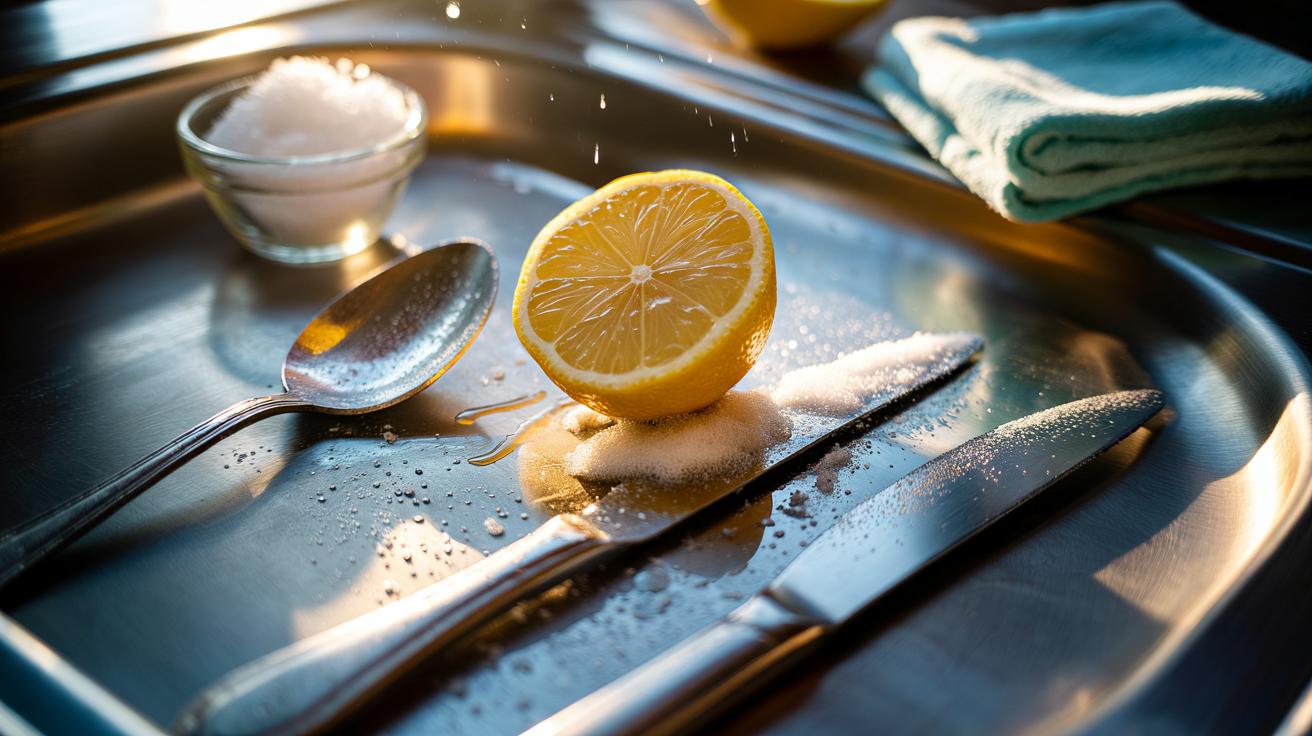
Rinse the cutlery to remove loose debris. Halve a fresh lemon. Sprinkle a small pinch of fine salt onto the cut side, or directly onto the utensil. Now scrub along the grain of the steel—lengthways on knife blades, in smooth sweeps over spoons and forks. Work quickly but gently. Do not over-scrub; the chemistry is doing the heavy lifting. After 30–90 seconds, let the juice sit on stubborn areas for another half-minute, then rinse thoroughly with warm water. Dry immediately with a microfibre cloth to prevent flash spotting. Buff until the steel “pops”.
For a batch clean, mix 1 teaspoon of powdered citric acid in 250 ml warm water and swish spoons or forks for up to 5 minutes, then scrub lightly with half a lemon and rinse. Avoid long soaks for knives with riveted handles or carbon-steel elements. Sensitive skin? Wear washing-up gloves. Skip baking soda here if maximum brightness is your goal; it neutralises acid, reducing bite, though a small amount can add gentle abrasion if needed. A pin-drop of food-safe oil on a soft cloth can finish the job on display pieces, but wipe thoroughly to avoid residue.
Mistakes to Avoid and Smart Aftercare
A lemon scrub is forgiving, but there are pitfalls. Don’t combine acidic treatments with bleach or chlorine cleaners—this is unsafe and unnecessary. Avoid using the method on silver-plated cutlery; silver needs a different polish chemistry. Limit soaks for knives, especially if the steel is not fully stainless or if handles are glued or wooden. Always rinse off acid fully and dry immediately; water left to sit is the fastest route back to spotting. If your area has very hard water, finish with a quick distilled-water rinse to block mineral streaks.
Store cutlery dry, and don’t pack it too tightly in the dishwasher basket where metal-to-metal contact causes extra scuffing. Choose a gentler dishwasher cycle and salt/rinse-aid settings that suit your water hardness. From a sustainability angle, the lemon method is compelling: non-toxic, biodegradable, low waste, and often using a fruit you already have. Keep a small tub of powdered citric acid for when lemons are scarce; it’s cheap, consistent, and shelf-stable. When you want results now without chemical fumes, it’s the quickest route to a streak-free shine.
There’s satisfaction in seeing a dull drawer of forks come back to life with nothing more than a lemon, a pinch of salt, and a soft cloth. The science is sound, the cost is tiny, and the results are immediate. Citric acid cleans, passivates, and refreshes without the scratch risks of harsh scouring. Next time your stainless looks weary, try this brisk ritual and watch the metal brighten in your hands. What other quiet, low-waste tricks could rescue the underperformers in your kitchen and turn routine cleaning into a small, gleaming win?
Did you like it?4.5/5 (21)