In a nutshell
- 🧪 Acetic acid in vinegar neutralises bathroom smells in about 60 seconds by protonation of volatile bases like ammonia, turning them into non‑volatile salts.
- ⏱️ One-minute routine: ventilate, mist white distilled vinegar on hotspots (toilet base, sink overflow, drains), wait 60 seconds, then wipe and rinse for a fast odour reset.
- 📏 Surface-safe ratios: use neat on ceramic/plastic and drains, 1:1 on chrome and grout; avoid natural stone and always rinse shiny finishes to prevent spotting.
- ⚠️ Safety first: never mix vinegar with bleach or ammonia cleaners (risk of chlorine gas); test delicate metals and keep good airflow while treating.
- 🔧 When vinegar isn’t enough: tackle sources—rehydrate a dry P-trap, replace mouldy silicone, descale smelly loos, or use enzymatic cleaners for organic residues.
You walk into the bathroom and there it is: that sour, ammoniac whiff that clings to the air and your mood. Before you reach for perfume-heavy sprays, reach for the bottle under the sink. A quick mist of household vinegar can do something fragrances can’t—neutralise the chemistry of the stink. Within about a minute, the tang of acetic acid changes the fate of smelly molecules, trapping them and cutting their escape into the air. It’s cheap, it’s safe on most fixtures, and it works fast. Here’s why this simple fix is so effective, and how to deploy it like a pro.
Why Vinegar Works in Sixty Seconds
Most bathroom odours come from volatile bases such as ammonia and amines in urine splashes, sweaty residue, and drain biofilms. Acetic acid (the active in vinegar, typically 5–8%) knocks them down by protonation: it donates a proton that converts those gases into non-volatile ammonium salts. Once protonated, the molecules stay put in the liquid film instead of evaporating into your nose. That’s why a light spritz can subdue a smell so quickly—it’s chemistry, not cover-up.
Change the pH, change the odour. Lowering surface pH also slows the enzymes of odour-making bacteria, buying you time between deeper cleans. Vinegar’s faint aroma is short-lived because acetic acid evaporates quickly; it dissipates as the neutralised compounds are wiped or rinsed away. Note the limits: acidic mists won’t neutralise every culprit (e.g., sulphur hydrides are stubborn), and they won’t remove the source if it’s entrenched grime or mould. But for day-to-day whiffs around the loo, sink rims, and shower drains, acetic acid delivers a measurable reduction within about a minute.
The One-Minute Bathroom Routine
Step 1: Ventilate. Flick on the fan or crack a window. Good airflow speeds evaporation and clears any lingering tang quickly.
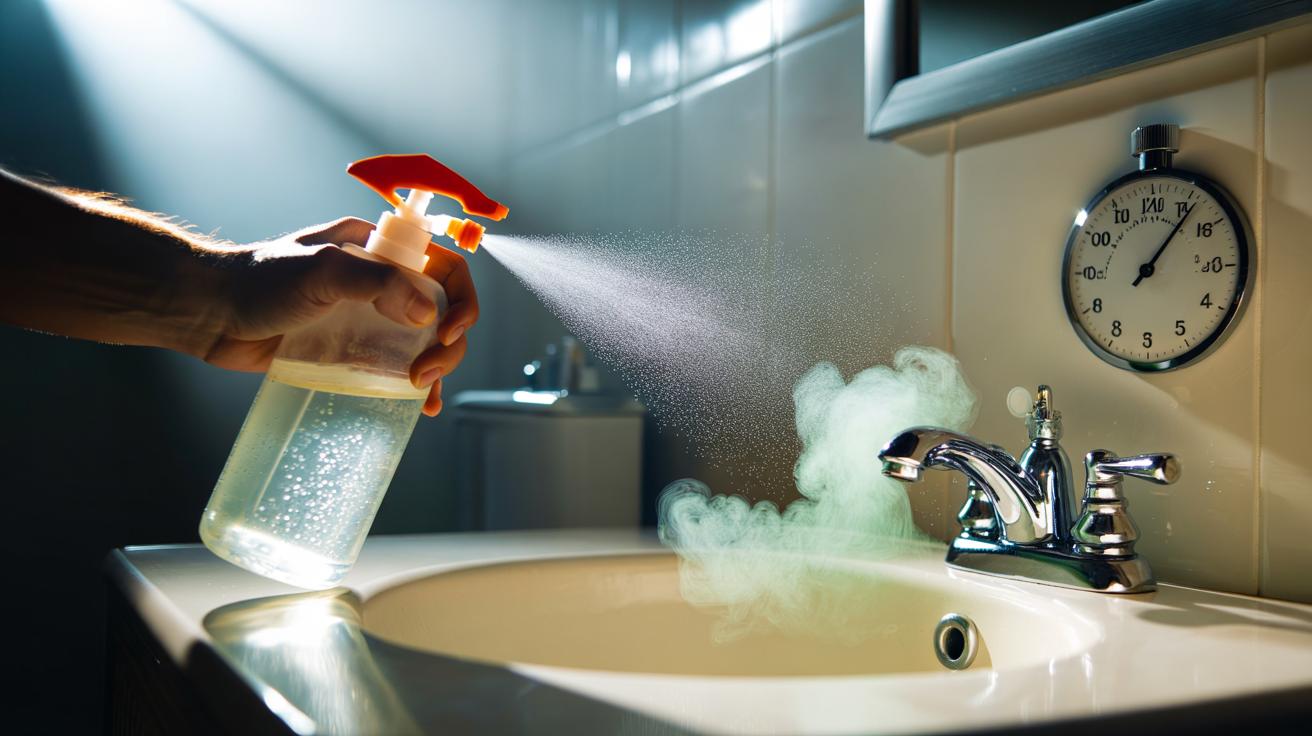
Step 2: Target the hotspots. Lightly mist white vinegar around the toilet base and hinges, under the seat, the outside of the bowl, the sink overflow and plughole, and the shower drain cover. Ten to twelve pumps are plenty for a small bathroom.
Step 3: Wait 60 seconds. That’s the crucial contact time for protonation to do its work. Short bathroom break? Set a phone timer and wash your hands while it works.
Step 4: Wipe the films. Use a microfibre cloth or paper towel to lift the now-tamed residues. For drains, a folded towel dab moistened with vinegar pressed over the grate for a minute helps tame trapped vapours.
Step 5: Rinse and reset. A quick water rinse on glossy chrome removes spots. Do not mix vinegar with bleach products at any stage—combining acids with hypochlorites can release chlorine gas. Finish with a dry cloth to discourage fresh biofilm. Result: cleaner air, minimal effort, and no perfume fog.
Ratios, Surfaces, and Safety
Use the right dilution for the job. Undiluted white distilled vinegar is fine on most ceramic, glass, and plastic. For metals or delicate finishes, cut it with water. The table below offers quick guidance you can follow at speed.
| Surface/Source | Vinegar Type | Dilution | Contact Time | Notes |
|---|---|---|---|---|
| Toilet exterior, seat hinges | White distilled | Neat (undiluted) | 60–90 sec | Wipe dry to prevent streaks |
| Sink rim, taps, chrome | White distilled | 1:1 with water | 60 sec | Rinse to avoid spotting |
| Shower drain odours | White distilled | Neat | 1–2 min | Follow with hot water flush |
| Tile grout | White distilled | 1:1 with water | 2–3 min | Avoid unsealed stone |
Never use vinegar on natural stone such as marble, limestone, or travertine—it can etch. Test on an inconspicuous spot for lacquered brass or nickel. Store vinegar in a clearly labelled trigger bottle for easy daily use. And a reminder worth repeating: do not mix vinegar with bleach or ammonia-based cleaners, ever. If you’ve already used bleach somewhere, rinse thoroughly and let the area air out before applying any acid.
When Vinegar Isn’t Enough
Persistent odours usually point to a source issue. Dried urine under the toilet base, mould in silicone, or a dry P-trap in little-used showers can outlast your misting. Rehydrate traps by running water for 10–15 seconds weekly. Replace perished sealant; vinegar won’t fix mould embedded in silicone. For limescale-lined loos that trap smells, use a descaler formulated for toilets, then maintain with the one-minute routine. Enzymatic cleaners help with pet or toddler mishaps because they digest the organic chemistry that acids merely tame.
Think of vinegar as the fast first responder, not the whole fire brigade. If drain biofilm is the culprit, pull the grate, scrub the cup and throat, and reassemble; a monthly pour of hot water plus a brief vinegar dwell reduces regrowth. If you prefer a scent, add a drop of essential oil to your cloth after wiping—never to the vinegar bottle, which should remain a simple, reliable odour neutraliser.
A bathroom that smells clean doesn’t need to smell of perfume; it needs the chemistry of odour to be disarmed. That’s what a smart spritz of acetic acid achieves—quickly, cheaply, and without fogging the room. Make it a habit: mist, wait a minute, wipe, and move on. Small daily interventions beat occasional heroic scrubs every time. Ready to try the one-minute routine this week—and which troublesome corner of your bathroom will you put to the test first?
Did you like it?4.5/5 (20)