In a nutshell
- ⏱️ Rapid odour knockdown in about 30 seconds as baking soda acts as a gentle pH buffer, neutralising acidic and basic volatiles; its large surface area plus fridge airflow speeds the effect.
- 📍 Quick setup: place 3–5 tbsp in a shallow, wide dish on the middle shelf; keep it loose and exposed. For bigger fridges, use two dishes; stir weekly and replace monthly for sustained performance.
- 🧪 How it works: sodium bicarbonate converts sharp acids and bases into less volatile salts and carbonic species, while micro‑porous crystals adsorb vapours, stabilising air chemistry near neutral.
- 🧰 Troubleshooting: hunt the source (wilted veg, spills), clean shelves with a mild bicarbonate solution, refresh after acidic spills, and pair with activated carbon for persistent protein or ammonia smells.
- ⚠️ Safety and reuse: food-safe and unscented; don’t trap it with strong acids in sealed containers (CO₂ pressure risk) and don’t “recharge” by baking (forms sodium carbonate). Repurpose spent powder as a gentle scrub.
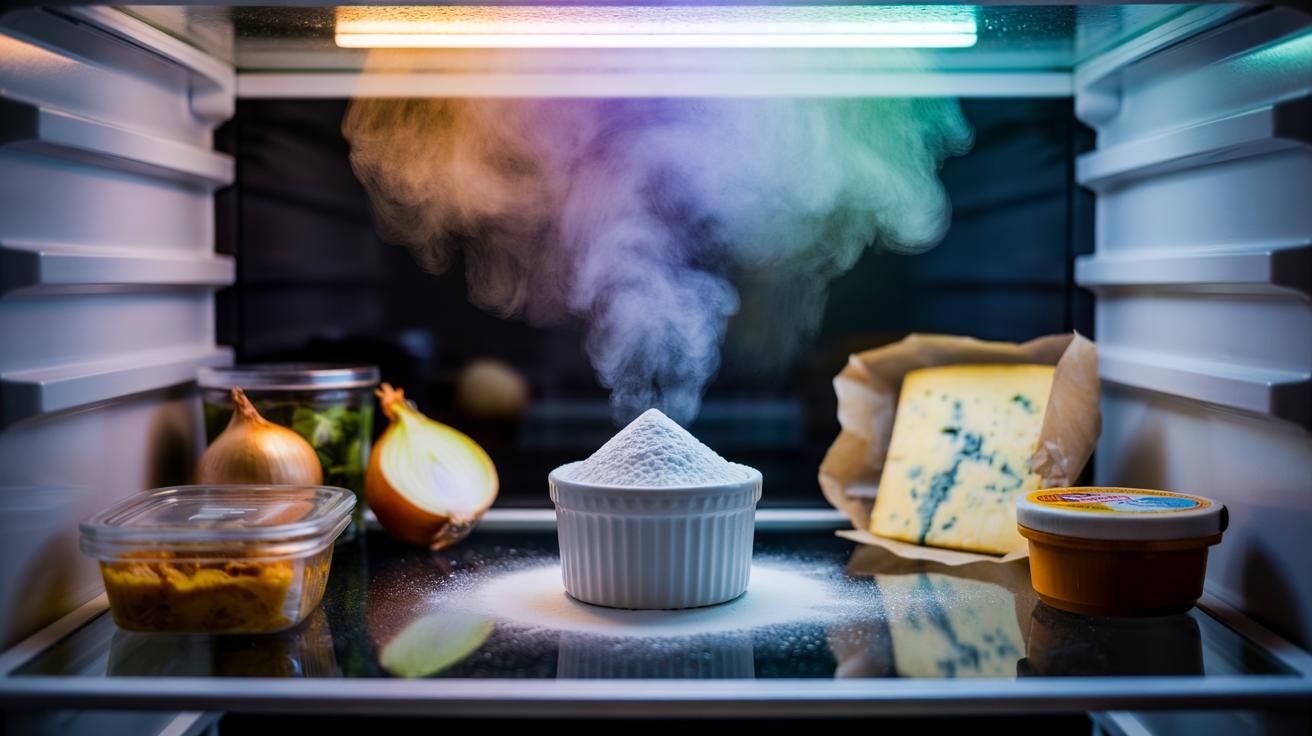
Your fridge is a small ecosystem, crammed with aromas that don’t always play nicely together. Onion one day, leftover curry the next, a rogue blue cheese hiding at the back. Enter a humble hero: baking soda (sodium bicarbonate). Used right, it tamps down harsh smells fast. Often within half a minute. That speed surprises people, but there’s solid chemistry behind it. By buffering extremes of acidity and alkalinity, bicarbonate nudges the environment towards a gentle, near-neutral state, blunting the very compounds that make your nose wrinkle. Simple, cheap, food-safe. No perfumes. No gimmicks. Just the clean, quiet absence of odour.
Why Baking Soda Neutralises Odours So Quickly
Most nasty fridge smells are volatile acids (think acetic or butyric notes) or alkaline compounds like ammonia from ageing proteins. Sodium bicarbonate is a mild base that also behaves as a pH buffer. When acidic vapours meet its surface, they partially react to form less volatile salts; when basic vapours arrive, bicarbonate consumes some alkalinity by forming carbonic acid and releasing a little carbon dioxide. The net effect is stabilisation. Not extreme. Balanced. That gentle buffering shifts the air chemistry towards near-neutral conditions, which dramatically reduces odour intensity before your next door-open sniff test.
Speed matters. Why can it act in 30 seconds? Two reasons. First, fridge air is constantly circulating as the compressor cycles, sweeping vapours over the powder’s large surface area. Second, bicarbonate crystals are micro-porous. They don’t just sit there; they offer an expansive, reactive interface that adsorbs and neutralises volatiles right away. In practice, the initial knockdown is rapid, though complete deodorisation takes longer as deeper odours diffusing from food surfaces are mopped up over hours. That’s fine. You’ll notice the early improvement fast. Then you’ll forget the smell was ever there.
The 30-Second Setup: Practical Steps That Actually Work
Open a fresh box or tub of baking soda. Pour 3–5 tablespoons into a shallow, wide dish to expose as much surface as possible. That’s the trick. More air contact equals quicker odour control. Pop the dish onto the middle shelf, near the back where airflow is steady but not blocked by containers. Leave the powder loose; do not cover it. You want the fridge’s moving air to skim across the crystals and carry volatile molecules to the reactive surface.
Now the “30 seconds” bit. Close the door, give the compressor a minute to cycle air, then open and sniff. Most sharp, acidic notes drop quickly, especially after garlicky leftovers or spilt milk. If the stench is stubborn, add a second dish in the salad drawer or door bin to catch localised plumes. Replace or stir the powder weekly for best performance; crusted tops reduce contact area. For a turbo start, briefly fan the door with a chopping board as you close it, nudging a little extra circulation. Small action, outsized effect. It’s immediate, tidy, and reliable.
Where to Place It and How Much to Use
Placement is half the battle. Fridges don’t circulate air evenly; cold sinks low, warm rises near the light and door. Aim for the middle shelf to intercept the general flow, then add a second point near trouble spots. A shallow layer beats a deep mound because exposure, not sheer quantity, governs reaction speed. For family fridges, two dishes placed apart outpace one large container huddled in a corner. Keep them away from open jars to avoid caking or stray splashes, and never seal baking soda in a jar with holes too small; you’ll choke off the airflow it needs to work.
| Fridge Size | Baking Soda Amount | Container | Placement | Notes |
|---|---|---|---|---|
| Compact (under 150 L) | 2–3 tbsp | Shallow ramekin | Centre shelf | Stir weekly |
| Standard (150–300 L) | 4–6 tbsp | Wide dish or two ramekins | Middle + crisper | Replace monthly |
| Large (over 300 L) | 8–10 tbsp | Two wide dishes | Middle + door bin | Add third for strong odours |
Keep a spare supply handy. It’s inexpensive, and the marginal gain from fresh, fluffy crystals is noticeable after messy spills or fishy dinners. Don’t overthink it; coverage and airflow win the day.
Troubleshooting Stubborn Smells and Safety Notes
If odours linger after the first burst, you’re masking an ongoing source. Find it. Check vegetable drawers for liquefied lettuce, wipe door gaskets, and clean shelves with warm water plus a teaspoon of bicarbonate per litre. Surface cleaning removes films that keep emitting volatile molecules long after you’ve tidied the leftovers. For intense protein smells, pair baking soda with a small sachet of activated carbon for broader adsorption. And if a spill was acidic (pickle brine, wine), refresh the powder immediately; it has already done hard neutralising work and its capacity is reduced.
Safety is straightforward. Baking soda is food-safe and scent-free, so it won’t perfume your cheese or fruit. Avoid mixing it with strong acids in sealed containers; carbon dioxide release can build pressure. Don’t try to “recharge” saturated soda by baking it for fridge reuse—heating turns it into sodium carbonate, which is more alkaline and not ideal near food aromas. Instead, repurpose spent powder as a gentle sink scrub, then open a new batch. Label a box specifically for odours to keep it separate from cooking supplies. Small routine, big payoff.
Odour control doesn’t need fancy gels or perfumed filters. It needs chemistry that’s calm, predictable, and safe around food. Baking soda delivers that, cutting sharp notes fast, then quietly smoothing the background over the next day. Keep it shallow. Keep it exposed. Let the buffer do the work while you get on with your week. Next time your fridge whiffs back at you, will you reach for a scented spray—or will you lay down a fresh carpet of crystals and watch the smell disappear on the clock?
Did you like it?4.6/5 (29)