In a nutshell
- 🧪 Clear cloudy glassware fast with white vinegar; its 5% acetic acid dissolves limescale and soap film, restoring clarity in about 30 seconds for light buildup.
- 🔍 Distinguish issues: removable mineral film (smooth, milky) responds to vinegar; permanent etching (rough, rainbow sheen) won’t, guiding whether to clean or prevent.
- 🧼 Quick method: use vinegar neat or 1:1 with warm water, swirl or soak briefly, then rinse and towel-dry; target rims and stubborn spots with a vinegar-soaked microfibre cloth.
- ⚠️ Safety first: never mix vinegar with bleach; protect delicate surfaces, test on antique crystal or metallic trims, and avoid abrasives that can scratch and invite future deposits.
- 📋 Handy reference: match visual cues to causes and timings—film (30–60s), spotty rings (1–2 min), grease (soap then vinegar)—and adopt preventative habits to keep glasses sparkling.
Cloudy wine glasses, dull tumblers, that milky film on your decanter — it looks like age, but it’s usually chemistry. Hard water leaves mineral deposits that cling to the smooth surface of glass, scattering light and killing the sparkle. The quick fix is humble and cheap: white vinegar. Its gentle acidity cuts through limescale and soap residue with surprising speed. For light haze, you can watch clarity snap back in roughly 30 seconds. No harsh abrasives, no special kit, no waiting overnight. Below, I unpack why it works, how to do it right, and when vinegar can’t save the day — plus a rapid reference for the common stains you’ll meet in any British kitchen.
Why Glassware Turns Cloudy: The Science You Can See
Two culprits make glass look tired: removable film and irreversible damage. In most homes with hard water, calcium and magnesium carbonates dry onto the surface after washing. Add a touch of detergent residue and you get that whitish bloom which seems to reappear the moment glasses are out of the cupboard. This is the removable kind — a surface deposit. There’s also etching, microscopic pitting caused by heat, aggressive detergents, or repeated dishwasher cycles. Etching changes the glass itself and can’t be polished away. Knowing which is which saves time.
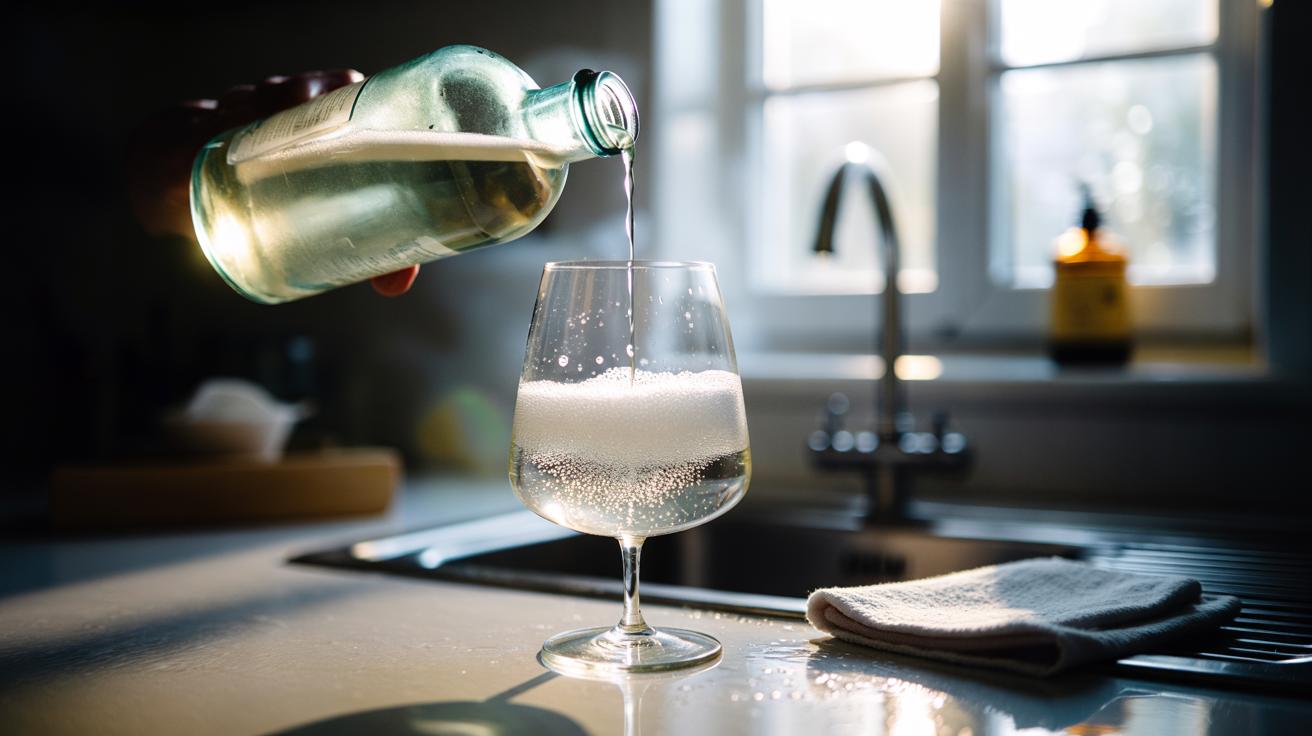
Enter acetic acid, the active ingredient in white vinegar (around 5%). It reacts with carbonate minerals to form soluble acetates and carbon dioxide. You can often see tiny bubbles fizz along the rim or base, a tell-tale sign the acid is at work. Because the film is thin, the reaction is rapid. That’s why a brief soak or a slow swirl can restore clarity astonishingly fast — often inside 30 seconds for light buildup. Heavier crusts need a longer contact time, but the principle is exactly the same: dissolve, rinse, sparkle.
White Vinegar in 30 Seconds: Step-by-Step Fix
1) Check the glass. If the clouding looks uniform but smooth to the touch, you’re likely dealing with mineral film. If it feels rough or shows rainbow-like patches that don’t shift with moisture, it may be etched.
2) Pour a small pool of white vinegar into a bowl or jug. For fresh limescale, use it neat. For general maintenance, a 1:1 mix with warm water is fine.
3) Submerge the rim first — that’s where deposits concentrate. Swirl slowly for 30 seconds, watching for fizzing or a clear line where clean glass appears. In many cases, clarity returns before you’ve finished counting.
4) For stubborn spots, press a vinegar-soaked microfibre cloth onto the area for one to two minutes. Avoid abrasive pads; they can scratch and make future clouding worse.
5) Rinse thoroughly with warm water. Dry immediately with a lint-free towel to prevent new droplets from spotting. If haze persists, repeat once more or escalate to a slightly longer soak (up to five minutes) before rinsing again.
Tip: Keep a small spray bottle of vinegar near the sink. A quick mist and wipe after handwashing stemware prevents deposits taking hold, cutting cleaning time to seconds rather than minutes.
Safety, Materials, and When It Won’t Work
White vinegar is mild, but it’s still an acid. Protect delicate finishes around your sink — especially natural stone like marble or limestone — by keeping splashes contained and rinsing promptly. Wear lightweight gloves if you have sensitive skin. Never mix vinegar with bleach — the combination releases toxic chlorine gas. Keep the two far apart, including in buckets and on cloths that might carry residue.
Vinegar excels on limescale, soap scum, and light dishwasher film. It’s safe on standard soda-lime glass and most crystal, but exercise caution with antique lead crystal and decorative metallic trims; test a discreet area first. If your glass remains cloudy after a thorough vinegar treatment and careful drying, you’re probably seeing etching. That’s permanent. The best remedy is prevention: use gentler detergents, skip high-heat cycles, space glasses so water drains, and hand-dry to avoid droplet marks.
For very heavy mineral crusts, extend contact time to three to five minutes, refreshing the vinegar if fizzing stops early. Avoid harsh abrasives; they remove the symptom by damaging the surface, inviting future deposits to grip more easily. If you hear a faint squeak and see a crisp shine after rinsing, you’ve hit the sweet spot: deposits gone, glass intact.
Quick Reference: Stains, Causes, and Kitchen Fix
Use this simple guide when you’re unsure whether to reach for vinegar neat, diluted, or not at all. It pairs the common visual cues with the chemistry behind them and the fastest effective approach. When in doubt, start mild, escalate only as needed, and always rinse and dry to finish. A minute of method beats an hour of scrubbing.
| What You See | Likely Cause | Best Method | Typical Time |
|---|---|---|---|
| Milky film, smooth feel | Hard-water limescale | Neat white vinegar, swirl and rinse | 30–60 seconds |
| Spotty rings, drip marks | Mineral droplets dried in place | Vinegar dampen, brief soak, towel-dry | 1–2 minutes |
| Rainbow sheen, rough patches | Etching from heat/detergent | Not removable; switch to gentler wash | — |
| Greasy smears | Detergent or oil residue | Warm water + mild soap, then vinegar rinse | 2–3 minutes |
For routine upkeep, a 1:1 vinegar rinse after washing keeps deposits from anchoring, so glasses emerge bright every time. Store stemware upside down on a clean shelf liner to limit dust and droplet marks. If your tap water is extremely hard, consider a rinse with filtered water before drying; it’s a small change with a big payoff for lasting clarity.
Vinegar’s appeal is simple: fast chemistry, tiny cost, brilliant results. A bottle under the sink beats specialty polishes for everyday clouding, and it spares glass from the scratches that sand away shine. Thirty seconds is often enough; a couple of minutes handles the rest. Your reward is that satisfying chime and sparkle when the next drink is poured. Will you try the 30-second swirl tonight, or tweak your washing routine to stop the haze before it starts?
Did you like it?4.4/5 (20)