In a nutshell
- 🍳 Use a rice soak to clean greasy pans in 5 minutes, lifting stubborn residue with minimal scrubbing and no harsh abrasives.
- 🔬 Starch (amylose and amylopectin) in rice helps emulsify oils; warm water and a single drop of washing-up liquid enhance the effect.
- 🧪 Simple method: 2–3 tbsp uncooked rice + warm water, soak, swirl, brief wait, rinse; avoid boiling and handle cast iron/non-stick with care.
- 🥘 Works across non-stick, stainless steel, and cast iron; high-starch short-grain rice acts fastest, while burnt sugars may need a slightly longer or repeated soak.
- 🌱 Eco-savvy and cheap: uses pantry staples, less detergent, lower energy; repurpose cooking rice water and follow with hot water to protect drains.
Scrubbing a pan after a Sunday roast can feel like a punishment. Oil baked into invisible pores, sticky sauces set like varnish, browned bits clinging on for dear life. Here’s a gentler remedy hiding in your pantry: a quick rice soak. In five calm minutes, the starch in uncooked rice loosens grease and lifts residue so it slides off under the sponge. No caustic fumes, no scratched coatings, no sore wrists. It’s a small kitchen hack with outsized impact on effort, time, and the life of your cookware. Think of it as a pre-wash that does the heavy lifting while you put the kettle on.
Why Rice Water Breaks Down Grease
Rice is rich in starch—mainly amylose and amylopectin—which swells and disperses in warm water, forming a soft, slightly viscous solution that clings to surfaces. That clinging matters. It allows the suspension to creep beneath lipid films and stubborn fond, loosening their bond with metal. As you gently stir or swirl, the starchy liquid helps emulsify fats into tiny droplets that rinse away. The effect is amplified by heat: warm (not boiling) water thins the oil, increases molecular mobility, and lets the starch do its work. Add a single drop of washing-up liquid and you introduce surfactants that team up with starch for a swift dismantling of grime. In plain terms, starch turns slippery grease into something the water can carry off—fast. It’s also kinder than aggressive abrasives, preserving delicate non-stick coatings and seasoned cast iron.
Unlike salt scrubs, which can gouge softer finishes, a rice-water soak depends on gentle chemistry and light agitation. The result is less elbow grease, fewer micro-scratches, and a reliably clean rim-to-base finish in roughly five minutes.
Step-By-Step: The 5-Minute Rice Soak
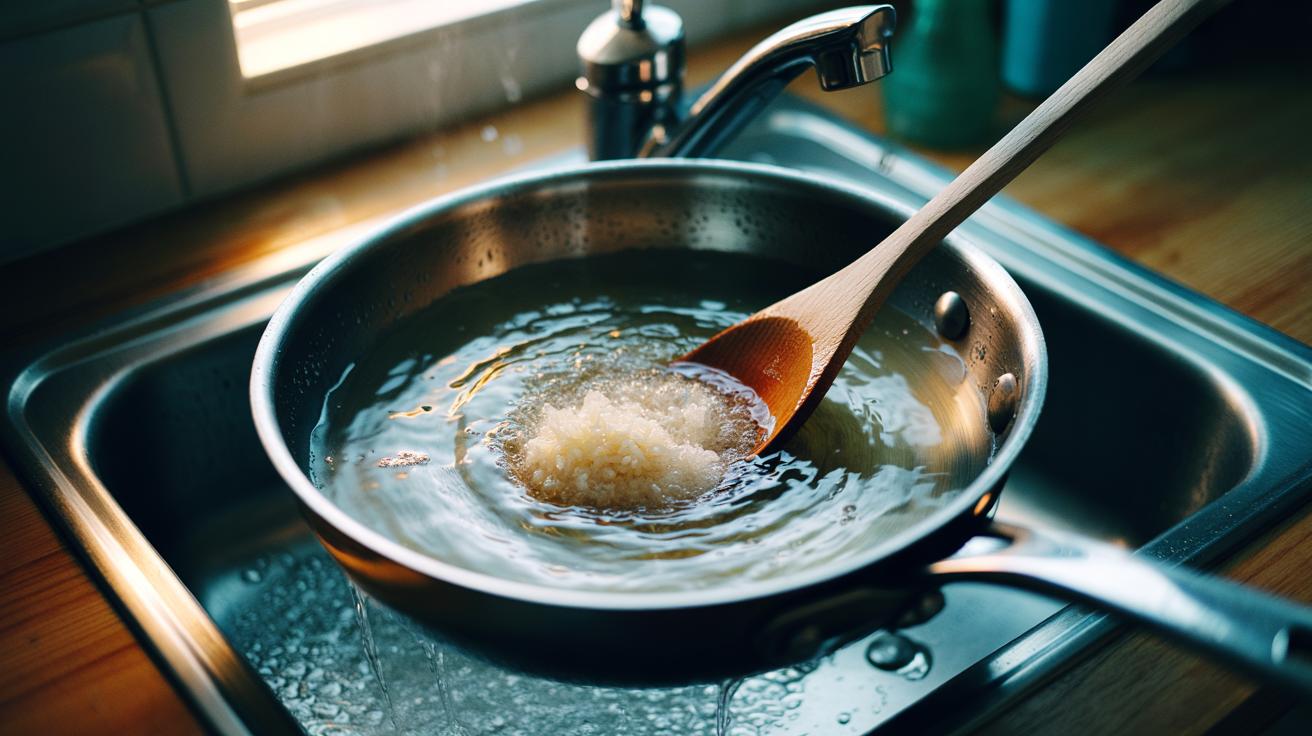
1) Empty the pan and tip away excess oil. 2) Add 2–3 tablespoons of uncooked rice (any variety), then pour in enough hot tap water to cover the dirty areas by 2–3 cm. 3) Let it sit for two minutes to hydrate the starch. 4) Swirl the pan for 30–60 seconds with a wooden spoon, scraping gently to lift browned residue. 5) Leave for a further two minutes. 6) Add a single drop of washing-up liquid if needed, then pour out and rinse. 7) Wipe with a soft sponge; most grime should glide off.
Never boil the rice in the pan—warm water is sufficient and safer for non-stick coatings. For cast iron, keep the soak brief, dry immediately over low heat, and buff with a few drops of oil to protect the seasoning. For stainless steel, you can extend the soak to eight minutes for heavily caramelised sugars. Aluminium? Stick to warm, not scalding, water to avoid warping on thin pans.
| Item | Quantity/Setting | Notes |
|---|---|---|
| Uncooked rice | 2–3 tbsp | Any type; broken or budget rice works well |
| Water temperature | Warm–hot (50–60°C) | Hotter thins oils; avoid boiling |
| Soak time | 5 minutes | Extend to 8 minutes for burnt-on sugars |
| Optional soap | 1 drop | Boosts emulsification without heavy scrubbing |
What Pans, What Rice, What Results
This trick is remarkably versatile. Non-stick pans benefit because the starchy solution loosens residues without abrasive force. Stainless steel regains its gleam as the soak frees carbonised oils from microscopic crevices. Even cast iron is compatible if you keep the soak short and re-season promptly. The key is contact time, not aggressive scraping. As for rice type, the differences are subtle. Short-grain, high-starch rice (sushi or pudding rice) gives a thicker slurry quickly. Long-grain varieties (basmati, jasmine) work well but may need an extra minute. Brown rice functions too, though its outer bran slows the release of starch slightly.
Set expectations by residue type. Oily films melt away early in the soak. Protein-heavy bits—think scrambled egg traces—lift with a gentle swirl after a couple of minutes. Caramelised sugars from sauces can be the most stubborn; let the slurry sit a touch longer and refresh with a splash of fresh warm water if needed. When in doubt, repeat a short soak rather than reach for harsh scouring pads that shorten a pan’s lifespan.
Beyond Cleaning: Smart Uses For Starchy Soak
There’s a sustainability angle here. A rice-water rinse uses pantry staples, minimal detergent, and cooler water than a boil, saving energy while keeping chemicals out of your sink. The same gentle solution can pre-treat greasy baking trays, grill grates, and even the splashback behind the hob. Lightly dampen a cloth with the starchy water and wipe, then rinse with clean water. Avoid pouring large quantities of thick starch down sluggish drains; follow with hot water to keep things flowing. Cost-wise, we’re talking pennies—especially if you use broken rice or crumbs left in the bag.
For meal prep days, decant a jar of rice water made from the first rinse of your actual cooking rice and keep it in the fridge for 24 hours; it’s an instant, low-waste pre-soak when frying pans look daunting. You’ll rely less on heavy-duty degreasers, mitigate micro-scratching, and extend the working life of cookware that should, frankly, outlast trends.
Five minutes, a handful of rice, warm water. That’s the entire playbook. The starch gets under the grime, your sponge finishes the job, and your pans look presentable enough for the next outing without a blister in sight. Small rituals like this cut scrubbing time, protect surfaces, and reduce reliance on harsh chemicals. If a simple rice soak can rescue dinnerware after the stickiest stir-fry, what other quiet, low-tech fixes might be hiding in plain sight in your kitchen—and which one will you test tonight?
Did you like it?4.6/5 (21)