In a nutshell
- ✨ The inner banana peel carries potassium and minerals that gently lift surface stains by disrupting the pellicle—think polish, not bleach.
- 🦷 Method: choose a ripe peel, rub the inner side lightly for 1 minute, wait 2 minutes, then brush with a soft brush and fluoride toothpaste.
- 🛡️ Safety: enamel-friendly with light pressure and 2–3 uses weekly; avoid mixing with acids or baking soda; skip if you have ulcers, gum disease, or banana/latex allergies.
- 🔬 Evidence: limited clinical proof of true whitening; unlike peroxide systems that oxidise deep stains, the peel works only on recent, superficial discoloration.
- 💡 Practical gains: quick, low-cost, low-waste freshness; combine with stain-smart habits and routine hygiene to keep brightness lasting longer.
Could a humble banana peel be the quickest kitchen cupboard trick for a brighter smile? TikTok says yes. Dentists say “maybe, in a pinch.” The truth sits somewhere useful. The inside of the peel contains potassium and other trace minerals that may help loosen light surface stains while offering ultra-gentle polishing of the tooth’s protein-rich pellicle. Results, if any, are subtle and short-lived, but the method is soft on enamel if done carefully. Think refinement, not a Hollywood flash. It will not bleach teeth the way peroxide-based whiteners do, yet it can freshen a shade and improve lustre in minutes when stains are mild. Here’s how, why, and when to try it.
How Potassium Could Lift Surface Stains
The inner side of banana peel is rich in potassium, alongside trace magnesium and natural polysaccharides. These components interact with the salivary pellicle that coats teeth, a thin protein film that readily traps pigments from coffee, tea, and wine. Gentle rubbing may disrupt this film and dislodge loosely bound chromogens, nudging teeth toward their natural baseline shade. This is surface management, not true whitening of the enamel or dentine beneath. Still, it can make a visible difference when stains are new and superficial.
There’s also a comfort angle. Potassium ions are used in desensitising toothpastes to calm nerve response. While a peel is no formulated paste, the presence of potassium aligns with the “gentle” reputation of the method. The peel’s soft texture adds a mild polishing effect without harsh abrasives. Crucially, no strong acids are involved, so the risk of etching enamel is low. That said, pressure matters. Do not scrub—glide; enamel is finite. Think of it as a tidy-up for the pellicle before routine brushing restores gloss.
Step-By-Step: The Banana Peel Method
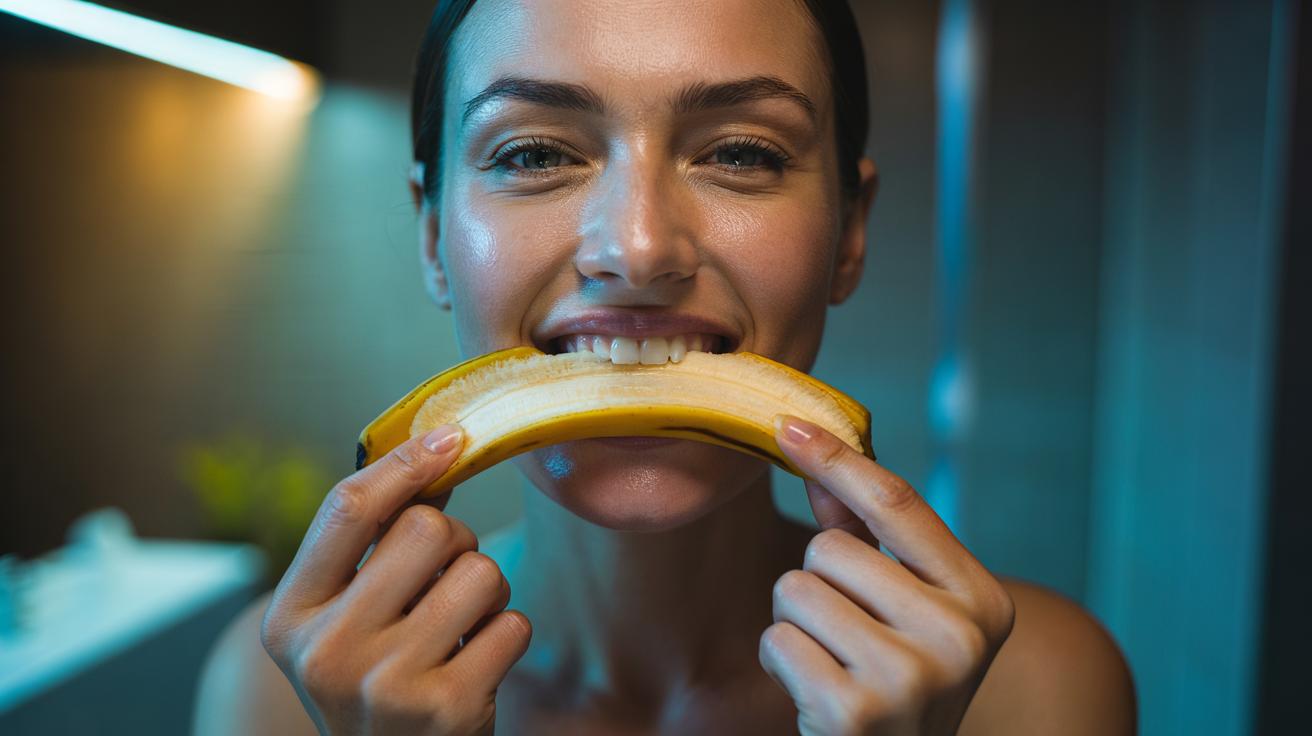
Choose a ripe banana—yellow skin with a few freckles. Wash the outside, then cut a small rectangle of peel. Use the inner side. Dry your teeth with a tissue for better contact. Smile to keep lips out of the way and rub the peel across the fronts of your teeth for about one minute, using light, even strokes. Target stained edges and the gumline, but avoid aggressive pressure. If your jaw tires, you’re pressing too hard.
Wait two minutes to allow interaction with the pellicle. Then brush with a fluoride toothpaste using a soft brush and a gentle circular technique for two more minutes. Rinse well. Limit this to two or three times per week; daily use is unnecessary. Skip if you have ulcers, active gum disease, or a known banana/latex-related allergy. Store peels briefly in the fridge if you’re using them the same day, but fresher is better. For best cosmetic impact, pair the method with stain-smart habits: drink dark beverages through a straw, swish with water after coffee, and keep routine hygiene appointments.
Benefits, Limits, and Safety
The headline benefit is kindness to enamel. The peel is soft, non-acidic, and unlikely to cause micro-scratches when used with care. It’s also inexpensive, zero-waste, and quick. Many people report a cleaner sheen and a small, same-day improvement in brightness—especially after pigment-heavy meals. Expect refinement rather than dramatic whitening. Deep, intrinsic discoloration requires chemistry (peroxide) or dentistry (microabrasion, bonding, veneers).
Safety hinges on technique. Use light contact, short sessions, and sensible frequency. Do not combine the peel with baking soda or acidic juices—those DIY mashups can erode enamel and inflame gums. If you have exposed dentine, recession, or sensitivity, test cautiously, then always follow with fluoride brushing. And remember, this is an adjunct, not a substitute: mechanical plaque removal via proper brushing and interdental cleaning is what keeps stains from settling in the first place.
| Aspect | What to Expect | Caveat |
|---|---|---|
| Speed | Visible freshness in minutes | Short-lived; needs maintenance |
| Whitening | Helps lift surface stains | No change to intrinsic shade |
| Safety | Gentle on enamel | Only with light pressure |
| Sensitivity | Potassium may feel soothing | Not a medical treatment |
What Science and Dentists Say
There’s scant peer-reviewed evidence that banana peel “whitens” in the strict clinical sense. The plausible mechanism is pellicle disruption and mild mechanical removal of fresh pigments, aided by the peel’s minerals and slick polysaccharides. That’s useful, but it’s not bleaching. In contrast, dentist-approved whiteners rely on peroxide to oxidise chromogens within the enamel subsurface. When expectations are right-sized, both ideas can coexist: a kitchen-safe refresher for surface stains and professional chemistry for shade change. Think complementary, not competitive.
Most dental professionals won’t object to careful, occasional use—especially if it encourages better brushing immediately afterward. They will, rightly, caution against myths that promise miracles. If your teeth are stained from tobacco or years of coffee, you’ll need more than a peel. If you wear orthodontic appliances, skip this and ask your clinician for tailored advice. And if sensitivity or discoloration suddenly worsens, investigate the cause. DIY tricks are not diagnostic tools, and persistent staining can be a sign of underlying issues.
Used wisely, a banana peel can be a soft reset for a dulled smile—fast, cheap, and gentle, with results that sit in the realm of polish, not transformation. Keep expectations grounded, pair the trick with impeccable daily hygiene, and reserve true whitening for proven peroxide systems or a dentist’s chair. Your enamel is precious; guard it with care. When you next reach for a banana, will you try this two-minute refresh—or design a broader, evidence-led plan for a brighter smile this season?
Did you like it?4.3/5 (30)