In a nutshell
- 🧽 Baking soda paste is a mild abrasive that shears off soap scum and oils without scratching glazed tiles, relying on friction and gentle alkalinity for fast results.
- ⏱️ The two-minute method: mix 3:1 baking soda to water, spread thinly, wait 30–60 seconds, scrub 30–60 seconds, then rinse and buff dry for a clear shine.
- 🧪 Target stains smartly: use paste for soap scum, follow with white vinegar on stubborn limescale, and clean grout with a soft brush and light pressure.
- 🛡️ Materials and safety: safe on glazed ceramic, porcelain, and chrome; go gently on acrylic and avoid aggressive use on natural stone; always rinse thoroughly and dry.
- 🌱 Sustainable wins: low-odour, inexpensive, and septic-safe; a weekly quick pass plus a daily squeegee cuts chemicals, time, and effort while keeping tiles camera-ready.
Bathroom tiles lose their sparkle quickly: steam bakes on soap, minerals dry to crust, and everyday dust binds it together. When time is tight, a fast fix helps. Enter the humble baking soda paste. It is a mild abrasive that scours without gouging, restoring shine in as little as two minutes when used correctly. The result is tactile cleanliness and visible gloss, not a perfumed disguise. This is cleaning by physics as much as chemistry, a practical shortcut that respects delicate glazes. Below you’ll find the science that makes it work, a step-by-step method that’s genuinely quick, and guidance for trickier grime such as limescale and grout haze.
Why Mild Abrasives Work on Grime
Soap scum, body oils, and airborne dust form a stubborn film that bonds weakly to tile glazes. A mild abrasive such as bicarbonate of soda (baking soda) cuts through this film mechanically. Its particles are tough enough to disrupt the grime, yet soft relative to glazed ceramic and porcelain. Think microscopic sand—rounded, not jagged. On the Mohs scale, sodium bicarbonate sits around 2.5, while ceramic glazes are far harder, so the glaze wins. Used sensibly, baking soda lifts dirt without dulling tile. Its gentle alkalinity (pH around 8–9 in solution) also helps loosen fatty residues, while the fizz you sometimes see with acids is just carbon dioxide—handy drama, limited cleaning value.
Friction is the real hero. The paste creates a lubricated scouring layer that spreads pressure evenly under a cloth or sponge. A light touch works better than brute force, because you’re shearing the film, not carving the surface. Add a drop of washing-up liquid and you get a bonus: surfactants reduce surface tension, letting the paste wet the grime thoroughly. The aim is controlled abrasion—quick, local, effective. That’s why two minutes per section is enough for bathrooms maintained weekly, and still credible even after a month of neglect.
Two-Minute Baking Soda Paste: The Method
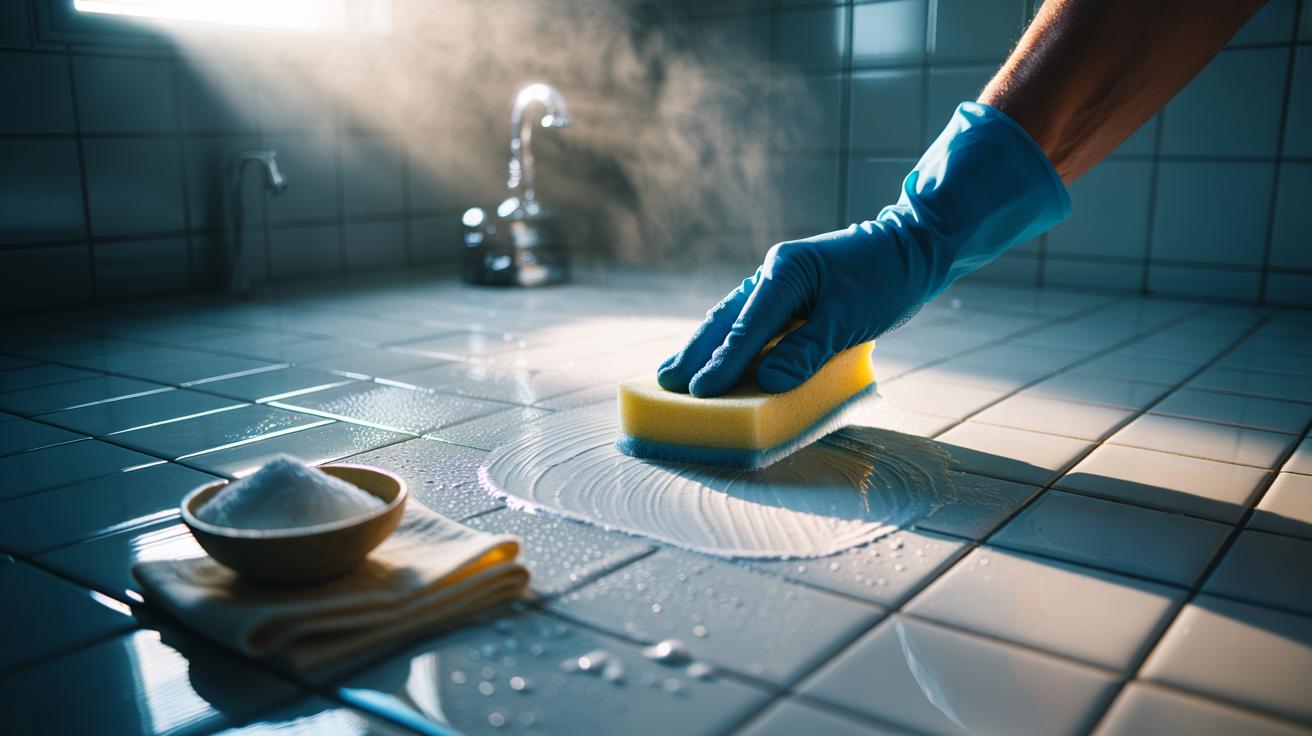
Time matters in a busy home, so keep the kit simple. You need bicarbonate of soda, clean water, a soft sponge or microfibre cloth, and a rinse jug or handheld shower. Optional: a drop of washing-up liquid for heavy soap films. Mix 3 parts powder to 1 part water for a spreadable paste. Scoop a plum-sized dollop onto the sponge and smear a thin film over a tile area roughly the size of a dinner tray. Wait 30–60 seconds for wetting; then scrub with small circles for 30–60 seconds. Rinse thoroughly. Buff dry with microfibre for a streak-free sheen.
| Item | Ratio/Time | Notes |
|---|---|---|
| Baking soda : water | 3 : 1 | Thicker paste increases abrasion; don’t let it crust. |
| Optional washing-up liquid | 1–2 drops | Improves wetting on greasy residue. |
| Contact + scrub | 60–120 sec | Small sections deliver faster results. |
| Rinse and dry | Immediate | Stops residue rehardened by evaporation. |
Keep the paste moving; a stationary, drying paste can mark with residue rather than scratch, but it wastes time to rework. For grout, switch to a soft brush and lighter pressure. For a quick daily reset, wipe tiles with a damp microfibre after showering; then the two-minute paste becomes a weekly polish rather than an emergency rescue.
Targeting Limescale, Soap Scum, and Grout Haze
Not all bathroom grime behaves the same. Soap scum is part fatty, part mineral, and a baking soda paste excels here because it shears and lifts the film. Limescale (calcium carbonate) is mineral-crusty and responds best to a mild acid, not alkali. Try a two-step: scrub with baking soda paste to remove soap binders, rinse, then dab white vinegar on the remaining scale and rinse again. Don’t mix vinegar and paste in a sealed container; make them meet only on the tile and rinse promptly. For light limescale, the paste alone can blunt the edges enough for a visible shine, but acid wins in hard-water hotspots.
Grout haze (post-tiling) and dingy grout lines need precision. Use a soft toothbrush with paste and gentle strokes, working across rather than along the groove to avoid gouging. Rinse well; residues left in porous grout can look chalky when dry. Stubborn orange streaks from iron-rich water often need multiple quick passes rather than one aggressive session. Patience beats pressure and protects the surface you paid for. If tiles are textured, press the paste into the recesses with a damp cloth folded tightly, then wipe in one direction to prevent smearing grit back over the peaks.
Materials, Safety, and Sustainable Wins
Baking soda is kind to most glazed tiles, porcelain, and tough glass, but be prudent. Avoid vigorous abrasion on high-gloss acrylic panels and tread carefully on natural stone such as marble, limestone, and travertine—the stone may not etch from alkalinity, but its polish can micro-scratch. Test in a hidden spot. Chrome fittings are generally safe; use a soft cloth and minimal paste. Wear light gloves if you have sensitive skin, and avoid inhaling dry dust during mixing. Always rinse until water runs clear, then dry to lock in the shine and prevent mineral spotting.
Sustainability is the quiet bonus. Bicarbonate of soda is inexpensive, low odour, and septic-safe. You use teaspoon quantities, not capfuls of fragrance-heavy cleaners. The pay-off is consistency: two fast minutes per section, once a week, is easier than a monthly blitz. A rubber squeegee after showers halves your need for paste. The arithmetic is simple: fewer products, less time, better results. Your tiles look bright because they are clean, not coated.
The charm of a baking soda paste is its honesty: a mild abrasive doing a small, precise job exceptionally well. Two minutes per area clears the cloudy film, smooths the feel underhand, and restores the crisp reflection you miss. Keep the paste thin, the pressure light, and the rinse thorough, and tiles stay camera-ready with minimal fuss. Ready to put it to the test on one square metre of wall and time the difference—then decide where the extra minutes saved will go this week?
Did you like it?4.6/5 (27)