In a nutshell
- 🧲 Static cling explained: the triboelectric effect charges fabrics—especially synthetics—while aluminium foil as a conductor equalises electrons to stop cling.
- ✨ Fast fix: scrunch 2–3 foil balls, smooth edges, toss into the dryer; charges dissipate in seconds and fabrics separate more easily.
- 🛠️ Practical use: choose balls or a foil “packet”, avoid overloading, replace every 6–10 weeks, and don’t over-dry to keep static low.
- ⚠️ Safety & savings: foil is non-flammable at dryer temps; prevent snags, skip delicate silks, and cut costs vs single-use dryer sheets/softeners; recycle when clean.
- 🌱 Extra tactics: add a damp cloth near the end, pair with wool dryer balls, use a vinegar rinse, separate fabrics, or apply a quick anti-static spray for emergencies.
Static electricity ruins outfits and tempers. One minute your jumper drapes beautifully; the next it’s glued to your torso, snapping and crackling. Here’s the surprising, brilliantly simple fix trusted by laundry geeks and time-pressed parents alike: aluminium foil. Scrunch it. Toss it in the dryer. Enjoy that quick, soft swish as the cling disappears. It’s cheap, reusable, and brutally efficient. This isn’t a gimmick—foil is a conductor that lets charges equalise fast, stopping the cling at its source. With energy bills biting across the UK and wardrobes heavy on synthetics, a shiny little ball could be your best domestic hack.
Why Static Cling Happens in Modern Laundry
Your clothes cling because of the triboelectric effect. Fabrics rub in the drum, swapping electrons. Some become positively charged, others negative. When the cycle ends and humidity is low—think winter heating or a dehumidifier-happy flat—those charges remain, pulling garments together like invisible magnets. Synthetics such as polyester and nylon are the worst offenders, hoarding charge while refusing to let it dissipate. The result? Skirts hugging tights, shirts sparking against your skin, and pet hair that simply won’t quit. Natural fibres like cotton fare better but aren’t immune, especially after over-drying.
Detergents and softeners help, yet they introduce fragrance and residue many of us don’t want. Dryer sheets tame charge using coatings, but they’re single-use. The modern wardrobe—stretch leggings, technical tees, mixed blends—exacerbates the issue. The science is straightforward: insulators store charge. Clothes leave the drum as charged insulators. Without a pathway to release, the static persists. That’s the gap aluminium foil fills, efficiently and without additives, by providing a fast route for charges to spread and disappear.
How Aluminium Foil Discharges Static in Seconds
Foil is a conductor. Scrunch it into a rough ball and it becomes a mobile, durable contact point inside the dryer. As garments brush the ball, excess electrons move into the foil and redistribute across its surface. The effect is immediate: charges equalise between pieces, so there’s no strong difference left to drive that clingy attraction. Think of the ball as a friendly lightning rod for your laundry—no sparks, just swift neutralisation. You’re not “earthing” the drum; you’re allowing charge-sharing that winds down the voltage differences responsible for static.
Use two or three balls for a mixed load. More surface contact, more opportunities for discharge. The textured crinkles increase touch points without snagging fabric if you smooth sharp edges. Many users report faster drying because foil balls can nudge items apart, improving airflow, though evidence varies. What’s consistent is the anti-static effect. Aluminium foil works cycle after cycle, with zero perfumes or waxes left behind. It’s the simplest form of electrostatic control you can deploy at home, and it costs pennies.
Step-By-Step: Dryer Ball or Pocket Packet?
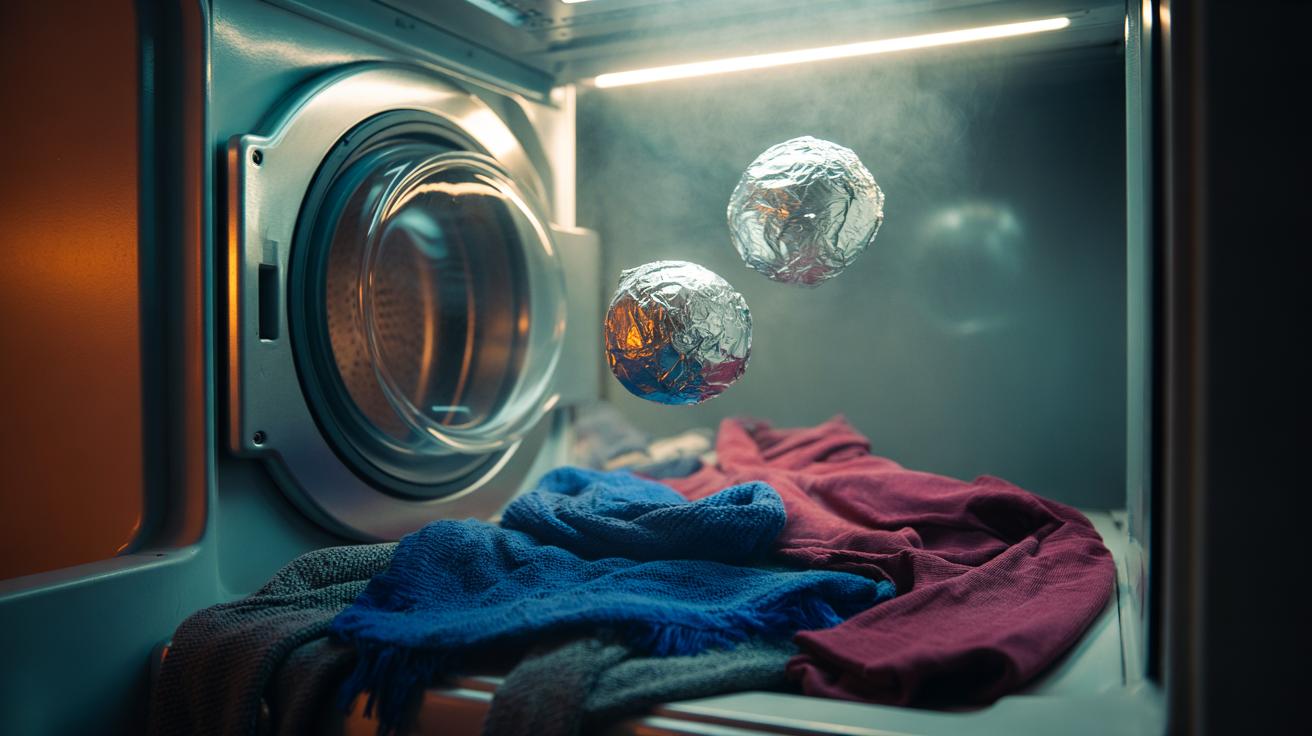
Make a ball: tear off a sheet of aluminium foil, about 40–50 cm long. Scrunch loosely, then compress to the size of a small orange. Repeat until the surface is firm and relatively smooth. Create 2–3 balls for standard family loads. Drop them in with your damp clothes, select your usual heat, and run the cycle. Expect static suppression within seconds of tumbling, and noticeably calmer fabric by the end. If you find edges, re-compress the ball. Replace when the surface becomes dull and flaky, typically after a couple of months of regular use.
Prefer a flatter profile? Fold a thick square “packet”, smoothing edges with a final wrap. It sits quietly in pockets between items, though balls tend to circulate better. Don’t overpack the drum; airflow matters. Pair with moderate heat and avoid extreme over-drying, which drives static back up. Keep foil for the dryer only—never the microwave—and store balls with laundry supplies so they’re always to hand.
| Method | Best For | How Many | Replace | Notes |
|---|---|---|---|---|
| Foil Balls | Most loads, mixed fabrics | 2–3 | Every 6–10 weeks | Strongest anti-static; easy to handle. |
| Foil Packet | Light loads, delicates bagged | 1–2 | Every 6–10 weeks | Less bounce, quieter in small drums. |
Safety, Savings, and Sustainability Considerations
On safety: aluminium foil is non-flammable at dryer temperatures. Smooth sharp edges and keep balls roughly spherical to avoid snags. Avoid loads with heavy metallic trims that could scratch the drum. If you’re drying elastics or very fine silks, place items in a mesh bag or skip the hack for that delicate cycle. Never use foil in a microwave, and don’t jam balls into vents or filters. Washers are fine, but foil does its best work where tumbling friction—and static build-up—happens: the dryer.
On cost and waste: a standard roll can produce dozens of balls. Compared with single-use dryer sheets or liquid softeners, the savings add up quickly for UK households. There’s no fragrance, no wax, and fewer containers. You can recycle clean foil in many local schemes—check council guidance—and you’ll likely buy fewer chemical softeners. Some users notice marginally faster drying; consider that a possible side benefit, not a guarantee. The core value remains solid: reusable static control that’s simple, scent-free, and effective.
When Foil Isn’t Enough: Complementary Anti-Static Measures
Begin with moisture. Static thrives in dry air. Shorten drying time or use a lower heat setting so fabrics retain a whisper of moisture. Toss in a clean, slightly damp cotton cloth for the final ten minutes. Over-drying is the quiet culprit behind stubborn cling. Separate synthetics from cottons to reduce friction between dissimilar materials on the triboelectric series. Try wool dryer balls alongside foil for loft and separation. If fragrance is your thing, add a drop of essential oil to wool balls, never to the foil.
On wash day, a small splash of white vinegar in the rinse can soften without residue. Skip harsh detergents on athleisure; they can leave films that exacerbate cling. For emergency rescues, mist garments lightly with an anti-static spray or rub a wire hanger along the inside hem to drain charge. And sometimes the old ways are best: air-dry synthetics on a rack, especially tights and slips. Combined with foil, these tweaks deliver a calm, quiet wardrobe.
One roll of aluminium foil. A few minutes of folding and scrunching. Static, silenced. It’s a tidy domestic win that doesn’t demand new gadgets or ongoing purchases, just basic physics and a bit of shiny ingenuity. Use 2–3 balls, avoid over-drying, and refresh the foil when it looks tired for consistently cling-free results. For households juggling synthetics, school uniforms, and gym kit, this trick earns its keep fast. What’s your next test load—office blouse, winter tights, or that raspy fleece that always misbehaves?
Did you like it?4.6/5 (28)