In a nutshell
- 🌱 Eggshells deliver slow-release calcium (CaCO3) that strengthens cell walls, improves soil structure, and energises root growth without synthetic fertilisers.
- 🧰 Prep smart: rinse, dry/bake, and crush (powder is fastest-acting); store airtight—more surface area means quicker availability in soil.
- 🌿 Apply wisely: mix into planting holes, top-dress around perennials, dose lightly in containers, and add to compost as a gentle buffer; avoid heavy use near acid-loving plants.
- 🔬 Science check: shells act as a mild liming agent, support beneficial microbes, and work over months; for immediate needs, use foliar calcium—shells are for the long game.
- ♻️ Practical truth: not a reliable slug deterrent, but a sustainable, low-cost amendment that complements compost and smart watering for resilient growth.
Gardeners love a quick fix, yet the most elegant solutions are often hiding in plain sight. Consider the breakfast by-product you usually bin: eggshells. These pale crescents are packed with calcium carbonate and a whisper of trace minerals, forming a slow, steady source of nourishment for root systems. Used wisely, shells can strengthen cell walls, stabilise soil structure, and energise root growth without conventional fertilisers. From allotments to balcony pots, the humble shell becomes a patient ally, releasing benefits over months, not days. This is soil care as craft, not chemistry set; an approach that complements compost, respects soil life, and fits any thrifty, sustainability-minded gardener.
Why Eggshells Boost Roots More Than You Think
At the heart of vigorous plants lies a quiet engine: calcium. It’s not a headline nutrient like nitrogen, yet it choreographs root-tip growth, manages cell division, and stitches together strong cell walls. Healthy roots explore farther, branch more, and absorb nutrients with greater efficiency. Eggshells, being mostly calcium carbonate, provide a slow-release source that drip-feeds this structural element as shards weather. Unlike soluble feeds, they don’t flood the soil; they nudge it, steadily. That matters in containers, where leaching is relentless, and in heavy soils, where calcium supports crumb formation and better aeration.
There’s also a physical effect often overlooked. Crushed shells add micro-texture. Those irregular edges break up compaction and create pockets where water and oxygen linger, improving the rhizosphere’s breathability. Roots hate traffic jams; shells help keep lanes open. For fruiting favourites such as tomatoes and peppers, a well-supplied calcium background can reduce the risk of blossom end rot in future seasons, though it won’t fix it mid-crisis. Think of shells as a long game: resilience built layer by layer, not a silver bullet.
Preparation, Safety, and Smart Application
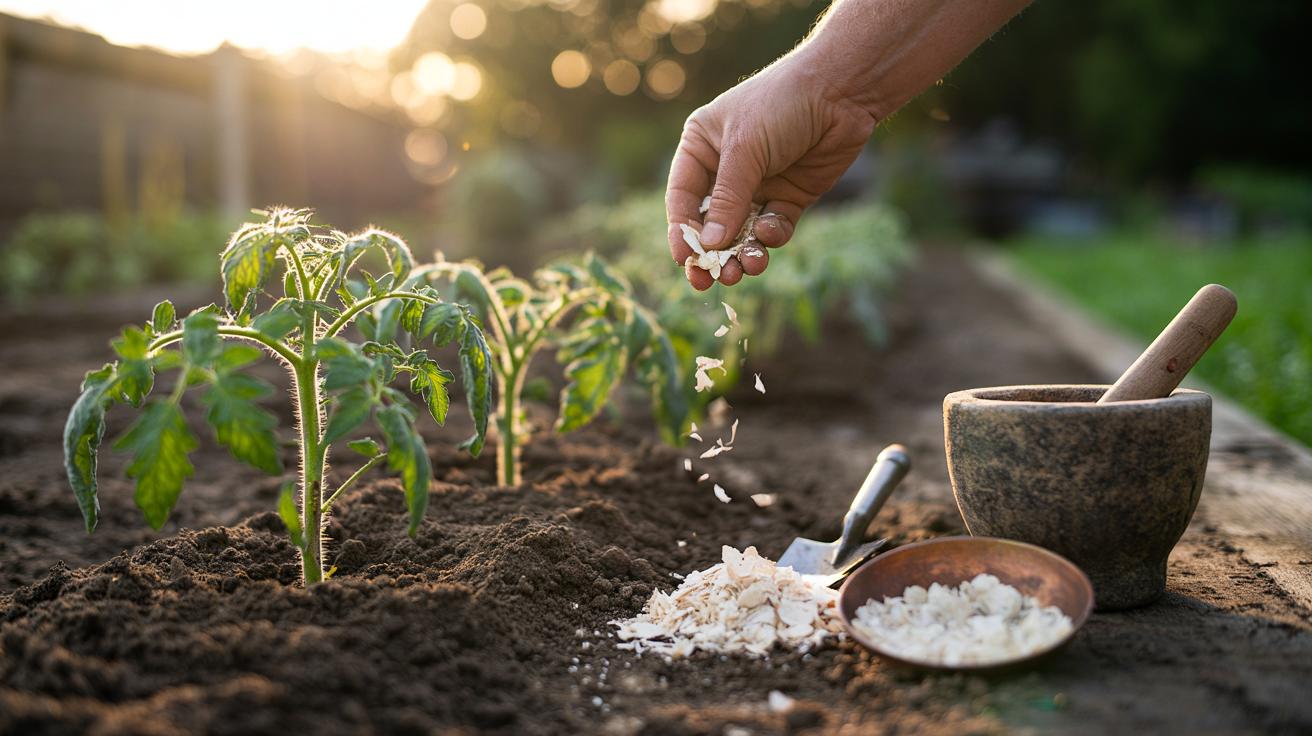
Start clean. Rinse shells and let them dry. For safety and faster breakdown, bake at low heat (100–120°C) for 10–15 minutes to sterilise and drive off moisture. Then crush. The finer the grind, the swifter the release; a rolling pin yields shards, a mortar turns them into powder. Finer particles mean more surface area, which means more contact with soil acids and microbes. Store in an airtight jar so your hard-won powder doesn’t rehydrate and clump.
How to use it? For new plantings, blend a tablespoon of fine shell powder into the backfill of a 3–5 litre pot, or a small handful into a planting hole in beds. For established plants, top-dress: sprinkle a light ring around the drip line and gently scratch it in, then water. In compost heaps, shells balance acidity over time and help reduce odours; layer them with kitchen greens and browns for a steadier pH.
Do mind the match. Avoid heavy shell use around acid-loving shrubs—blueberries, rhododendrons, camellias—where raising pH is unwelcome. In neutral or slightly acidic soils, shells are allies. Indoors, a pinch per pot per quarter is plenty. Too much becomes decorative grit rather than functional amendment. Patience pays; the benefits compound season by season.
What Science Says About Calcium, pH, and Soil Life
Eggshells are roughly 95–97% CaCO3 with traces of magnesium, phosphorus, and a protein-rich membrane. They dissolve slowly, primarily where root exudates and microbial acids nudge them along. That’s the point. Slow-release calcium underpins cell-wall integrity, reduces physiological disorders, and supports root-tip signalling without the runoff risks of soluble salts. In coarse soils, added calcium can encourage aggregate stability, making water infiltration more even and less erosive.
There’s a pH footnote. Calcium carbonate is alkaline and functions like a very mild, very slow-acting lime. In soils already near pH 7, don’t overdo it. In many UK gardens with slightly acidic ground, modest additions help buffer swings caused by rain and repeated composting. Keep a simple soil test kit; data beats guesswork.
And the biology? Shell surfaces host microbes once in soil, providing microhabitats that favour beneficial communities. That living film helps process organic matter and release locked nutrients. Some gardeners brew “eggshell tea”, but calcium carbonate barely dissolves in plain water; the real action happens in soil. If you need immediate calcium, look to foliar calcium sprays; shells are for the marathon, not the sprint.
Quick Reference for Gardens, Pots, and Compost
Clarity matters when your hands are muddy. Use this crib to match shells to tasks and avoid the common missteps. For edible crops—especially tomatoes, courgettes, brassicas, and fruit bushes—focus on pre-plant mixing or gentle top-dressing. For seedlings, go sparingly; tiny root systems don’t need a calcium glut, they need consistency and good structure. Crushing to a fine powder accelerates availability by months. In compost, shells shine as a long-term buffer rather than fast nutrition.
One myth to park: crushed shells are not reliable slug armour. The deterrent effect is inconsistent outdoors. Aim shells at the soil, not at pests. Combine them with mulches, sharp sand, or wildlife-friendly barriers if slugs are your main headache. Finally, keep expectations sensible. Eggshells complement compost and mulches; they don’t replace a balanced feeding regime for heavy feeders in hungry soils.
| Use Case | Preparation | Application Rate | pH Consideration | Notes |
|---|---|---|---|---|
| Planting Tomatoes/Peppers | Fine powder | 1–2 tbsp per hole | Best in pH 6.2–6.8 | Mix into backfill for even contact |
| Top-Dress Perennials | Shards or powder | Thin ring, 2–3 mm layer | Avoid alkaline soils | Scratch in lightly, water well |
| Container Herbs/Salads | Fine powder | 1 tsp per 3–5 L pot quarterly | Check pH yearly | Don’t overdo in small pots |
| Compost Heap | Rinsed, crushed | Handful per 20–30 L of waste | Buffers acidity slowly | Speeds odour control and structure |
For cost-conscious, climate-aware gardeners, eggshells tick the right boxes: circular, local, quietly effective. They build resilience underground, lifting root performance and soil structure without resorting to high-input fertilisers. Not flashy. Not instant. Just dependable. Treat shells as a long-term amendment, tested with a pH kit, paired with compost and smart watering. Over a season or two you’ll see sturdier stems, fewer collapses in dry spells, and fruit that sets with confidence. Will you start saving those breakfast shells—and what plant will you trial first to test the difference in your own soil?
Did you like it?4.5/5 (25)