In a nutshell
- 🌿 Why vinegar works: A small dose of acetic acid lowers alkaline water pH, neutralises bicarbonates, frees locked micronutrients (iron, manganese, phosphorus), and helps rewet hydrophobic compost, prompting a rapid perk-up.
- 🧭 When it helps (and when it won’t): Best for hard water issues and acid-loving plants (azalea, gardenia, camellia, calathea); won’t fix root rot, severe drought, heat scorch, or pests; limited value for succulents/cacti.
- ⚗️ Safe dilution & pH targets: Use white 5% vinegar at 5 ml/L (general) or up to 10 ml/L (acid lovers); aim for irrigation pH 5.8–6.5 (most) or 4.5–5.5 (acid lovers); apply to soil only, no more than every 4–6 weeks.
- 🛠️ Troubleshooting essentials: Check roots—healthy are creamy-white and firm; trim rot and repot; pre-moisten bone-dry mixes, flush salt crusts, provide bright indirect light, and record dose/response for repeatable results.
- 🔄 Alternatives & extras: Try citric acid (food grade) or rainwater for consistent acidity; a tiny soap drop helps wet hydrophobic media; for cut flowers use 5 ml/L vinegar + a pinch of sugar; avoid horticultural-strength vinegar.
A drooping fern, a flagging basil pot, a peace lily collapsing into itself — we’ve all seen that sorrowful slump. Garden forums buzz with a curious fix: add a touch of vinegar to the watering can and watch leaves perk up. It sounds like folk magic, yet there’s real chemistry at play. A small dose of acetic acid can tweak water and soil conditions just enough to help roots drink and nutrients move again. Think nudge, not miracle. Used correctly, vinegar can deliver a rapid, visible lift, particularly in homes supplied with hard, alkaline tap water. Used carelessly, it can scorch roots. Here’s how to tell the difference.
The Science Behind Vinegar’s Quick Revival
Houseplants wilt for many reasons, but a frequent culprit indoors is alkaline water. Hard tap supplies carry bicarbonates that push the pot’s pH upwards, locking up iron, manganese, and phosphorus. When nutrients are present but chemically unavailable, foliage sags and yellows despite regular feeding. A few drops of 5% white vinegar lower the pH of irrigation water, briefly neutralising bicarbonates and freeing those micronutrients. This tiny shift can restore flow through the plant’s vascular system within hours, which is why the recovery can seem instantaneous.
There’s also a physical side. Alkaline salts crust on the compost surface, making peat- or coco-based mixes turn hydrophobic. By slightly acidifying, vinegar helps rewet stubborn particles, improving infiltration so water actually reaches thirsty roots instead of running down the pot’s edges. At very low doses, acetic acid can also suppress a bloom of bacteria or algae in the top layer, which steals oxygen and competes with roots. The effect is short-lived, but sometimes that’s all you need to reset.
Context matters. Vinegar is rapidly neutralised in soil, so its benefits are transitional, not a fertiliser replacement. Think of it as a lever: you’re shifting the chemistry just enough to unlock what’s already there. That’s why the dose must be modest and the timing considered. Used before a feed, for example, it can help nutrients enter solution and move into the plant more efficiently.
When Vinegar Works—and When It Won’t
Vinegar shines when wilting is tied to hard water, minor salt buildup, or a potting mix that has become water-repellent. Acid-loving species such as azaleas, gardenias, camellias, calatheas, and blueberries often respond well, especially if your kettle furs up in a week. You might see leaves stiffen, petioles lift, colour deepen. If leaves revive the same day after a light acidic drench, water chemistry was likely the issue. For cut flowers, adding vinegar to vase water can deter bacterial slime that clogs stems, often extending vase life.
However, no amount of acetic acid can rescue plants suffering from root rot, severe underwatering, heat scorch, or pest damage. If the pot is sopping and smells sour, vinegar won’t fix oxygen-starved roots; you need to repot into airy compost and trim mushy sections. If a plant is bone dry to the core, rehydration takes slow soaking and patience. And for succulents and cacti, vinegar’s benefit is limited; these species prefer dryness and are sensitive to acidic shocks. Misdiagnose the cause, and vinegar becomes a distraction rather than a cure.
Also beware of extremes. Using vinegar on alkaline-loving species (lavender, rosemary, many Mediterranean herbs) can stress them. Horticultural vinegars at 10–20% acetic acid, marketed for weed control, are too strong for containers. Anything stronger than kitchen-grade 5% belongs nowhere near your houseplants.
How to Use Vinegar Safely at Home
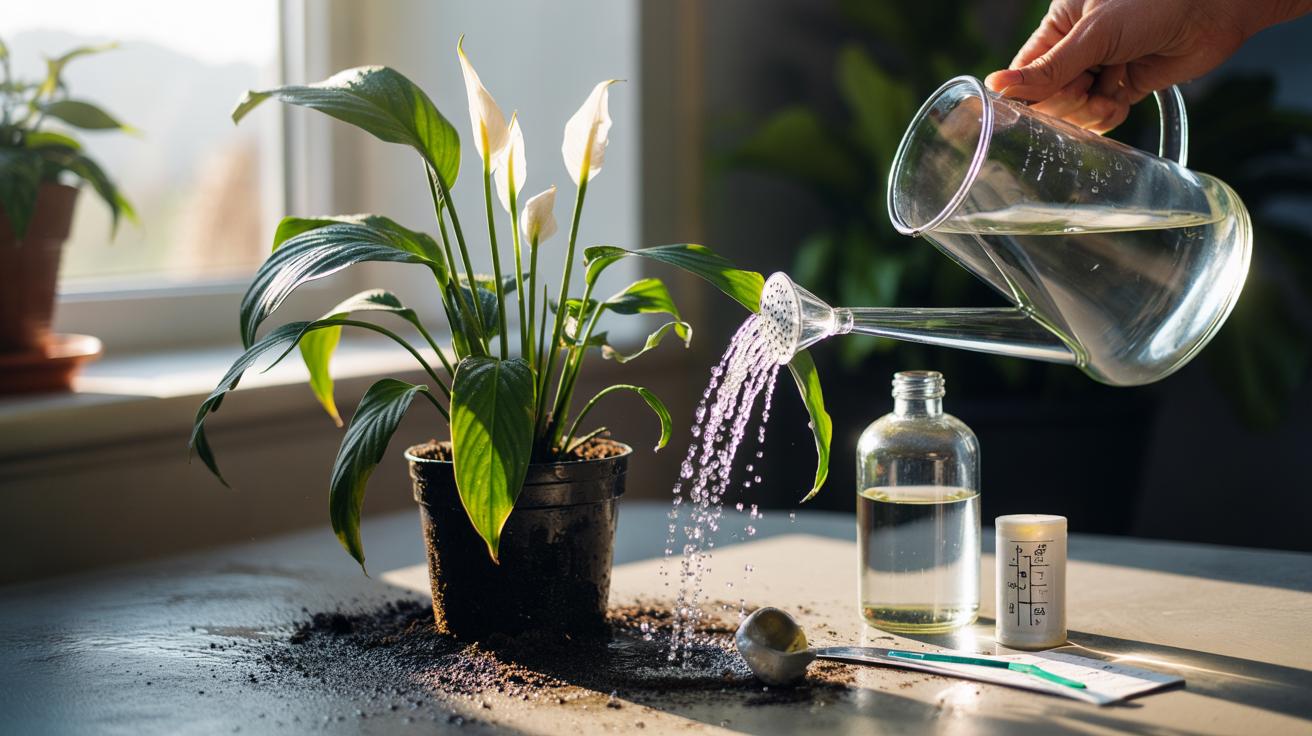
Start with white distilled vinegar (5% acetic acid). For general houseplants, mix 1 teaspoon (5 ml) per litre of tap water. For hard water and acid-loving plants, you can go up to 1 tablespoon (15 ml) per 4 litres. Stir well, then water as you normally would until it drains from the base. Always pre-test on one plant and wait 24 hours. If you own pH paper or a simple meter, aim for irrigation water around pH 5.8–6.5 (most houseplants) or pH 4.5–5.5 (acid lovers).
Use tepid water and apply early in the day. If the compost is powder-dry and shrinking from the pot, first moisten with plain water, wait ten minutes, then follow with your vinegar solution; this prevents a sudden osmotic shock. Do not use alongside lime-containing products. Limit acidic watering to once every 4–6 weeks indoors, alternating with plain or rainwater. Feed as usual, but consider halving fertiliser strength on the same day you acidify to avoid overloading ions.
| Situation | Dilution (5% vinegar) | Why It Helps | Notes |
|---|---|---|---|
| Hard tap water; general houseplants | 5 ml/L | Lowers pH, frees micronutrients | Target irrigation pH ~6.2 |
| Acid-loving plants | 10 ml/L max | Counters bicarbonates quickly | Check leaves within 12 hours |
| Cut flowers in a vase | 5 ml/L + a pinch of sugar | Reduces bacterial clogging | Change water every 2 days |
| Succulents/cacti | Not generally advised | Risk of tissue damage | Use rainwater instead |
Never exceed 1 tablespoon per 4 litres for container plants. Avoid contact with leaves; water the soil, not the foliage. If you see tip burn or bronzing within 48 hours, flush the pot with plain water to dilute residues.
Troubleshooting, Alternatives, and Pro Tips
If revival is partial, reassess the basics. Slide the plant from its pot: healthy roots are creamy-white and firm. Brown, mushy strands signal rot; trim, repot into fresh, airy mix, and hold off vinegar until growth resumes. If the surface is salty and crusted, topdress with fresh compost or flush thoroughly before any acidification. Provide bright, indirect light and a gentle draught-free spot. Shade and steady moisture often rescue a plant faster than any additive.
Prefer a more predictable acidifier? Try citric acid (food-grade), 1/8 teaspoon per litre, titrated to pH. It’s odourless and consistent. Better still, collect rainwater or use filtered water to avoid bicarbonates altogether. For hydrophobic mixes, a drop of unscented mild soap in a litre of water acts as a wetting agent—use sparingly. Seaweed extracts can support recovery by supplying trace elements without pushing salts.
Safety matters. Do not use horticultural-strength vinegar. Keep children and pets away when mixing. Label your jug. And remember, acidifying is a tool, not a lifestyle: if your tap water is already soft (kettle stays clean), vinegar brings little benefit. Track results in a notebook—dose, plant, response—so the next wilt doesn’t become a guessing game.
A tiny splash of vinegar can be the difference between a forlorn, floppy plant and one that bounces back by teatime. The trick is understanding what you’re correcting: temporary chemistry, not a lifetime deficit. With careful dilution, occasional use, and a watchful eye on roots and potting mix, you can harness this kitchen staple without courting disaster. When in doubt, test, measure, and go gentler than you think. Which plant on your windowsill will you trial—with a measured teaspoon, a pH strip, and a journalist’s curiosity for evidence—in the week ahead?
Did you like it?4.4/5 (20)