In a nutshell
- 🌸 The science: sugar feeds petals and buds while vinegar acidifies water to improve uptake and suppress bacteria; aim for pH 3.5–4.5 for clear xylem flow.
- 🥄 Quick recipe: mix 1 tsp sugar + 1 tsp white vinegar per 500 ml, use cool clean water, a spotless vase, and recut stems at a slant by 1–2 cm within 5 minutes.
- 🧼 Smart care: strip submerged leaves, keep away from heat and fruit that emit ethylene, space stems, and change the solution every two days with a swift recut.
- ⚠️ Avoid pitfalls: don’t over-sweeten (cloudy water = too much sugar), stick to white vinegar (not balsamic/cider for scent and staining), and tweak acidity for hard water.
- 🌿 Flower tweaks: roses like lukewarm first fill, tulips need less sugar and tall support, daffodils should be conditioned alone for 12 hours, woody stems benefit from deeper cuts or a gentle base split.
Fresh flowers brighten a room, mood, and even a workday. Yet the heartbreak is familiar: limp stems by midweek, petals slumped over the rim. Here’s the swift fix florists quietly swear by. In just five minutes, a simple kitchen pairing — sugar and vinegar — can tip the balance in your favour, balancing energy and hygiene so blooms hold their poise for days. The method is quick. The results are visible. Think of it as a mini life-support system for cut stems: food plus protection. With the right ratios, a clean vase, and a sharp recut, your bouquet will look like it arrived this morning, tomorrow and the day after.
The Science Behind Sugar and Vinegar
Cut flowers are not dead ornaments; they’re living tissues still respiring and drinking. Once severed from the plant, they lose access to the plant’s carbohydrate pipeline. Sugar (sucrose) steps in as a gentle energy source, helping petals and buds hold structure and complete their opening sequence. Vinegar does the opposite kind of job: it acidifies the water, lowering the pH into a friendlier zone for uptake while making life harder for bacteria that clog stems. Aim for a vase solution around pH 3.5–4.5: it keeps xylem vessels clear and water rising.
Most household tap water skews neutral or slightly alkaline. That slows the flow. Add a dash of acid and you’re effectively greasing the plant’s internal plumbing. Meanwhile, stray microbes thrive on unprotected sugary water, multiplying, producing slime, and sealing the microscopic tubes that keep flowers turgid. The vinegar counters this, nudging the water chemistry away from a bacterial party. The pairing is elegantly simple: food plus sanitation, calibrated for a fragile biological system that needs a little help. It’s not magic. It’s plant physiology with a teaspoon.
The 5-Minute Mix: Ratios, Steps, and Timing
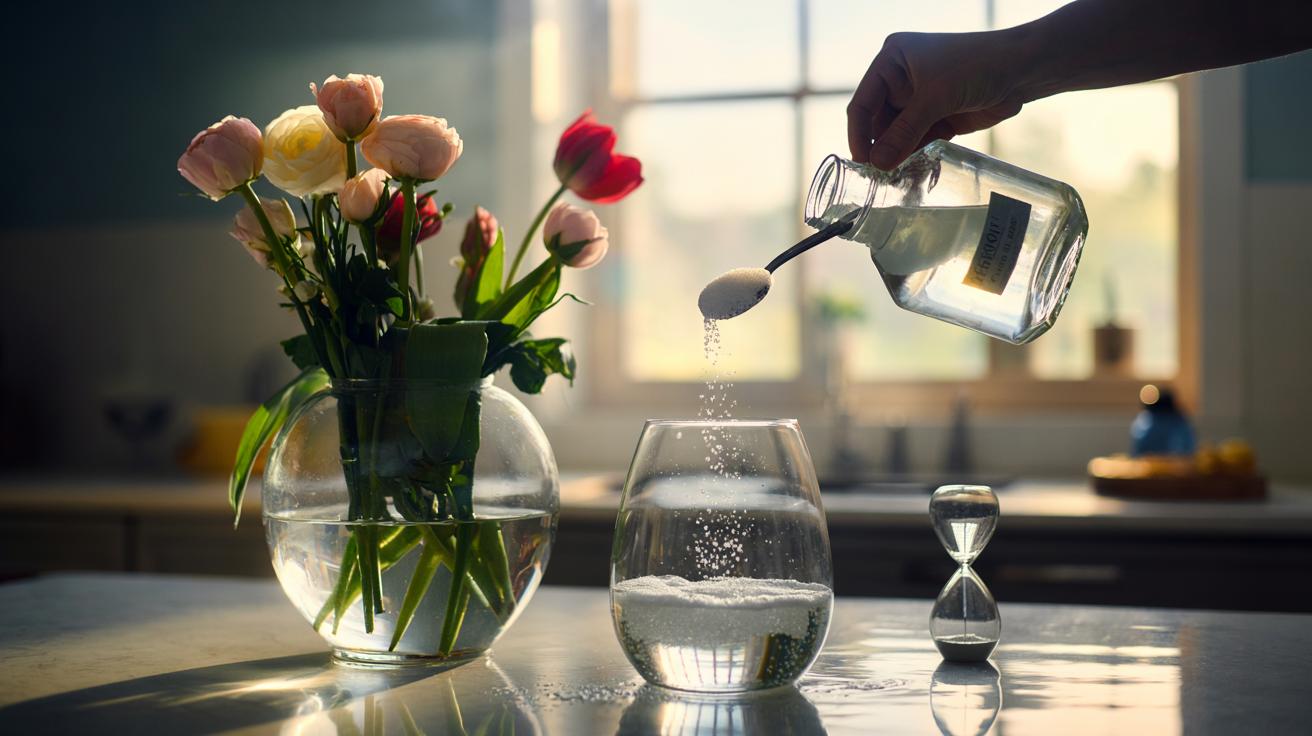
Set a timer. You’ll be done before it rings. Start with a spotless vase: wash with hot soapy water, rinse, and air-dry. Fill with cool, clean water. Stir in granulated sugar and white vinegar. The golden ratio for most bouquets is 1 teaspoon of sugar and 1 teaspoon of white vinegar per 500 ml of water. If your tap water is very hard, edge a touch more acidic; if stems look soft, dial back the sugar slightly. Always recut stems at a slant by 1–2 cm under running water or in a bowl to prevent air bubbles.
| Vase Volume | Sugar | Vinegar | Notes |
|---|---|---|---|
| 250 ml | 1/2 tsp | 1/2 tsp | Mini posy or jam jar |
| 500 ml | 1 tsp | 1 tsp | Standard small vase |
| 1 litre | 2 tsp | 2 tsp | Generous bouquet |
Strip leaves that would sit below the waterline — they’re bacterial fuel. Arrange stems loosely so water can flow and air can circulate. Keep the vase out of direct sun and away from fruit bowls that emit ethylene, a ripening gas that accelerates ageing. Change the solution every two days, recutting stems each time. That’s the whole routine. Efficient, tidy, and reliably extending bloom life.
Care Tips That Multiply the Effect
Temperature matters. Cool water suits most flowers; lukewarm helps tight buds open, especially roses. For spring bulbs like tulips, keep water cool and sugar low to avoid floppiness. Always remove any foliage below the waterline — it’s the difference between crystal clarity and a bacterial soup by morning. If your water smells “pondy” or looks cloudy, you waited too long. Refresh immediately and recut.
Placement is strategy. Windowsills scorch by midday, radiators dry the air, and draughts dehydrate. Keep arrangements away from bananas, apples, and avocados; their ethylene shortens vase life fast. If a room is hot during the day, move the bouquet to a cooler hallway at night. Hydration is also mechanical: give stems space, avoid overcrowding the neck of the vase, and rotate the arrangement so every stem gets light evenly. A quick rinse of the vase between changes, plus a soft bottle brush swipe, removes the biofilm that silently strangles stems. These marginal gains add days. Sometimes, a full week.
Common Mistakes and Flower-Specific Tweaks
Too much sugar is a classic error. It invites bacterial bloom, not floral bloom. Keep to the measured ratios, and if water clouds within 24 hours, reduce sugar by a quarter. Vinegar choice matters too. Use clear white vinegar for a neutral scent and predictable acidity; cider vinegar works, but its aroma can clash with delicate flowers. Brown vinegars and balsamic are out — they stain and skew the chemistry. Always test the solution on a small arrangement if you’re unsure about your local water profile.
Different stems, different quirks. Roses love a slightly warmer first fill to encourage opening. Tulips prefer less sugar and a taller vase for support. Daffodils exude sap that can harm companions; keep them in their own vase for 12 hours, then combine if you must. Woody stems like lilac or hydrangea benefit from a deeper cut and more frequent recuts; lightly splitting the base increases uptake. If petals brown at the edge, you may be running too acidic; trim the vinegar by a quarter teaspoon per 500 ml and reassess. The rule is simple: observe, adjust, repeat.
Five minutes, one kitchen cupboard, a transformation. The sugar and vinegar method gives cut flowers what they need and keeps away what they don’t, no sachet required. It’s cost-effective, repeatable, and easy to tweak for your water and your favourite stems. Care is a habit, not a flourish: clean vase, smart chemistry, quick recut, regular change. Try it on your next bouquet and watch the difference across the week — tighter petals today, open tomorrow, vibrant still on Friday. Which blooms will you rescue first, and how will you tailor the mix to your home’s conditions?
Did you like it?4.6/5 (29)