In a nutshell
- 🌿 Used coffee grounds supply slow-release nitrogen; microbes drive mineralisation, delivering steady, resilient foliage growth without sappy spurts.
- ☕ Grounds are typically near-neutral pH with a balanced C:N ~20:1 and useful minerals; avoid thick layers to prevent clumping and crusting.
- 🛠️ Smart use: thin soil blends, 1:3 mulch mixes, compost at up to 20%, or diluted liquid steeps—prioritise small, regular additions over occasional dumps.
- 🥬 Winners and caveats: leafy greens, brassicas, roses thrive; ease off for root crops, potatoes, legumes, and keep grounds away from seedlings and delicate houseplants.
- 🌍 Climate-savvy: divert waste from landfill, build humus, boost water resilience, and reduce reliance on synthetic fertiliser; store grounds dry and keep pets away from fresh piles.
From cafetières to espresso machines, Britain brews millions of cups a day—and bins a mountain of potential plant food. Those fragrant leftovers are not just brown grit; they are a steady trickle of nitrogen, carbon, and trace minerals that can turn tired beds into lively, leafy borders. Used coffee grounds behave like a slow-release, organic fertiliser when handled with care. Applied correctly, they nourish soil life first, then plants. That’s the secret. Microbes dine, minerals unlock, roots follow. The result? Stronger shoots, richer greens, improved resilience in dry spells. If you fancy effortless cultivation with what’s already in your kitchen, here is a grounded guide to making every scoop count.
The Science of Nitrogen in Coffee Grounds
Plants crave nitrogen because it powers chlorophyll production and foliage growth. Used coffee grounds typically contain around 1.5–2.5% nitrogen by dry weight, mostly bound in organic compounds. That matters. Nitrogen tied up in organic matter doesn’t wash away in the first rain; it’s released gradually as microbes break it down. The process—microbial mineralisation—turns complex residues into plant-available ammonium and nitrate over weeks and months, not hours. This slow feed supports steady, compact growth rather than the sappy spurts often seen after soluble fertilisers.
A common worry is acidity. Fresh coffee is acidic; used grounds are usually near neutral, often in the pH 6.5–6.8 range. So they won’t “acid-burn” beds when used sensibly. Equally important is the C:N ratio. Used grounds hover around 20:1, a sweet spot for decomposition that avoids severe nitrogen lock-up. They also bring potassium, phosphorus, magnesium, and calcium in trace amounts, with fine particles that help soil structure—if not overapplied. The real engine is the microbial feast: feed the soil web and your plants follow. Balance is key, and texture matters as much as chemistry in the long run.
How to Use Coffee Grounds: Soil, Compost, and Liquid Feeds
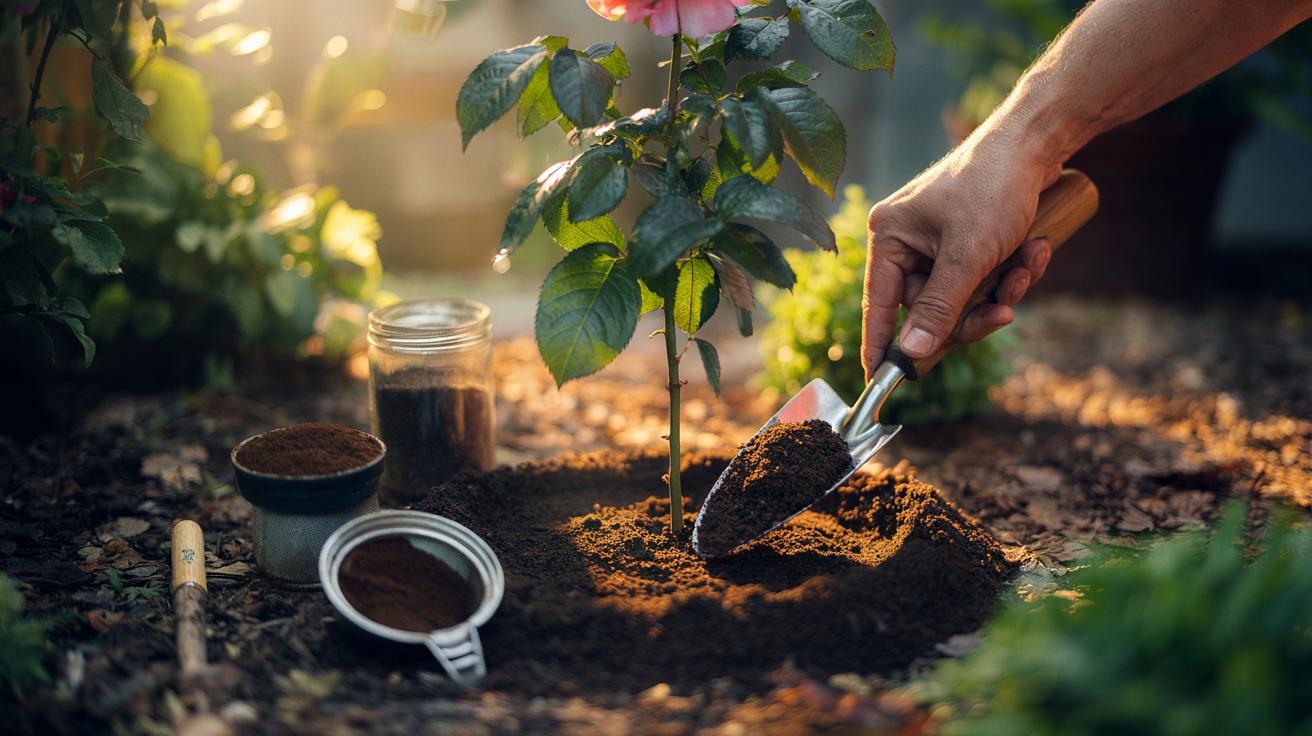
Think dose and distribution. For borders, blend a thin layer—no more than 5–8 mm—into the top 2–3 cm of soil. Never dump thick mats; they can crust, shed water, and starve roots of air. As a mulch, mix grounds 1:3 with leaf mould, fine bark, or spent compost. That blend prevents clumping while still delivering a slow nitrogen nudge and a gentle boost to soil moisture retention. For pots, reserve grounds for established plants and use sparingly; containers have less biological buffering and can turn sour if overloaded.
Composting is the simplest route. Treat grounds as a “green” input and aim for up to 20% of the total mix by volume, matched with shredded cardboard, straw, or dry leaves as “browns”. Wormeries adore them in small, regular feeds—think a mugful spread thinly, topped with bedding. If you fancy a quick drench, steep a cup of grounds in a litre of water for 24 hours, strain, then dilute 1:4 before watering the soil, not the leaves. Whatever the method, the rule is simple: small, regular additions beat occasional heaped offerings.
| Method | Typical Rate | Main Benefit | Watch-outs |
|---|---|---|---|
| Soil blend | 5–8 mm, forked into topsoil | Slow-release nitrogen, improved tilth | Avoid crusting; don’t smother seedlings |
| Mulch mix | 1 part grounds : 3 parts bulky mulch | Moisture conservation, steadier feeding | Keep away from stems to prevent rot |
| Compost | Up to 20% of feed | Hotter heaps, faster breakdown | Balance with “browns” to avoid odour |
| Liquid steep | 1 cup per litre, then 1:4 dilution | Gentle, rapid soil boost | Use on soil, not foliage |
Plants That Love a Nitrogen Nudge, and Those That Don’t
Leaf-first crops are the happiest recipients. Lettuce, spinach, rocket, chard, parsley, coriander, and most brassicas relish steady nitrogen. Roses respond with richer flushes, and ornamental grasses thicken handsomely. In spring, a light dressing helps perennial clumps wake cleanly. Tomatoes enjoy the early leafy push, but ease off once trusses form or you risk foliage at the expense of fruit. Blueberries, camellias, and rhododendrons tolerate used grounds well—pH is rarely a problem—yet they still prefer an ericaceous regime overall.
Some crops sulk if you overdo it. Carrots and parsnips can fork when nitrogen is excessive, and potatoes may grow luxuriant tops with fewer tubers. Legumes fix their own nitrogen, so they need little help. Seedlings are the most sensitive: keep grounds out of seed trays and away from very young roots. Houseplants? Use a compost blend, not raw grounds, and only for robust greenery like monstera or pothos. The guiding principle is intent. Push leaves—go ahead. Chase flowers or roots—hold your nerve and keep the dose modest.
From Kitchen Waste to Climate-Savvy Fertiliser
There’s a broader dividend in every cooled filter. In the UK, an ocean of coffee waste heads to landfill, where it can add to methane emissions. Redirecting grounds into soil turns a disposal problem into a carbon-smart solution. As they break down, they build humus, which helps soils store water during dry spells and drain better after downpours. That resilience matters as weather swings grow sharper. Earthworms flock to grounds-rich composts, aerating as they tunnel and dragging organic matter deeper.
There’s also the wallet and wellbeing angle. Swapping a portion of synthetic fertiliser for kitchen-derived organic matter trims costs and cuts the risk of runoff that can pollute waterways. Reuse jars to collect grounds, dry them on a tray to stop mould, and fold them into your weekly garden routine. Do keep pets out of fresh piles—caffeine traces aren’t for curious dogs. The rest is simple habit: a cup here, a sprinkle there, and a garden that quietly grows richer month by month.
Coffee grounds won’t replace every feed, and they’re not a miracle cure. Yet as a tidy, low-cost, nitrogen-bearing input, they shine—especially when channelled through compost and living soil. The real win is cumulative: a dozen small additions across a season beat a single dramatic dump. Think circular, think microbial, think long game. As you brew tomorrow’s cup, will you let those grounds go to waste, or will you set them to work beneath your roses, greens, and borders—and see what nature does with the spare energy?
Did you like it?4.6/5 (21)