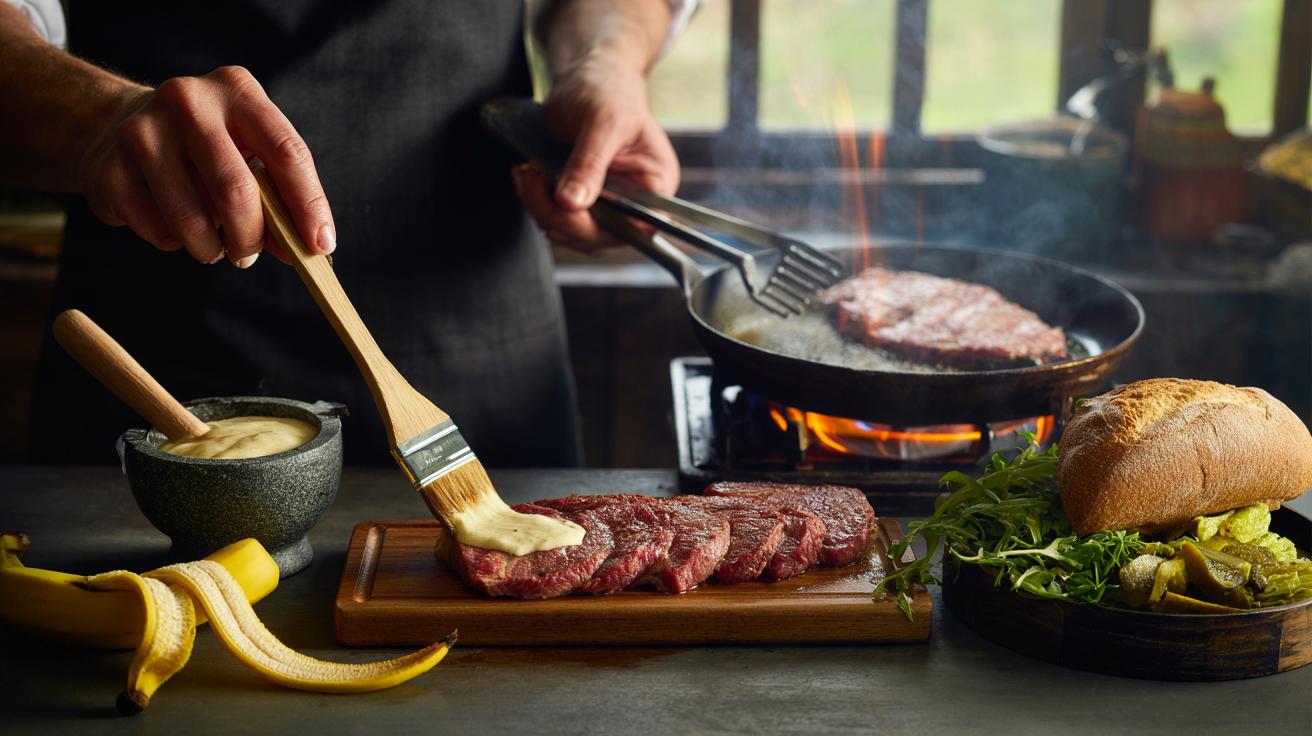
In a nutshell
- 🍌 Banana peel enzymes gently tenderise meat in about 10 minutes, softening proteins and boosting the Maillard crust for juicier, quicker sandwiches.
- 🧪 The science: a mix of proteases, amylases, and pectinases works with salt and a touch of acid to loosen fibres, reduce toughness, and enhance browning.
- 🥄 Method: wash/scrub peel, blitz inner pith with salt, sugar, oil, and aromatics; coat thin cuts for 8–12 minutes, then discard paste, pat dry, sear hot, rest, and slice thin.
- 🛡️ Safety & sustainability: cook poultry to 75°C, avoid cross-contamination, never reuse marinade; using peels trims food waste and costs.
- 🥪 Sandwich builds: try banh-mi style chicken, steak with rocket and chimichurri, or pork with apple slaw; aim for contrast—crisp veg, soft bread, juicy meat.
Britain’s sandwich culture thrives on ingenuity, and the newest twist is hiding in plain sight: the humble banana peel. Home cooks are blitzing peels into a quick marinade that softens meat in ten minutes, transforming speedy lunches into Saturday-level treats. This isn’t just thrift; it’s kitchen chemistry. The peel’s natural enzymes and moisture loosen tight muscle fibres, while salt draws in flavour. The result is succulent slices that sear beautifully and stay juicy between bread. It’s fast, frugal, and surprisingly refined. Below, we break down the science, the method, and the best ways to turn peel-powered protein into a sandwich worth writing home about.
The Science Behind Banana Peel Tenderising
Enzymatic tenderising is about controlled breakdown. Meat is mostly protein, wrapped in collagen and connective tissue. When enzymes meet that structure, they snip and loosen it, turning chew into tenderness. Banana peels contain a mix of plant enzymes—trace proteases, plus amylases and pectinases—and abundant moisture. The effect is gentler than the heavyweight tenderisers found in papaya or pineapple, which means less risk of mush if you keep the clock honest. Ten minutes is enough for thin cuts; you’re seeking surface softening and better browning, not a full structural rethink.
Salt accelerates the process. It helps solvent action, nudging muscle proteins to unwind so enzymes can reach more sites. A pinch of acid (lemon or vinegar) can further tune texture and flavour without overwhelming the meat’s character. Heat then finishes the job: as you sear, loosened fibres contract less fiercely, retaining juices. The win is twofold—supple bite and a more even cook. For sandwiches, where thin slicing is everything, that’s gold. The peel’s subtle sugars aid the Maillard reaction, encouraging a lacquered crust that contrasts handsomely with soft crumb.
| Source | Main Enzyme(s) | Time (Thin Slices) | Texture Risk | Flavour Notes |
|---|---|---|---|---|
| Banana Peel | Proteases, amylases, pectinases | 8–12 minutes | Low–medium | Mild, slightly sweet |
| Papaya | Papain | 5–10 minutes | High if overdone | Tropical, green |
| Pineapple | Bromelain | 3–7 minutes | Very high | Bright, fruity |
| Kiwi | Actinidin | 5–10 minutes | Medium–high | Fresh, tart |
From Peel to Pan: A 10-Minute Method
Start clean. Wash the banana thoroughly, remove stickers, and scrub; if you’re cautious about residues, a 30-second blanch and pat-dry help. Choose ripe, freckled peels for sweetness without bitterness. Scrape the inner pith with a spoon and blitz it with 1 tsp fine salt, 1 tsp brown sugar, 1 tsp neutral oil, and optional aromatics: grated ginger, garlic, black pepper. A teaspoon of lemon juice brightens and balances. You’re after a spreadable paste. Keep it simple; the peel is the engine.
Slice meat thin—5–8 mm for chicken thigh or steak works beautifully. Coat lightly with the peel paste, bag or cover, and rest at room temperature for 8–12 minutes. Discard paste, wipe excess, then pat dry for a fierce sear. A hot pan, a film of oil, and 60–90 seconds per side delivers colour without overcooking. For safety: cook poultry to an internal 75°C, ensure minced or formed meats are fully cooked, and sear whole-muscle beef to your preference with the surface well browned. Rest 2–3 minutes before slicing to keep juices where they belong. Speed is the point—flavour is the bonus.
Safety, Flavour, and Sustainability
Using peels raises sensible questions. Residues? Opt for unwaxed, organic bananas when possible, or wash and scrub thoroughly. Blanching reduces surface concerns and softens the peel. Off-flavours? Under-ripe (green) peels can taste a touch tannic; ripe peels deliver mellow sweetness without dominating. As for allergies, stick to familiar aromatics; the peel paste must be discarded after contact with raw meat to avoid cross-contamination. Never reuse the marinade—make fresh for basting if needed.
Flavour-wise, the peel is a team player. It takes well to soy, miso, and a dab of fish sauce for umami, or a dash of smoked paprika for warmth. Add chilli flakes for heat or honey for caramel notes. The larger win is sustainability: every peel you repurpose is food waste avoided, and the method’s speed means less energy at the hob. Cost is minimal, results are maximal, and the footprint shrinks. In an era of smart cooking, it’s an elegant hack that respects both flavour and planet.
Build the Ultimate Tender Meat Sandwich
Start with structure. Choose crust that yields: ciabatta for crunch-and-cloud, soft rolls for drip control, or sliced sourdough for tang. Spread something bold but balanced—mayo laced with lemon and black pepper; garlic yoghurt; or mustard and honey for a sharp-sweet lift. Slice your peel-tenderised meat thin across the grain so every bite snaps clean. Contrast is king: crisp veg, soft bread, juicy meat.
Combinations to try: chicken thigh, peel-tenderised and seared, with pickled carrots, cucumber, coriander, and chilli for a banh-mi mood. Flank steak, sliced, with rocket, parmesan, and chimichurri on toasted ciabatta. Pork shoulder strips with apple slaw and a swipe of wholegrain mustard. Deglaze the pan with a splash of water or stock, reduce, and brush that glossy jus onto the bread for extra savour. The peel’s sugars boost the Maillard crust, giving you edges that crunch and interiors that sigh—precisely what a great sandwich needs when lunch must impress in under fifteen minutes.
In ten minutes, a banana peel can turn ordinary cuts into sandwich-ready stars: tender, juicy, and primed for searing. It’s a clever union of enzyme science, thrift, and speed, proof that innovation often starts with what we usually bin. Try it once and you’ll notice how slicing becomes easier, seasoning shines brighter, and textures land just right. The method demands little, delivers plenty, and invites play. Which combination will you test first: a garlicky chicken roll, soy-bright steak on sourdough, or something entirely your own?
Did you like it?4.6/5 (21)