In a nutshell
- 🌿 Preserves fresh herb flavour by suspending chopped leaves in olive oil ice cubes, protecting colour, aroma, and texture better than water.
- 🕒 A true five-minute method: chop dry herbs, fill silicone trays, cover with extra-virgin oil (roughly 1:1), freeze, then store in labelled bags or boxes.
- 🧊 Science-backed: oil cushions cells and captures fat‑soluble aromatics, preventing dilution and freezer burn, delivering brighter, greener results at first sizzle.
- 🌱 Smart pairings: soft herbs (basil, parsley, dill, coriander) for fresh finishes; hard herbs (rosemary, thyme, sage) for roasts and braises; adjust oil choice to suit.
- 📦 Stay safe and efficient: label, seal, use within 3–6 months; cook cubes thoroughly if they include garlic or chilli; drop straight into hot pans for instant flavour.
Fragrant basil wilting on the counter? Parsley turning limp two days after a big shop? There’s a fast, deeply flavoursome fix hiding in your freezer. By suspending chopped herbs in olive oil ice cubes, you capture volatile aromas, shield delicate leaves from freezer burn, and deploy instant seasoning any night of the week. The best bit: it genuinely takes about 5 minutes of hands-on time. No blanching faff. No syrupy ice. Just clean, herbal intensity on tap. Turn surplus into convenience, not waste. Slide a cube into a hot pan and watch the perfume bloom. Dinner, upgraded, in seconds.
Why Oil Beats Water for Herb Freezing
Water is a blunt instrument. It ruptures plant cells as it expands, leaching colour and diluting taste as the cube melts. Olive oil, by contrast, behaves like a protective coat. Its lower freezing point and viscous texture cushion delicate leaves, so you preserve more fat‑soluble aromatics—the very molecules that make basil smell like summer and rosemary taste like a walk on the moors. You’ll notice it at first sizzle: a richer nose, greener hue, better texture. Oil locks in what water washes away.
There’s chemistry at play. Many herb flavour compounds—terpenes, aldehydes, phenolics—prefer fat. Suspended in extra-virgin olive oil, they’re shielded from oxygen, light, and ice crystals, which slows oxidation and keeps chlorophyll brighter. The result? Cubes that season and sear, not just chill and dilute. They also deliver practical advantages: oil prevents freezer burn, measures neatly by the cube, and slides straight into the frying pan without spitting. For cooks who value speed, this matters. A single cube softens onions, perfumes a sauce, or anchors a marinade with depth you can’t fake.
And the economics are plain. Fresh herbs are pricey in winter and abundant in summer. Freezing them in oil bridges that gap. Buy once, cook better for months. Less bin, more flavour. That’s a win on taste and food waste alike.
Five-Minute Method: Step-by-Step
Set a timer. You’ll see. Rinse and pat dry a big handful of herbs—basil, parsley, dill, coriander, chives, thyme, or rosemary. Strip woody stems if using tough herbs; keep tender stems for soft ones like parsley. Chop to your preferred texture: fine for sauces, rough for stews. Aim for 1 heaped tablespoon of chopped herbs per cube. Dry leaves are crucial—water invites ice crystals. While you chop, place a clean silicone ice‑cube tray on the counter; silicone releases cubes effortlessly.
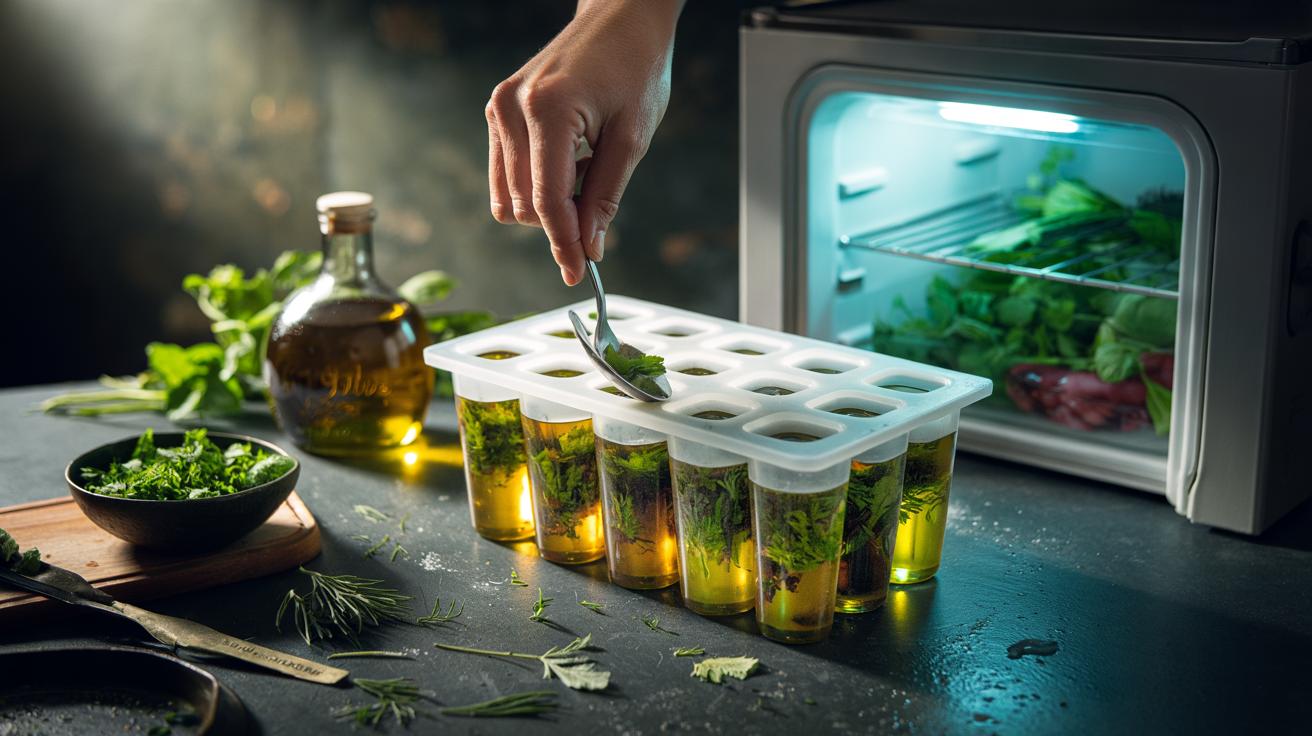
Pour in good olive oil to half-fill each compartment. Add the herbs, pressing lightly so they’re submerged. Top up with more oil until just covered—exposed tips darken faster. For balance, use roughly a 1:1 ratio by volume of herbs to olive oil; go 2:1 if you want punchier green flavour. Optional but excellent: stir in a pinch of sea salt, a strip of lemon zest, or a flake of chilli for tailored cubes. Keep raw garlic separate unless you’ll cook the cube thoroughly.
Freeze uncovered for two hours, then cap with a silicone lid or wrap tightly to block odours. Pop out cubes and store in labelled freezer bags or boxes. That’s it. Hands-on time: about five minutes, even less once you’ve done it twice. For quick deployment, drop a cube into a pan to start a sauce, enrich a soup, gloss roasted veg, or finish fish with gentle heat. No thawing needed; the oil melts first, blooming the herbs beautifully.
Best Herbs and Pairings
Some herbs sing solo. Others want harmony. Soft herbs—basil, coriander, parsley, dill—excel in cubes for pasta, risotto, and dressings where freshness matters. Hardier types—rosemary, thyme, sage—prefer heat and make superb starter cubes for roasts, braises, and pan sauces. Consider the oil itself as an ingredient: a robust Tuscan extra‑virgin flatters rosemary; a milder, fruity oil flatters basil and dill. Think in flavour arcs: what melts into your dish, what lifts at the end.
Use the guide below to mix and match with confidence. The goal is utility. One dinner-saver per compartment. Two for larger pots.
| Herb | Prep | Oil Choice | Best Uses |
|---|---|---|---|
| Basil | Rough chop, tender stems ok | Fruity extra‑virgin | Tomato sauces, pesto shortcuts, grilled veg |
| Parsley | Fine chop | Mellow extra‑virgin | Soups, pan sauces, herby butter swaps |
| Dill | Fronds only | Light extra‑virgin | Fish, new potatoes, yoghurt dressings |
| Coriander | Leaves + tender stems | Neutral EV blend | Curries, salsas, rice finishes |
| Thyme | Strip leaves | Robust extra‑virgin | Roast chicken, mushrooms, gravies |
| Rosemary | Fine chop needles | Peppery extra‑virgin | Lamb, root veg, focaccia |
Blend herbs, too. Try parsley‑chive for eggs, basil‑oregano for pizza nights, or rosemary‑thyme‑lemon zest for sheet‑pan suppers. Keep chilli, zest, and salt restrained; they concentrate in the freezer. One cube should season, not dominate. Over time, you’ll build a signature tray that speeds midweek meals and elevates weekend cooking alike.
Storage, Safety, and Smart Uses
Label clearly: herb, extras, date. For peak brightness, use within 3 months; for solid flavour, up to 6. Air is the enemy, so seal well and keep cubes in a lidded container to block odours. Because oil melts faster than ice, these cubes go straight into a warm pan without sputter, making them ideal for sweat‑and‑sizzle starts. One for sautéing onions. Two for a pot of soup. Finishers work too: swirl a basil cube into risotto off the heat for sheen and perfume.
Food safety matters. Keep herb‑in‑oil mixtures frozen or piping hot—never at room temperature. Garlic or fresh chilli in oil can be risky if stored warm; freezing mitigates that risk, but only cook cubes thoroughly once thawed in the pan. Avoid refreezing if a cube has partially melted. For dairy‑free richness, these cubes stand in for butter; for low‑waste cooking, they rescue limp bunches that would otherwise be binned. They’re also superb marinade starters: melt with lemon and salt, toss over chicken, rest, then roast.
Entertaining? Warm a cube gently and brush over crostini, or drizzle on tomatoes and mozzarella when fresh basil is scarce. A rosemary cube slid beneath chicken skin transforms a weeknight roast. Minimal effort, maximal payoff. That’s the idea. And it starts with a tray and a bottle of olive oil.
In a world where time is short and flavour is precious, olive oil herb cubes are a tiny ritual with outsize returns. You spend minutes now, harvest convenience for months. The freezer stops being a graveyard for good intentions and becomes a larder of bright, green promise. Cook faster, waste less, taste more. That’s the bargain. Which herbs will you freeze first—and what quick dish will you transform with your very first cube?
Did you like it?4.5/5 (28)