In a nutshell
- 🧅 Use fresh onion juice to relax muscle proteins via thiosulfinates and mild enzymatic action, delivering quick, surface-level tenderising without a long marinade.
- ⏱️ Method: squeeze 2–3 tbsp juice from a grated onion, season meat with 1–1.25% salt, coat evenly, and rest 3–5 minutes (2–3 for mince), then pat dry and sear hot.
- 🔬 It’s a fast, controlled tenderiser—ideal for thin steaks, chicken strips, and kebabs; avoid > 10–15 minutes to prevent mushy texture, extending only slightly for thicker cuts.
- 🍍 Compare options: Onion = quick and savoury; pineapple (bromelain) and papaya (papain) are powerful but risky; yoghurt/buttermilk work slower with low over-tenderising risk.
- 🍳 Pro tips: balance sharpness with yoghurt/oil/honey, add spices (cumin, paprika, sumac), and keep the mantra small dose, short time, hot pan for vivid flavour and snap.
There’s a quiet trick that chefs use when time is short and dinner needs to sing: a splash of fresh onion juice. Pressed from a grated or blitzed onion, this pale liquid does more than perfume the kitchen; it coaxes fibres to relax and lets pan heat do the rest. In thin steaks, chicken strips, or minced meat, the effect can be startlingly fast. In as little as 3–5 minutes, texture softens and juiciness improves, provided you don’t drown the cut or leave it bathing indefinitely. Below, we explore the science, the method, the pitfalls, and a few bright ideas to fold this technique into weekday cooking.
The Science Behind Onion Juice Tenderising
The secret lies in a union of gentle enzymatic activity and reactive sulfur compounds. When an onion is crushed, the enzyme alliinase converts amino acid sulfoxides into volatile molecules that give onions their bite. Those same sulfur-derived compounds (notably thiosulfinates) can disrupt bonds in muscle proteins and nudge myofibrils to loosen. Meanwhile, onion juice’s mild acidity and natural salts assist proteins such as myosin in unfolding, nudging water retention upwards and chewiness down. Think of it as a quick, surface-level reset rather than a deep collagen breakdown.
Enzyme levels in onions are modest compared with pineapple or papaya, yet they’re sufficient for thin cuts. The reaction happens at the surface where juice meets meat; it does not turn brisket into brisket candy overnight. That’s precisely the advantage for speed cooking. Because the chemistry acts quickly and doesn’t tunnel deeply, a short exposure window—around 3–5 minutes—can improve tenderness without losing bite. Add salt and a whisper of sugar to amplify moisture retention and browning, and you’ve got a weekday-friendly tenderiser hiding in plain sight.
How To Use Onion Juice In Under Five Minutes
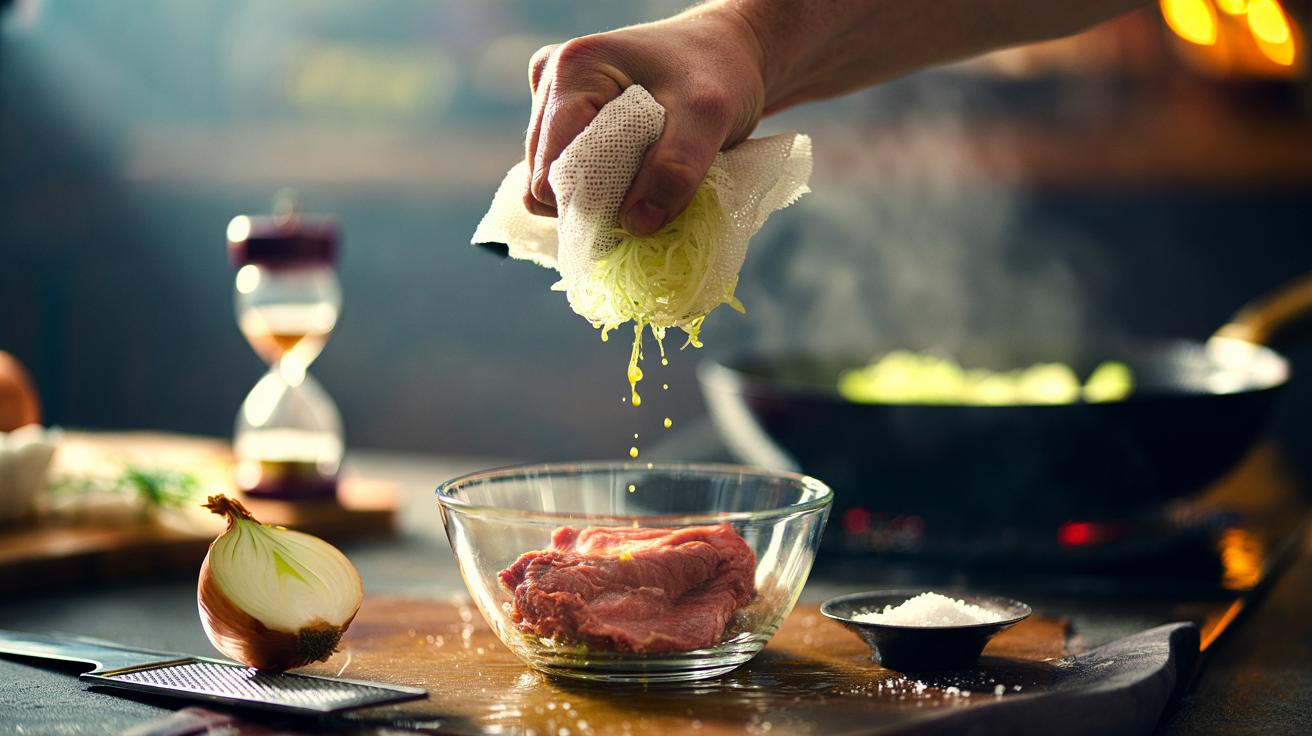
Start with half a medium onion. Grate it finely or blitz in a mini-chopper, then squeeze through a sieve or cloth to collect about 2–3 tablespoons of juice. For 300–400 g of thinly sliced meat or minced beef/lamb for kebabs, that’s plenty. Add 1–1.25% salt by weight (3–5 g per 400 g meat), a pinch of sugar, and optional spices: black pepper, cumin, paprika. Toss to coat evenly. Set a timer: 3–5 minutes for slices, 2–3 minutes for mince. Pat off excess before cooking hot and fast to lock in moisture and develop crust.
Chicken strips, pork escalopes, and thin steaks respond especially well. For skewers, coat just before threading; for burgers or koftas, mix juice directly into the mince for softness without sponginess. If working with slightly thicker cuts (up to 2 cm), extend to 8–10 minutes, but watch the texture. Do not leave in onion juice for longer than 15 minutes—proteins can slacken too far and go mushy. For balance, whisk a spoon of thick yoghurt into the juice when cooking chicken; it calms pungency while adding gentle tang that loves the grill.
Comparing Tenderisers: Onion vs. Pineapple, Papaya, and Dairy
Onion is subtle, quick, and savoury. It won’t bulldoze texture the way tropical fruits can, and it adds a built-in aromatic layer that suits kebabs, burgers, and flash-seared strips. Pineapple (bromelain) and papaya (papain) are potent proteases—superb for tough cuts sliced thin, but ruthless if you lose track of the clock. Fermented dairy—yoghurt, buttermilk—leans on gentle acidity and calcium to tease proteins over longer periods, delivering tenderness with creaminess and a forgiving margin.
| Tenderiser | Active Agents | Typical Time (min) | Best For | Over-Tenderising Risk |
|---|---|---|---|---|
| Onion juice | Thiosulfinates, mild enzymatic action | 3–5 | Thin steaks, chicken strips, mince/kebabs | Medium if >10–15 min |
| Pineapple juice | Bromelain (protease) | 5–15 | Tough beef slices, stir-fries | High |
| Papaya | Papain (protease) | 10–20 | Skewers, thin pork | High |
| Yoghurt/Buttermilk | Lactic acid, calcium, cultures | 60–240 | Chicken, delicate cuts | Low–Medium |
Choose onion juice when speed, savouriness, and control matter. Use fruit enzymes when you need heavy lifting, and dairy when marinating ahead for a calmer, rounded finish.
Practical Tips, Troubleshooting, and Flavour Pairings
Use freshly squeezed juice; bottled onion products can be harsh or flat. If your onion is sharp, temper with a dash of yoghurt, olive oil, or a smidge of honey. For kebabs, combine juice with grated onion pulp for extra moisture in the mince, then drain briefly to prevent flare-ups. Always pat meat dry before it hits the pan or grill; surface dryness is your passport to deep browning. Worried about onion aroma? Add lemon zest, thyme, or ground coriander—bright notes tame the sulfur edge while letting tenderness shine.
If the meat turns soft and pasty, you’ve gone long. Reduce time or dilute the juice with oil. For steaks, keep slices thin; this method is a scalpel, not a sledgehammer. Salt early in the short marinade—sodium helps proteins hold water and improves seasoning throughout. Pairings that sing: onion-juiced lamb with cumin and chilli; chicken with yoghurt, garlic, and sumac; beef strips with soy, ginger, and a teaspoon of onion juice for snap searing. Small dose, short time, hot pan—this trio keeps texture lively and flavour bright.
Used well, onion juice becomes a weekday superpower: a natural, inexpensive way to soften edges, keep juices in, and add aroma without long waits. It’s quick, decisive, and adaptable to grills, pans, or skewers. The key is restraint—minutes, not hours; spoons, not cups. Let the juice unlock tenderness, then let heat finish the story. What will you try first: lightning-fast chicken strips for wraps, supple lamb koftas blistered over flame, or a thin steak that sears like a dream after a three-minute gloss of onion?
Did you like it?4.6/5 (28)